
A solar water heater uses solar heat to produce hot water. It’s a simple and sustainable way to reduce your energy consumption and CO₂ emissions.
How does it work?
A solar water heater consists of solar collectors on the roof (usually 1 to 3) and a storage tank typically inside the house. Unlike photovoltaic panels, the collectors do not generate electricity but heat a fluid that circulates through the system.
Through a heat exchanger, this heat is transferred to the domestic water in the tank, which can reach temperatures of 60–90°C. On sunny days, the solar heater does almost all the work; on cloudy days or at night, your boiler automatically takes over. This way, you always have hot water.
What types are there?
Solar water heaters fall into two main categories. Both use solar heat to efficiently heat domestic water but differ in design, installation, and capacity.
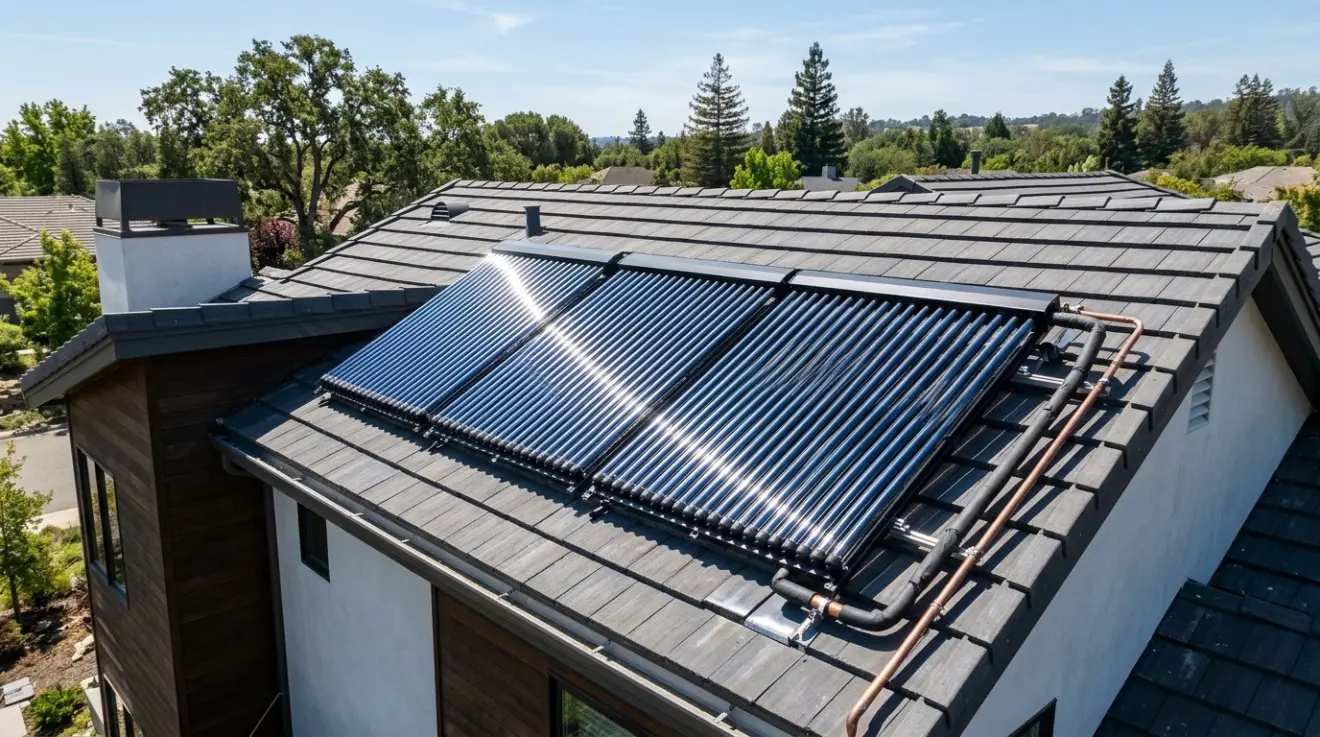
1. Systems with separate tank (split system)
In a split system, solar collectors are installed on the roof, while the hot water storage tank is inside the house — for example, in a utility room, basement, or bathroom. The collectors heat a special circulation fluid that transfers heat to the tank through pipes.
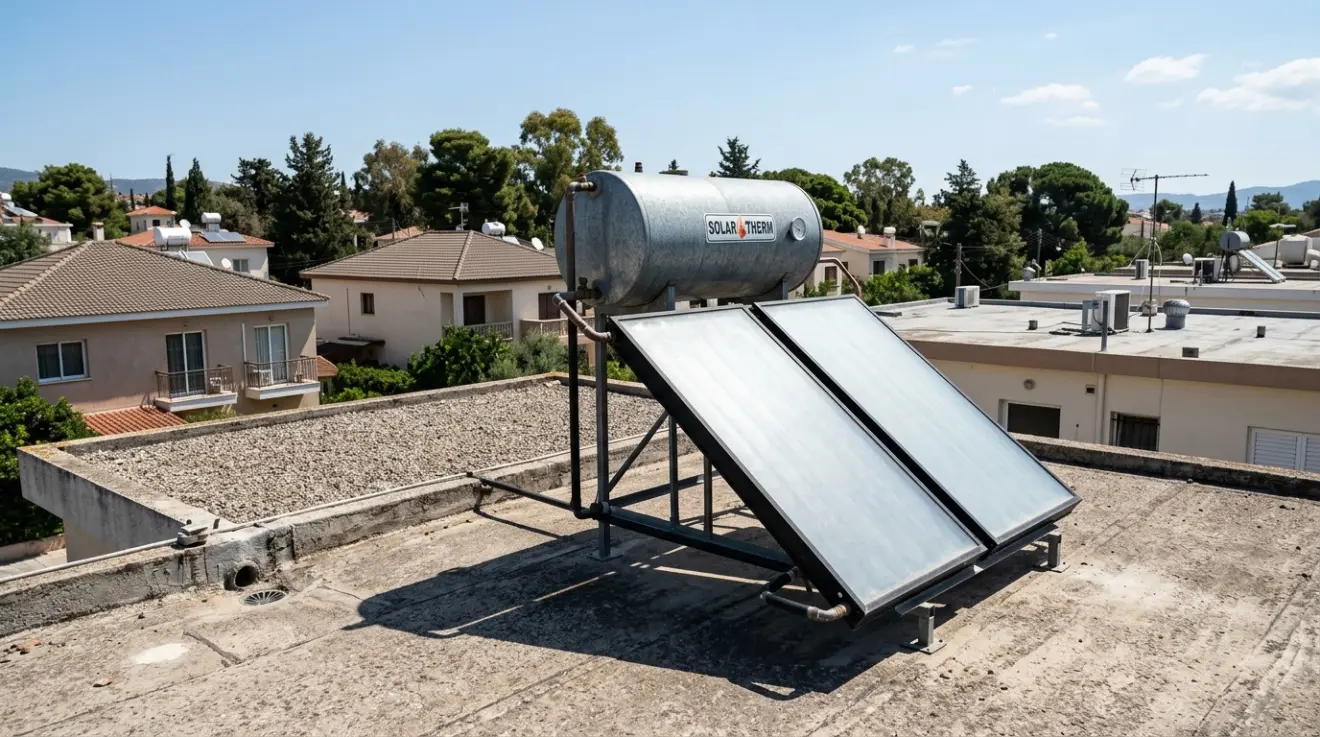
2. Compact systems (monobloc)
A monobloc solar water heater is a single compact unit on the roof, integrating both the collector and the storage tank. It works via thermosiphon: hot water naturally rises to the tank, so no pump or circulation fluid is needed. It is directly filled with mains water, which is heated on the roof.
Comparative table
| Split system (separate tank) | Monobloc system (compact) | |
|---|---|---|
| Setup | Pump + circulation fluid | Thermosiphon, no pomp nor fluid |
| Efficiency | ⭐⭐⭐⭐ High | ⭐⭐ Moderate–good (more heat loss) |
| Capacity | Suitable for families | Limited, mainly 1–2 people |
| Space required | Needs indoor space | No indoor space needed |
| Visual impact | Discreet collectors | More visible unit |
| Roof weight | Relatively light | Heavier on one point |
| Winter performance | Very good (indoor tank) | Lower (outdoor tank) |
| Installation speed | More complex | Quick installation |
Is a solar water heater right for you?
Whether a solar water heater is a good fit depends on several factors. Here are three scenarios to help you decide.
Scenario 1 - You don’t have solar panels yet
If you have enough roof space, consider installing solar panels first. They usually deliver the fastest return on investment because you save on electricity consumption.
But if you want to cut gas consumption and CO₂ emissions, a solar water heater is a smart choice. It reduces your reliance on fossil gas, which Brussels aims to phase out, and improves hot water comfort.
Scenario 2 - Your roof is small or poorly oriented
A solar water heater needs less space than solar panels (only 2–3 m² for an average household), performs well in less ideal conditions, and is less sensitive to shade. For a fully sustainable solution, combine it with green electricity from your supplier.
Scenario 3 - You already have solar panels
If you already generate enough electricity, investing in a solar water heater is often smarter than adding more panels. Feed-in tariffs are dropping while gas prices remain high. If you still heat with a gas boiler, you can significantly reduce gas use and lower your energy costs and climate impact.
Why choose a solar water heater in Brussels?
Save on energy bills
An average Brussels household of three people saves about 160 to 200 m³ of gas per year. At current gas prices and depending on your tariff, this means a saving of €200 to €250 per year on the energy bill.
Contribution to the Brussels Climate Plan
The Brussels-Capital Region aims for carbon neutrality by 2050. By using less natural gas, you actively contribute to this goal. You avoid several hundred kilos of CO₂ emissions each year – more than with additional solar panels alone.
A sustainable choice for the future
Solar heat is free, inexhaustible, and clean. By using it, you reduce your dependence on fossil fuels with fluctuating prices.
When is a solar water heater less suitable?
A solar water heater is not always the ideal solution:
- Very little sunlight: if there is heavy shading, the cost does not outweigh the benefits.
- Limited budget: installation costs several thousand euros, which may not be feasible.
- Unsuitable roof: without a strong, safe, and well-oriented roof surface, installation cannot proceed.
- You already have a fully electric heat pump: it heats water very efficiently in summer, so a solar water heater offers little extra savings.
- You are connected to a district heating network: the added value depends on your specific situation. Ask a specialist for advice.
Your long-term plans also matter:
- Planning to switch to fully electric heating within 10–15 years? Calculate carefully whether a solar water heater is still cost-effective. A later switch to a heat pump or district heating significantly reduces savings potential.
- Already have a solar water heater and want to add a heat pump? It’s possible, but the existing storage tank is often incompatible, requiring a new tank or adjustments.
- Safety considerations: when combined with a heat pump, an electric booster heater is usually needed to prevent legionella risks.
Costs, incentives and payback time
A solar water heater is still an investment, but thanks to available incentives and its long lifespan, you recover the costs over time.
Investment costs
Indicative prices for a household of three people:
- €3,500–€4,500 for a standard installation with ± 2.4 m² of collectors and a 120-liter storage tank
- €2,500–€3,500 for a monobloc system (cheaper, but smaller capacity)
Premiums in Brussels
The Brussels-Capital Region offers incentives for solar thermal energy. Your net investment can be reduced by €1,000 to €1,500. More info on Bruxelles Environnement.
Payback period
- On average 10 to 15 years, depending on your consumption and gas price.
- The lifespan is 20 to 25 years, so you benefit from lower costs for a long time.
With higher hot water use or rising gas prices, the payback period is even shorter.
Frequently asked questions
Does a solar water heater work in winter?
Yes. The highest efficiency is achieved on a sunny summer day with a clear sky and a south-facing collector at an angle of about 35°.
However, performance remains good in cloudy weather, during other seasons, and even when installed facing east, west, or vertically on a wall.
When sunlight is scarce, your boiler or heat pump automatically takes over, ensuring you always have hot water.
Is my roof suitable for a solar water heater?
Depending on the region of residence, you will find different solar mapping tools on the suitability of your roof.
- Evaluate the solar potential of your rooftop situated in the Brussels-Capital Region
- Do you live in Flanders? Then the solar map (online ‘zonnekaart’) will give you all the feedback you need
- In Wallonia: check the Carte du potentiel solaire
Which heating system is a solar water heater ideal for?
A solar water heater works best with systems that can efficiently provide backup heating for hot water. In many homes, this results in significant energy savings. The best combinations are:
- High-efficiency gas boilers (HR boilers)
These boilers only activate when necessary, delivering the greatest gas savings. - Hybrid heat pumps
Combined with a solar water heater, the heat pump uses less gas, further reducing your overall energy consumption.
Always seek advice from a certified installer to ensure your system is properly configured and optimized.
Hybrid heat pumps: a good alternative for more sustainable heating?