
The sky is blue and the sun is high in the sky. Your solar panels should be generating record amounts of energy, shouldn't they? In fact, the reality is more nuanced. In Belgium, the sun may test our patience, but it also affects how your photovoltaic cells work.
It's a common belief that photovoltaic panels achieve their maximum generation in summer, and generate almost no energy in winter. But this isn't the case! Sunlight isn't the only parameter that affects your energy production. Between spring's cool temperatures and autumn clouds, let's discover what really boosts (or slows down) your system.
Sunlight
This is the most obvious factor: without light, there's no electricity. In Belgium, there is a striking gap between the never-ending days of June and the grey skies of December. But as well as how long the sun shines, it's the angle of the sun's rays that matters.
In winter, the sun remains low on the horizon. Its light has to penetrate a thicker layer of atmosphere so it reaches your panels with less intensity. That's why generation never really stops, even in winter, it's simply running in slow motion.
Wat is my roof's solar energy potential?
Brussels Environment has provided a solar map of the Brussels-Capital Region. By consulting this map, you can see whether your roof is facing the right direction for it to accommodate panels.
To the solar map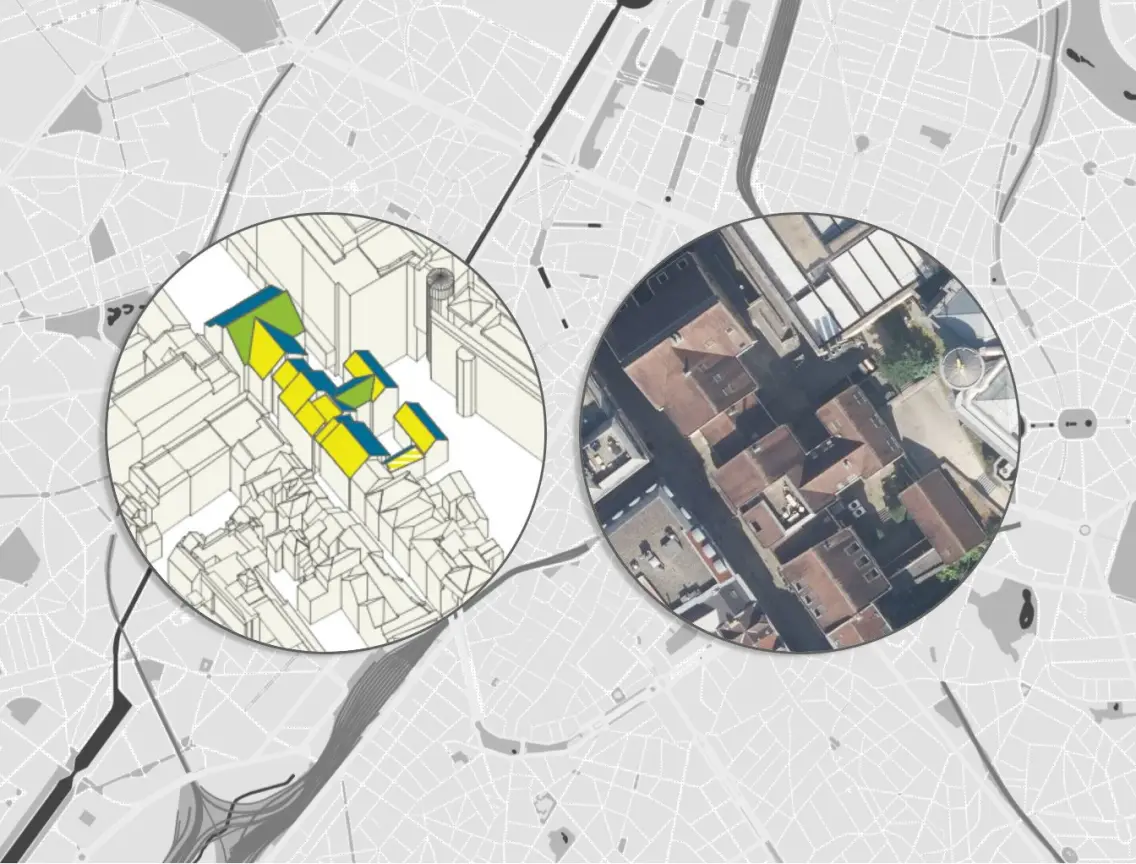
Don’t forget to register your solar panels!
To ensure a safe and reliable electricity grid, it is essential that the grid operator knows where electricity is generated and fed into the grid. That is why every solar installation must be registered in accordance with the law.
Do you live in Brussels? Register your solar panels online here.
Temperature
Here's the paradox few people realise: solar panels don't like heat. Like any electronic appliance, they become less effective when they overheat.
Once temperatures rise above 25°C, solar panel efficiency drops by around 0.4% for every extra degree. So, a cell baking in 30°C heat will generate less electricity than a cell bathed in gentle spring sunshine at 15°C.
It's a bit like us; we work better with a slight breeze than in a heatwave!
Plants are your friends
A green roof and bifacial solar panels are a winning combination. The plants maintain a cooler temperature on the roof, while the bifacial solar panels capture the light reflected off the vegetation or light-coloured gravel. The result is higher power generation and greater thermal comfort.
Clouds
In Belgium, especially from mid-October to mid-March, we are the grey sky experts. And the good news is, your panels are too!
Photovoltaic panels don't need a perfectly clear sky to work. They use what is called diffuse radiation. Even on cloudy days, photons still get through and are captured by your system. Obviously, generation is lower than in full sun, but it continues at a reduced level.
Profitability trick
The secret to reducing your bill isn't to generate as much electricity as possible and export it back to the grid. Indeed, with an export price much lower than your purchase price, in most cases, export is not the most profitable solution. The key is to use as much of your own electricity as possible. Every kilowatt hour that you produce and use yourself is electricity that you do not have to buy from your supplier at a high price.
Rain
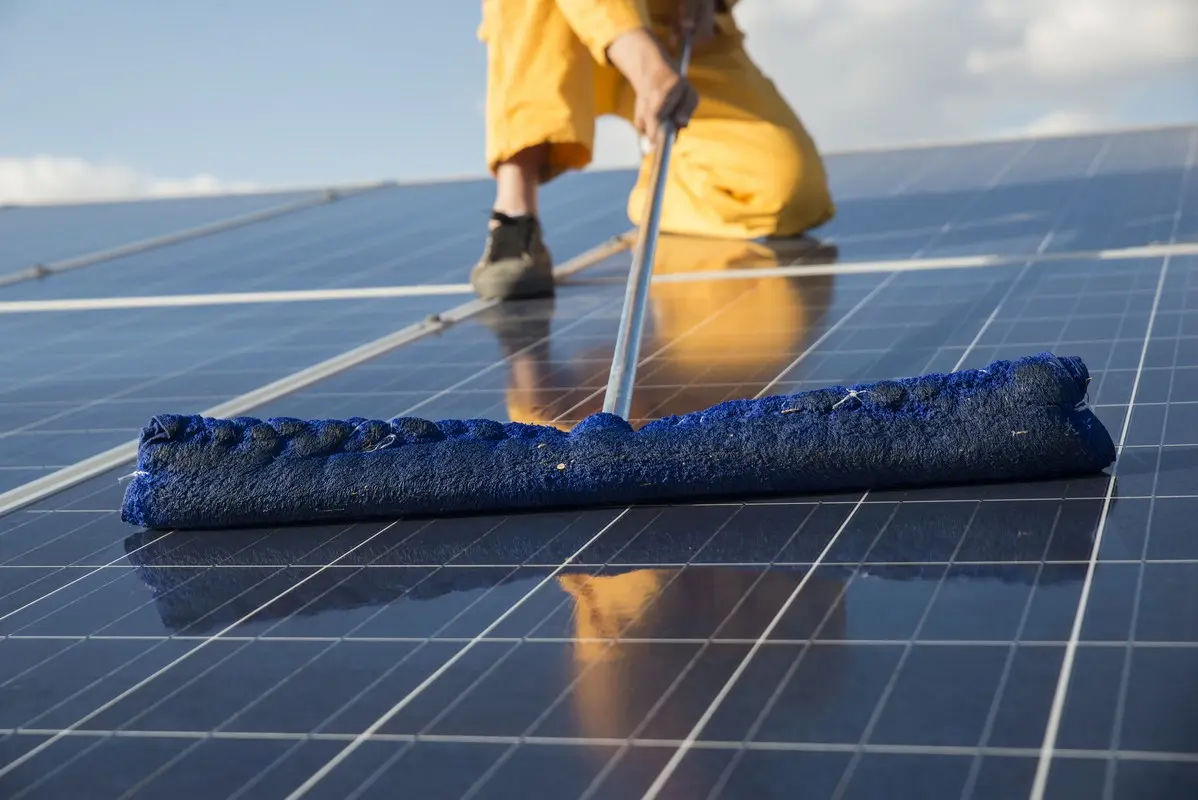
We often moan about the rain, but for your panels, it's a blessing. Rain washes away the dust and residue that build up and can eventually form a thin, opaque film. A clean panel captures light better. Think of every shower as a free clean from the Belgian weather.
Rain is particularly useful at the end of spring, when pollen settles on every surface. A study by the University of California showed that, after 145 days without rain, panel efficiency can fall by as much as 7%!
Snow
Fortunately rare in Brussels, snow remains the enemy of photovoltaic panels. A layer of persistent snow can block electricity generation if it covers all the cells. Fortunately in Belgium, any snowfall rarely lasts long. Furthermore, the panels are smooth and installed on an angle so snow quickly slides off.
Did you know?
In Belgium, panels produce most between May and June. At the end of spring, the days are already longer and the air is cool. This is the "weather cocktail" that provides the most impressive generation peaks in the year. On the Elia website, you can monitor photovoltaic generation in Belgium and find out the forecasts by day and by month.