
Like many of us, you may have wondered just exactly how much you are paying for your shower or bath. Added to the cost per litre of water, it all depends on the energy used and what type of appliance you have. Discover the real cost of hot water and how to choose the best system for your needs.
After a long day, there's nothing more comforting than a good hot shower. It's a calm, almost sacred moment for yourself.
But with new rules being introduced for our boilers, this pleasure may soon leave a bitter taste when the bill arrives. From the introduction of bans to fluctuating prices, we can sometimes feel a bit lost.
However, it's still possible to balance comfort and savings without having to become an expert in energy. Understanding the real impact of every minute you spend in the shower is the first step to taking back control.
Appliance types
Here are the most common appliances used for domestic hot water production:
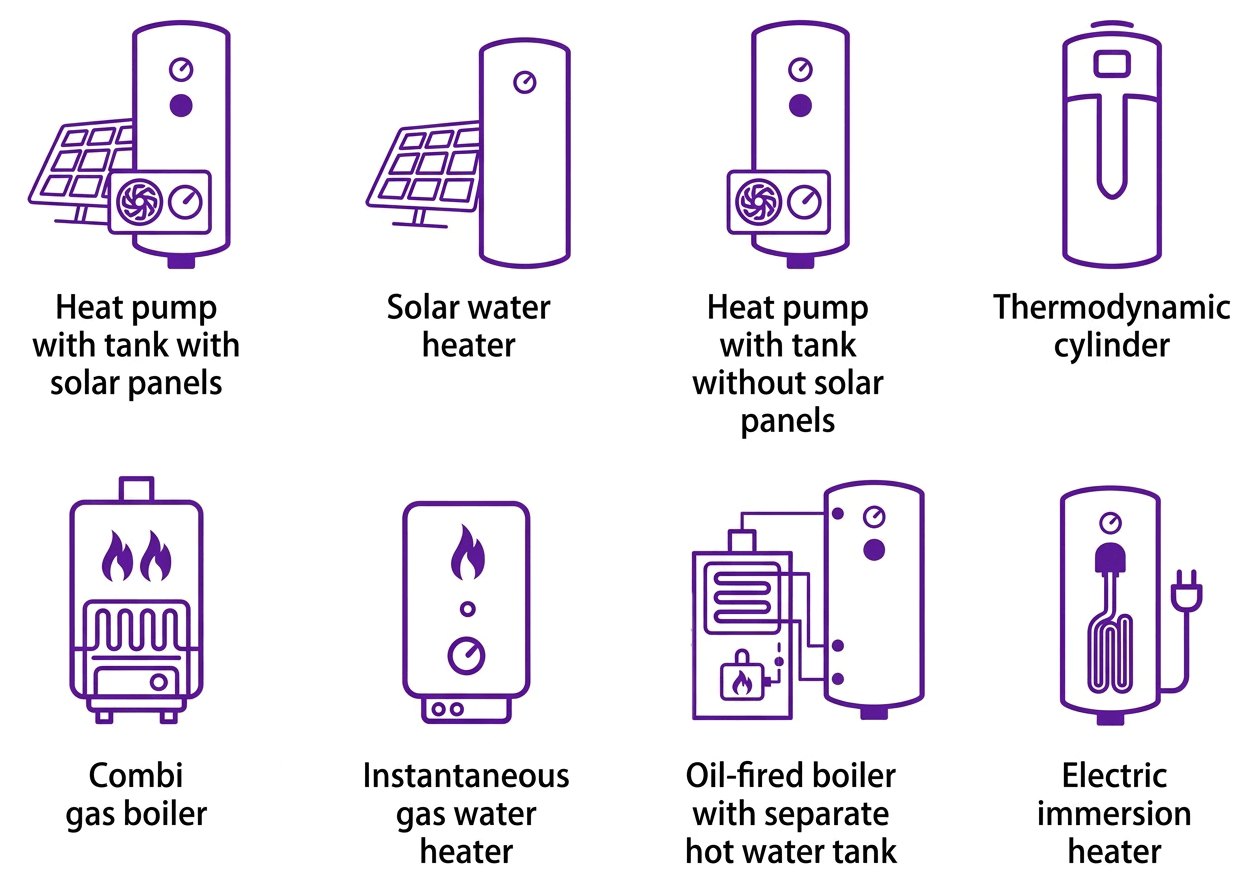
Cost of hot water depending on appliance type
The estimates below are based on the following parameters (March 2026):
- Price of a litre of water: 5.65 €/m3.
- Price of energy: 0.34 €/kWh for electricity and 0.08 €/kWh for gas.
- Water consumption: approximately 63 m³ per year (63,000 litres) just for showers. 60 litres per shower for an average family (2.3 people).
- Purchase and installation: average purchase and installation costs for the system.
- Annual depreciation: average annual cost of the purchase and installation in relation to the lifespan of the system.
Here are the annual production costs for domestic hot water for the most common appliances:
| Appliance type | Purchase and installation* | Annual depreciation (A) | Cost of water and energy per year (B) | Total cost per year (A+B)** | Cost per shower (60l) |
|---|---|---|---|---|---|
| Heat pump with storage tank (with solar panels)* | €3,600 | €240 (15 years) | €181 | €421 | €0,40 |
| Solar water heater | €5,000 | €200 (25 years) | €425 | €625 | €0,60 |
| Heat pump with storage tank (without solar panels)* | €2,400 | €160 (15 years) | €531 | €691 | €0,66 |
| Thermodynamic water heater | €2,800 | €187 (15 years) | €569 | €755 | €0,72 |
| Gas combi boiler* | €900 | €45 (20 years) | €750 | €795 | €0,76 |
| Instant gas water heater | €1,200 | €80 (15 years) | €731 | €811 | €0,77 |
| Oil boilers with tank* | €1,000 | €50 (20 years) | €950 | €1,000 | €0,95 |
| Electric boiler | €800 | €67 (12 years) | €1,444 | €1,510 | €1,44 |
* For systems providing both hot water and heating (heat pumps, gas combi boilers, oil boilers with tank), the investment displayed represents a 20% share of the total price of the installation, this relates to the average use for hot water. For the scenario with solar panels, this portion also includes 20% of the estimated cost of the photovoltaic installation.
** Annual cost for all domestic hot water (showers + sinks + washbasins, excluding dishwashers).
Worth knowing
By opting exclusively for showers (which is the case in our examples) a family can save up to €900 a year on their "water + energy" total. In fact, heating 150 litres of water to 38°C requires much more gas or electricity than heating 60 litres.
What systems are currently permitted?
Prioritising renewable energy
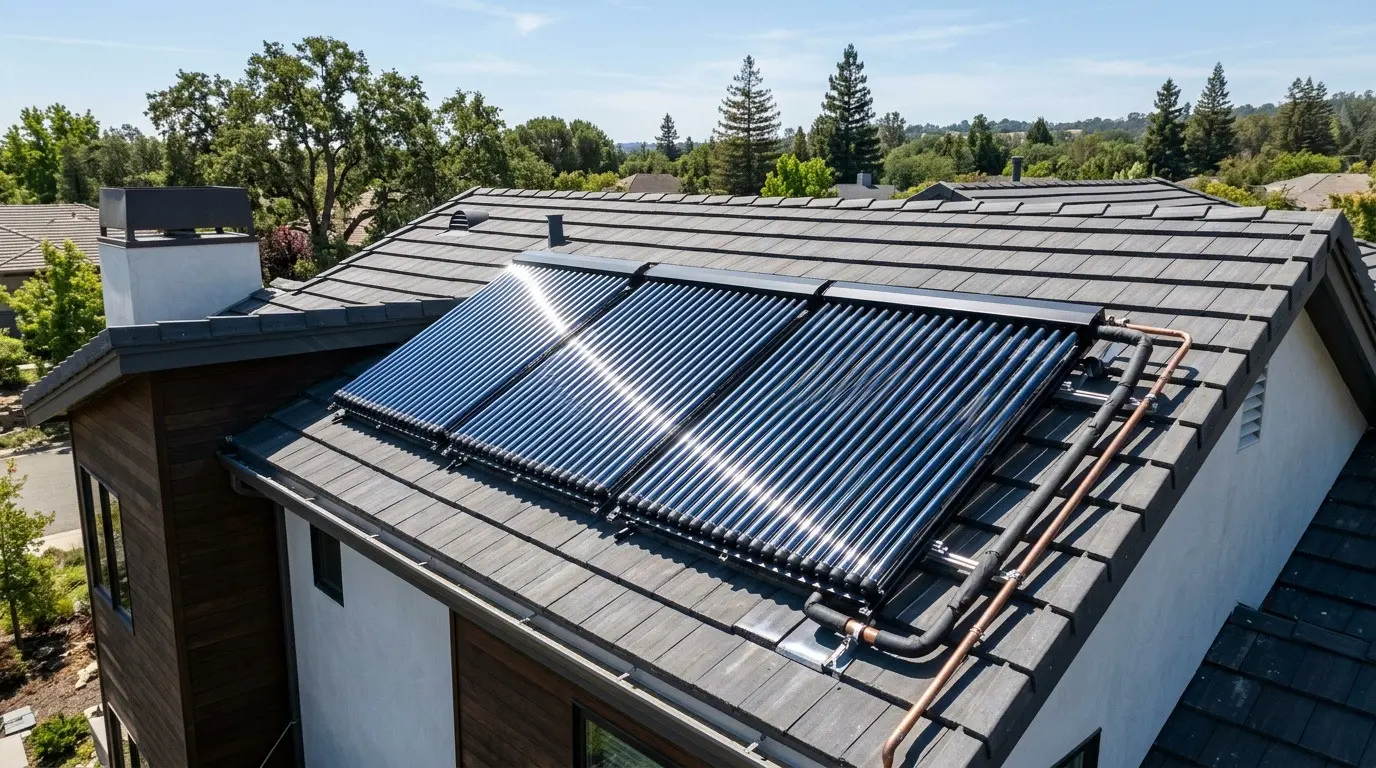
Sustainable systems (heat pumps, solar thermal energy) are of course permitted and actively encouraged throughout Belgium. They represent the future for our homes and the best way to keep your energy costs under control over the long term.
But for many of us, the reality is more immediate: your boiler breaks down in the middle of winter and you may wonder whether your current system is still up to the job. Between the desire to do the right thing and budget constraints, your doubt is entirely understandable.
Can you still choose gas or oil today? Here is an analysis of the rules to help make things clearer.
Gas: general move towards bans
Political will aims to make this energy less attractive than electricity, although it is still cheaper to use in the short term.
The general shift is towards banning gas boilers in new homes and replacing them in existing homes when necessary. This is the situation by region in March 2026:
| Region | New (Construction) | Existing (Replacement) |
|---|---|---|
| Brussels | Prohibited | Permitted |
| Flanders | Prohibited | Permitted |
| Wallonia | Permitted* | Permitted |
* Subject to observing the renewable energy quotas imposed by the BEP
Please note
Throughout Belgium, VAT on the installation of gas boilers has increased from 6% to 21%, making the investment higher than before in comparison to heat pumps (which often benefit from a reduced rate).
Oil: an almost-total ban
As for oil, both installation and replacement have been virtually banned across the country since 2026.
But if your oil boiler is still working, you are entitled to continue to use it and have it repaired (replacement of the burner, for example).
What system to choose?
Today, you're no longer choosing "just a water heater" but an energy strategy. The choice should not be based solely on the purchase price, but on a balance between your budget, your home's layout and your environmental beliefs.
Here are a few scenarios to help you to decide:
- Are you renovating a house with an existing gas connection?
A gas combi boiler offers competitive running costs (approximately €0.76 per shower) for a reasonable initial investment (€900 for the share). This is a pragmatic choice for tight budgets. However, be aware that the VAT on the installation has increased to 21% making the investment higher than before. - Do you have or are you planning to install photovoltaic panels?
The winning combination is a heat pump with hot water tank. By using your own electricity to operate the heat pump, you dramatically reduce the running cost. This is the smartest option to maximise the value of your energy production while preparing for future restrictions on fossil fuels. - Do you want to reduce your bills without changing everything?
A thermodynamic water heater is the perfect compromise. For a lower initial investment than a full solar system, it offers excellent efficiency by capturing heat from the air. It is a highly effective replacement for an old electric boiler which has by far the highest annual running costs on the market.
A ranking to be put into perspective
Before rushing headlong into buying a heat pump or thermodynamic boiler, take the time to study the available government subsidies. Various incentives can alter this ranking. Systems that are more expensive up front may sometimes end up being more attractive.