In older houses, cracks and fissures often supply enough fresh air. But this isn't the case in modern homes, which are so well isolated that they prevent air from circulating naturally. So, how can you let your house breathe without causing your heating bills to skyrocket?
We often think ventilation is just a "draught", but that's not true! In reality, it's the very lungs of your home. Whether its the damp from the shower, cleaning products or the CO2 released, your house needs to get rid of these impurities to stay healthy.
The paradox of insulation
This is the flip side of the coin when it comes to energy performance: the better your insulation, the more airtight your house becomes. In older buildings, which work a bit like a thermal sieve, air circulates through construction defects. But letting in fresh air also means letting in more cold.
In a modern house without suitable ventilation, supplying fresh air can quickly add up to 20% to 30% of the total heat loss of the house. However, there are several solutions you can put in place to strike a balance between thermal comfort and clean air.

What is the difference between ventilating and aerating?
Centralised systems
These systems work on the whole house at once. They use a network of mechanical ducts or pipes to circulate air throughout the building.
System A: natural ventilation (NV)
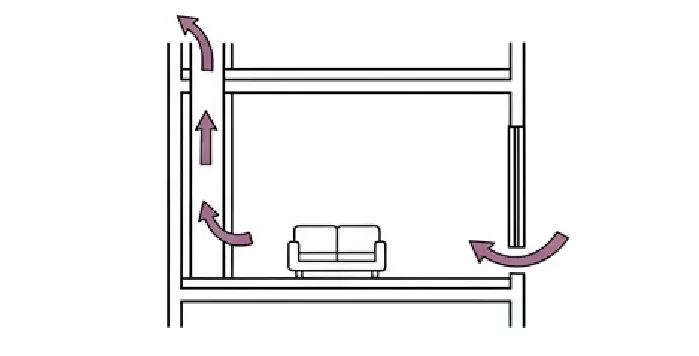
This is the ancestor of ventilation. It uses pipes that run through the building, up to the roof. Warm air, which is lighter, naturally rises and escapes, just like in a chimney.
- Strengths: No motor (completely silent), zero electrical consumption, minimal maintenance.
- Weaknesses: Efficiency varies depending on the wind, doesn't work well if the air outside is too hot, high levels of heat loss in the winter.
The hybrid alternative
To improve the weaknesses in System A, you can install a low-pressure extractor at the top of the natural pipes. This "hybrid" system is smart: If the weather conditions are enough to create a draught of air, the motor stays off. If there's no wind or it's too hot, the mechanical assistance kicks in. It's a great compromise for older buildings: You can keep the simplicity of the natural system, and benefit from the security of the mechanical one.
System B: Mechanical injection
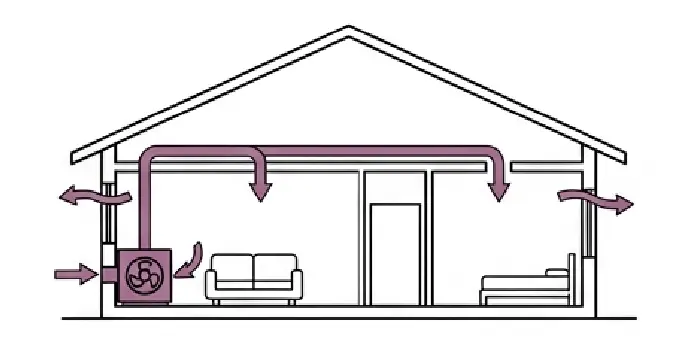
Unlike traditional CMV (System C), a motor takes air from outside, filters it and distributes it into each room through a network of hidden pipes. This then increases the pressure in the house, which forces the stale air to escape through the extraction outlets.
- Strengths: Air quality is controlled in each room, high-performance filtration.
- Weaknesses: Complex installation (network of ducts), draughts can be felt if the air is not preheated.
The MIV alternative
There is a simplified version of this concept: Mechanical Injection Ventilation (MIV). Unlike System B, with its full network, this one is "semi-centralised". Air is injected into a single, central point in the home (often a corridor). The pressure then naturally distributes this air into other rooms, which refreshes the air without installing pipes in all the ceilings.
System C: Single-flow controlled mechanical ventilation
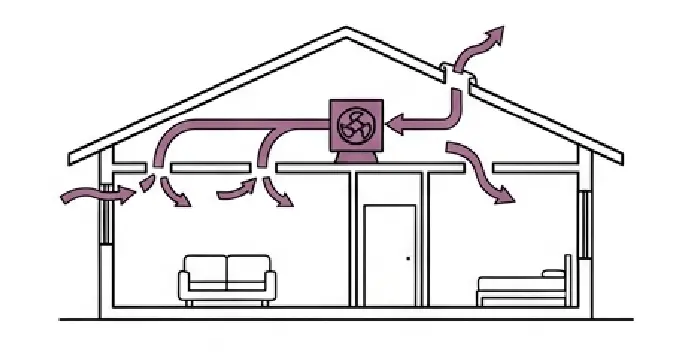
Single-flow CMV is the most widespread system in Europe. A motor extracts air from damp rooms (e.g. kitchen or bathroom), creating an area of low pressure that draws in fresh air through grilles in the windows.
- Strengths: Unbeatable price, very little maintenance, ideal for renovations.
- Weaknesses: Lets in cold air in winter, no filtration of outside air.
The "Hygro" option
To limit heat loss, there is a humidity sensitive, or "Hygro", version of this system available. Sensors measure the humidity level in each room, and the system only kicks in if you're cooking or taking a shower. The rest of the time, it reduces the flow rate to keep the heat in your house.
System D: Double-flow controlled mechanical ventilation
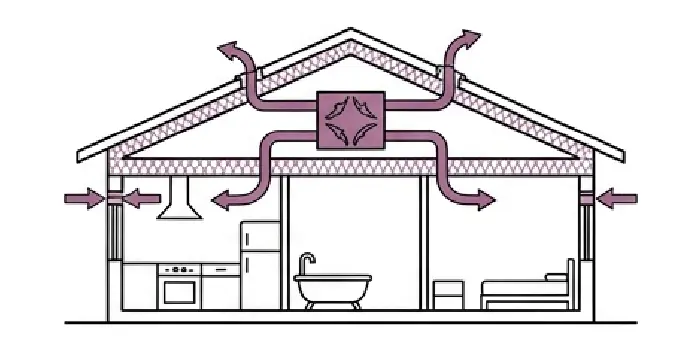
Double-flow CMV is the standard system for passive houses and energy-efficient constructions. This is the most efficient system. It causes the (warm) outgoing air to pass by the (cold) incoming air in a heat exchanger to recover the energy.
- Strengths: Exceptional levels of thermal comfort (no draughts of cold air), filtration of pollen, savings on heating costs.
- Weaknesses: High installation costs, cumbersome (double network), mandatory maintenance of filters every 6 months.
Decentralised systems
With these systems, there is no central motor, nor shared pipes. Each appliance is completely independent and is installed directly where it is needed.
Decentralised mechanical ventilation
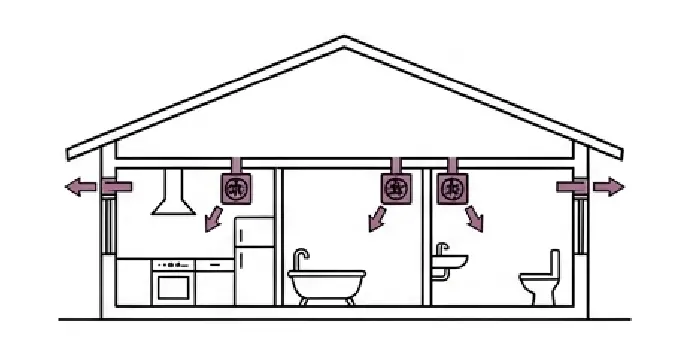
With DMV, individual extractors are installed directly in each damp room.
- Strengths: Ideal for refreshing the air in a single room (e.g. bathroom), very quick installation, no ducts to conceal.
- Weaknesses: Several small motors, external walls must be drilled through in several places.
Individual appliances (decentralised double flow)
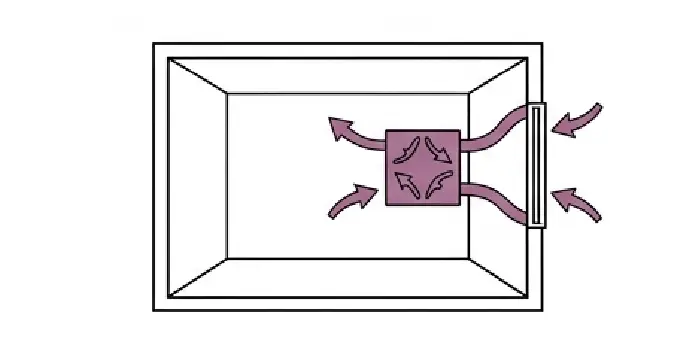
Small, wall-mounted blocks that include their own mini heat exchanger for a single room.
- Strengths: Allows you to benefit from a double flow without installing the full network.
- Weaknesses: Can be visually intrusive on the wall, relatively high cost per unit.
Impact on your bills
As well as on the air quality, your choice of ventilation system has a direct impact on your heating costs. To refresh the air in your home, you need to evacuate warm air to the outside. Your heating therefore has to offset this loss by reheating the fresh air entering the house. Your consumption will vary considerably depending on whether the system simply releases this heat, or whether it "captures" it in an exchange to warm up the new air.
What will definitely change?
- The traditional systems (A, B, C, DMV, MIV and hybrid) bring outdoor air in just as it is. If the temperature is 0°C outside, your heating will have to work hard to heat this air up to 20°C.
- Double flow systems (D and individual appliances) use a heat exchanger. The warm air leaving the house passes by the cold air entering the house (without mixing). The heat from the warm air is transferred to the cold air. So, the air entering the house is already warm, and your heating doesn't need to work as hard.
Comparison of thermal performance
| System | Savings on heating costs | Why? |
|---|---|---|
| System D/Individual appliances | 🟢 Maximum | Recover the heat from the outgoing air via a heat exchanger. |
| System C (hygro) | 🟡 High | Reduces extraction (and therefore loss) when the air is clean. |
| Hybrid ventilation | 🟡 High | Uses the natural system as a priority and minimises the mechanical flow rate. |
| MIV (injection) | 🟠 Moderate | Uses electricity to preheat the incoming air. |
| System C (traditional)/DMV | 🟠 Moderate | Constant extraction of warm air, even when not required. |
| System A or B | 🔴 Low | Lets in large amounts of uncontrolled cold air. |
Note on individual appliances: Although these operate in the same way as a System D, their overall impact on the bill will depend on the number of rooms fitted. If they are only installed in one room, losses will remain high throughout the rest of the home.
Ventilate to help your heating
We are often cautious of ventilating in winter for fear of "losing energy". However, humid air is much more difficult to heat than dry air, and requires a lot more energy! By extracting ambient humidity, your ventilation system helps your radiators to work more efficiently.
Which system should you choose?
Choosing the right ventilation system isn't just about your budget, it's also about the context. Here's how to divide up the options depending on your situation:
- You're completing a comprehensive renovation project or building a new house: System D (double flow) is the most profitable investment over the long term. It guarantees perfect airtightness and greater thermal comfort.
- You're renovating a modern apartment (1990s-2000s): If there are already ducts in the building, switching to humidity sensitive CMV (System C hygro) is the most cost-effective option to reduce your heat loss without involving major work.
- You're living in an old, damp house: MIV (injection) is your greatest ally. It can often be installed in just one day and "pushes" dampness outside your old walls while also filtering outdoor air.
- You're renovating a single room (e.g. a new bathroom): DMV or an individual extractor will do the job perfectly without having to drill through the ceilings throughout the house.
In summary: There are no "bad" systems, just systems that aren't well suited to their environment. Efficient ventilation ensures your house will last and keeps it healthy.
What if I don't have a system installed at all?
If your home doesn't have any mechanical assistance, the golden rule is to ventilate manually for 5 to 10 minutes, twice a day by opening your windows wide. This refreshes the air without cooling the wall structures (due to their "inertia"), thus avoiding condensation.