
Behind their gentle humming, your fridge and freezer are always on the go when it comes to energy use. And because they never stop, the slightest malfunction or bad habit can make your bills soar.
Running 24 hours a day, 365 days a year, your fridge and freezer can be some of the most energy-intensive appliances in your home. They alone can account for up to 15% of your electricity bill.
Even the smallest change in temperature can lead to immediate savings. With a few simple adjustments and a bit of common sense, it's completely possible to tame these cold giants and reduce their energy footprint.
The right location
It's all a question of the right neighbours. To keep things cold inside, your appliances need to release heat at the back.
- Keep them away from heat sources: avoid placing your fridge freezer or chest freezer next to the oven, dishwasher or a radiator. Just a 1°C rise in room temperature can increase energy use by 3%.
- Make sure the grille can breathe: the black grille at the back (the condenser) of the appliance needs air. Leave a 5 to 10 cm gap between it and the wall. For integrated models, check that the ventilation grilles are not obstructed.
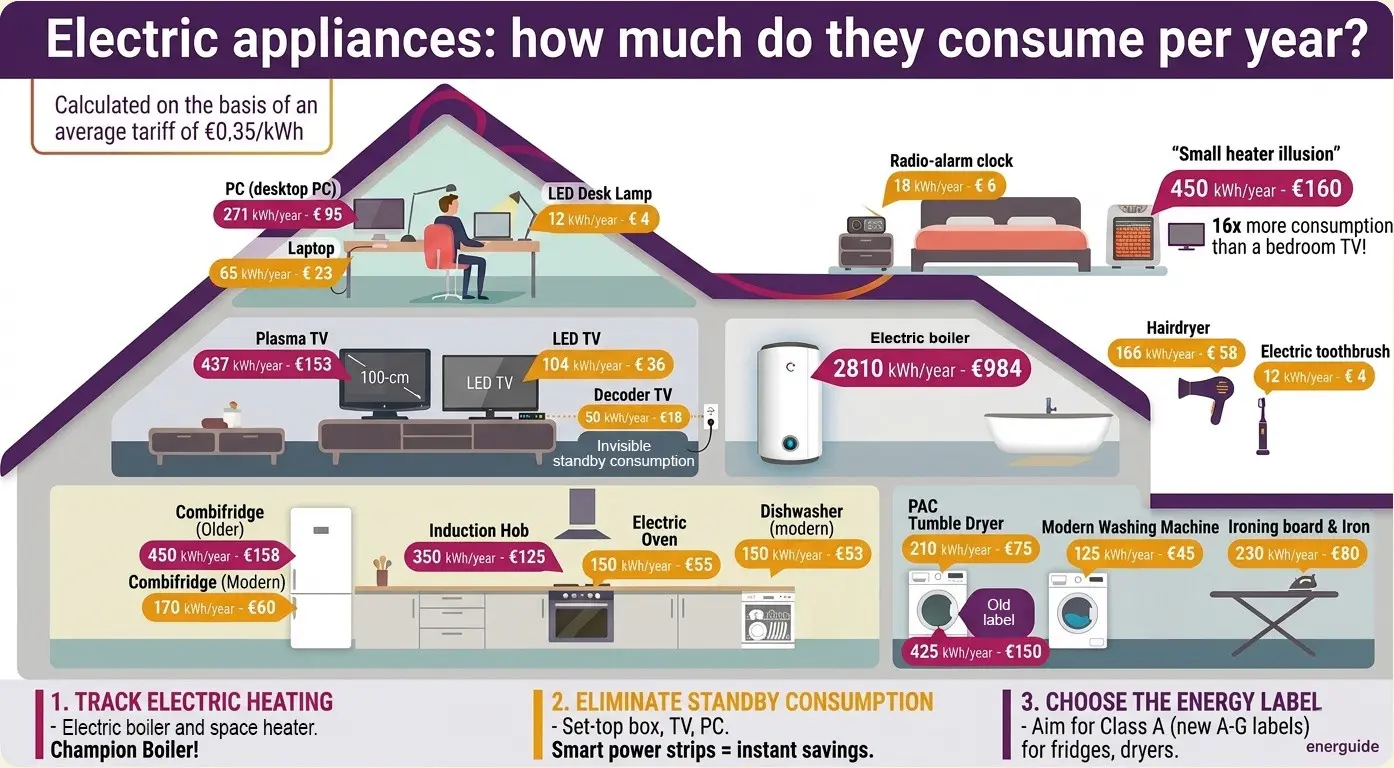
How much energy do my household appliances use?
Ready to cut energy costs? Power and usage time drive your bill. Discover the consumption of every household appliance with our handy guide.
The right room temperature
This is a key factor, but one that's often overlooked. Every appliance is designed to work in a specific temperature range, called the climate class.
| Class | Name | Optimal temperature range |
|---|---|---|
| SN | Subnormal | 10°C to 32°C |
| N | Normal | 16°C to 32°C |
| ST | Subtropical | 16°C to 38°C |
| T | Tropical | 16°C to 43°C |
- Why is this important? Using the right climate class helps prevent the motor from overworking (avoiding higher energy use or premature failure) and keeps your food safe.
- Where do I find it? It is included on the energy label when you purchase, but also on the rating plate inside the appliance (often behind the salad drawer in the fridge or on the inner wall of the freezer).
- The garage trap: if you place your N class freezer in an unheated garage where it is 5°C in winter, the appliance may struggle to regulate its temperature and allow the internal temperature to rise.
- The golden rule: position your fridge or freezer in a cool location, but never in a building where the temperature is lower than 10°C.
The right temperature setting
It's no good turning your fridge into an ice field or your freezer into the South Pole. Every degree lower than the recommended threshold can increase energy use by up to 5% depending on the type of appliance.
- Fridge: between +4°C and +5°C.
- Freezer: -18°C (there's no need to set it to -24°C, except for rapid freezing).
Glass of water test
For a fridge, place a thermometer in a glass of water in the middle of the appliance for 24 hours. For a freezer, place the thermometer between two bags of frozen vegetables.
The right maintenance
A properly maintained appliance uses less energy and will last longer.
- The war on frost: this is a key point for freezers. A 2 mm layer of frost can lead to around 10% higher energy use. Frost acts as an insulator, so the motor has to work harder to "push" the cold through this layer of ice.
- The door seal: a split door seal allows warm air and humidity (which creates ice) to enter the appliance.
- Remove dust from the grille: vacuuming the grille at the back once a year can reduce energy use by anywhere from 5 to 10% depending on how much dust there is. A clogged grille causes the motor to overwork.
The paper test
Tuck a sheet of paper in the door and close it. If you can pull the paper out easily, your door seal is worn and letting energy escape.
The right daily behaviours
Your behaviour directly influences the work of the compressor.
- Never put hot dishes in your fridge or freezer: wait until they have cooled to room temperature, otherwise your appliances will have to make a huge effort to offset this addition of heat.
- Fill intelligently: an empty freezer uses more energy! Why? Because every time it is opened, the cold air escapes. Frozen food already in the freezer helps retain the cold thanks to its ‘thermal inertia".
- Plan your meals: defrost your food in the fridge the day before. This will act like an "ice pack" helping your fridge to stay cold for free.
- Wrap food: keeping your food wrapped reduces the formation of ice and prevents food drying out.
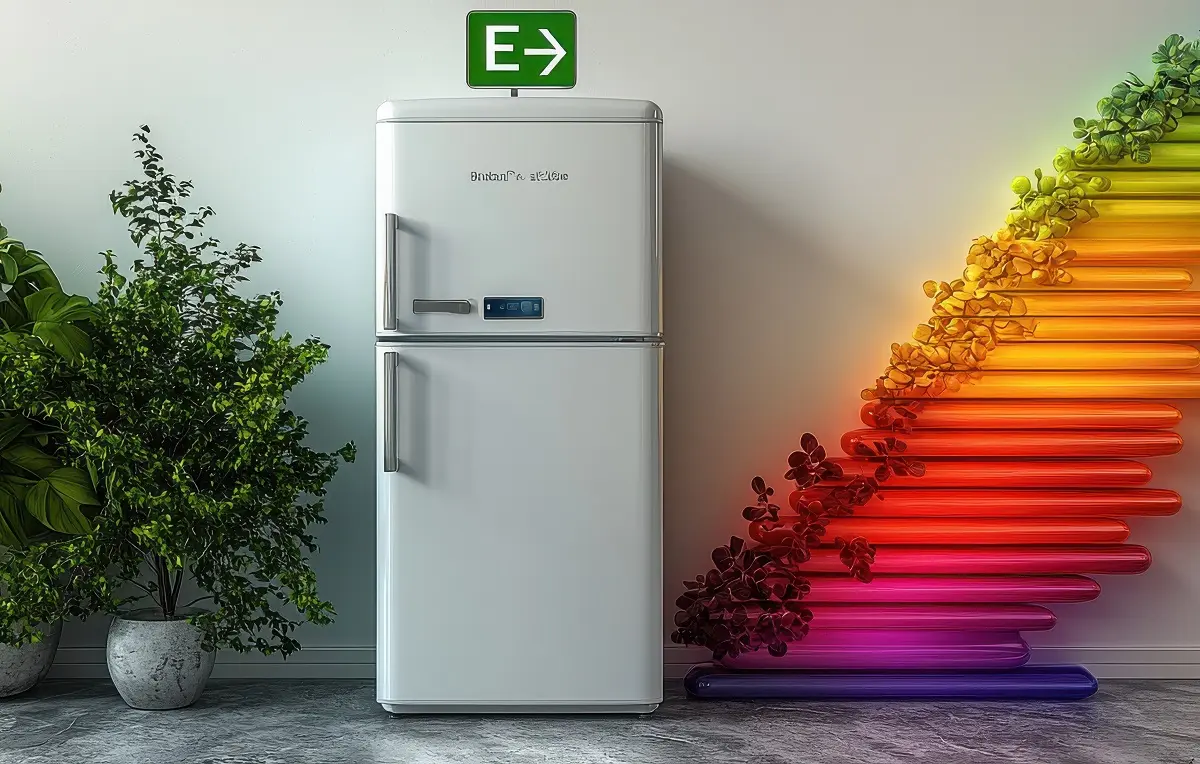
How to choose the right refrigerator and freezer?
When buying a refrigerator and/or freezer pick a size that fits your needs and check the energy label. Not too big, but definitely efficient.
The bottle trick
If your freezer is half empty, fill the spaces with 3/4 filled bottles of water or polystyrene blocks. This will limit the cold air loss when opening.