
Want to heat more sustainably and save on energy? In older homes, that's often challenging. A hybrid heat pump could be the solution.
Heating your home exclusively with a heat pump is only economically viable if your home is perfectly insulated. But not everyone has a new house or the means to carry out major renovations.
Have you already carried out some insulation works, but your home still does not meet the strict standards required for a pure electric heat pump? Installing a hybrid heat pump offers an affordable and more environmentally friendly alternative.
How does it work?
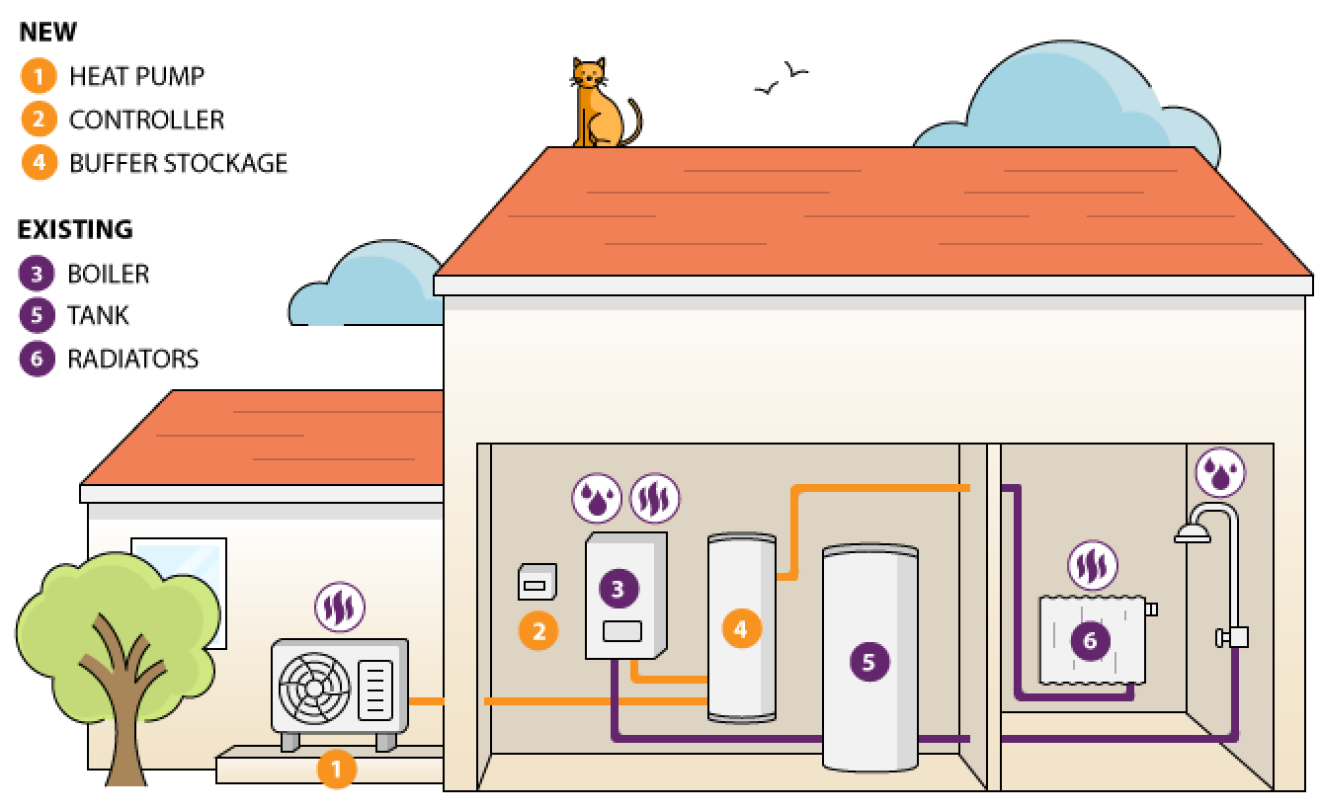
A hybrid system combines the best of both worlds: an electric heat pump and a conventional boiler. A smart control system automatically selects the most efficient heating mode.
In mild weather
- Only the electric heat pump runs.
- It extracts up to 75% free energy from outside air.
- Combined with solar panels, even 100% renewable energy.
In cold weather
- The gas boiler automatically kicks in or takes over.
- It provides sufficient heating when the heat pump becomes less efficient.
- Comfort guaranteed, even in freezing temperatures.
Upgrade or renovation?
There are two possible situations.
- Upgrade: your boiler still meets the latest standards. So you can opt for a hybrid system to supplement your existing installation.
- Renovation: if your boiler is outdated and needs replacing, this is the ideal opportunity to consider installing a complete hybrid system.
Advantages and disadvantages of hybrid systems
| PRO | CON |
|---|---|
Reasonable investment The major advantage of hybrid systems is they enable more sustainable heating at a lower investment cost. In many cases, it is possible to keep the existing heating system (boiler, pipes and radiators). Grants You can also qualify for grants for the installation of these systems. Energy efficiency Hybrid systems mainly use renewable energy, supplemented by fossil energy for peak loads. The cheapest energy source is always preferred, depending on the context. Thermal comfort As the boiler takes over when heating needs increase, you always have an ideal temperature. Even on cold winter days. Service life Alternating between the two systems extends their service life. Furthermore, if one of the systems fails, the other takes over. Scalability Hybrid systems can be connected to solar panels and are suitable for green gas, hydrogen or future investments such as better insulation.. | Maintenance The presence of two energy sources makes these systems more complex, which can result in higher maintenance costs. Required space Hybrid heat pumps require more space than conventional systems. Fossil fuels Dependence on fossil fuels persists. Noise The heat pump's outdoor unit can generate noise, which may disturb some users or neighbours. Electrical connection In some cases, the installation may require an upgrade of the home's electrical connection, resulting in additional costs. Return on investment The time required to recoup the initial investment is longer, depending on local energy rates and your potential for self-generation of electricity, for example via solar panels. |
Combined or separate system?
There are two types of hybrid systems:
- 2-in-1 systems: they combine a heat pump and a fuel-fired boiler in a single unit.
- Split systems: these consist of two separate units. A heat pump unit is placed alongside an existing or new boiler.
15 years to continue to make progress
Contrary to popular belief, you do not have to carry out a complete renovation to improve the energy efficiency of your home. In reality, every little bit counts.
Many households have already undertaken some works to improve their energy consumption, such as the insulation of the roof and ventilated spaces, or replacement of window frames.
In this case, adopting a hybrid system can be the next step towards a more sustainable home. It offers a 15-year period (the average service life of a boiler) to continue to make further progress towards carbon-neutral heating.
Mandatory in the Netherlands in 2026
In the Netherlands, from 2026, hybrid heat pumps will be the minimum standard for domestic heating. When replacing central heating systems, it will be mandatory to opt for a more sustainable alternative, such as a hybrid heat pump.
Brussels does not (yet) have this obligation, but follows the European trend towards more sustainable heating. The city has therefore developed a Climate Plan to become carbon neutral by 2050.
Conclusion
Despite some disadvantages, hybrid systems are an attractive option in many respects. They offer a good compromise between price, energy efficiency and thermal comfort.
Hybrid systems provide a basis for greater energy savings and environmental friendliness in the future. By further insulating your home, you will be able to, for example, run the heat pump more often, and save money in the process.
Additionally, hybrid systems contribute to the 2050 climate goals, with lower CO₂ emissions and a solution that fits the limitations of older buildings.
Can a geothermal heat pump work for city homes?
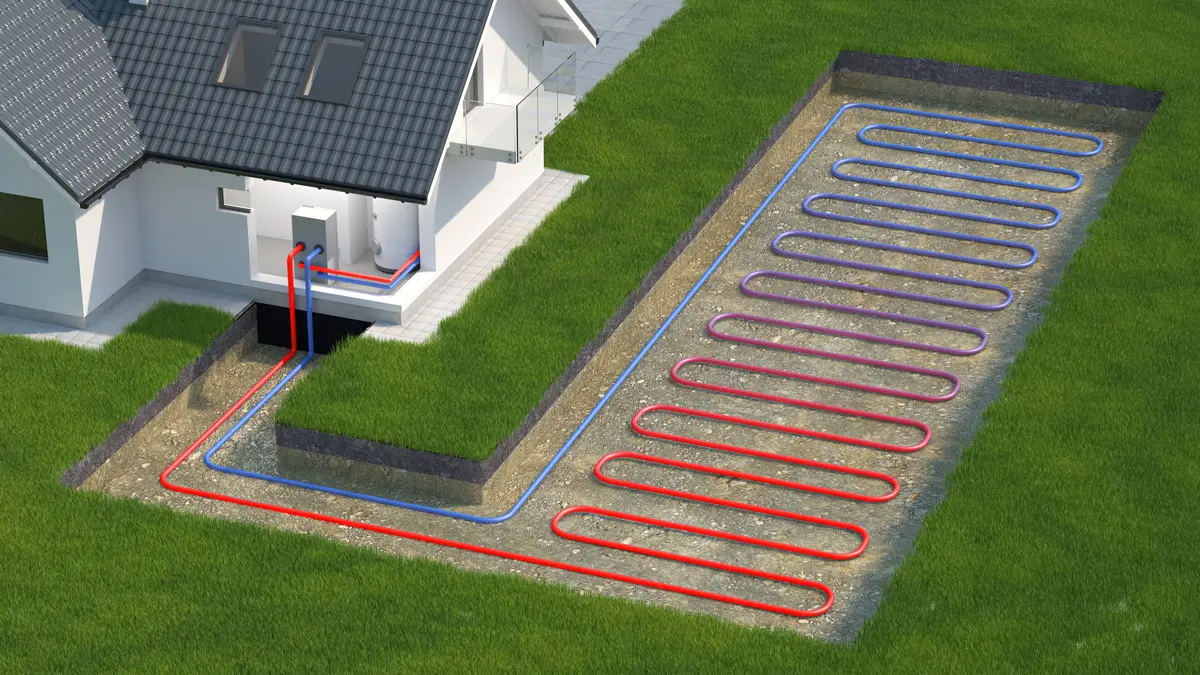
Geothermal energy can be an excellent option for more sustainable heating in the city, provided you have the required budget and sufficient outdoor space.