
Heat exchangers are all around you, often without you even noticing: in your heating system, your car’s radiator, and even in your fridge. But how do they actually work?
The name is misleading: a heat exchanger doesn’t actually 'exchange' heat, but transfers it between 2 fluids or gases at different temperatures without these ever coming into contact with each other.
A heat exchanger can either heat up or cool down fluids – depending on the system. Think of your air conditioner or refrigerator.
How it works
1. Separate circuits
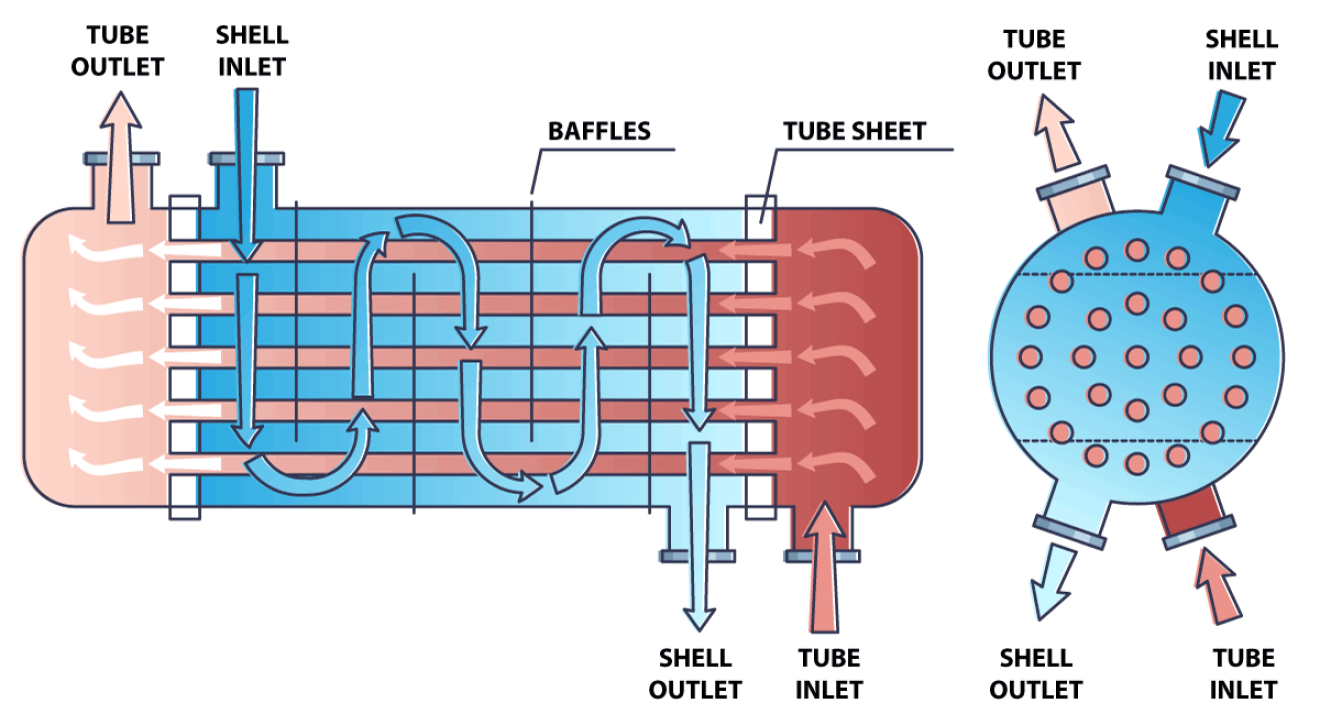
A heat exchanger has 2 separate circuits, divided by a conductive wall. This allows different fluids (water, a heat-conducting liquid, air, oil, or steam) to transfer heat efficiently without mixing.
2. Heat exchange
The hot fluid flows through one circuit, the cold fluid through the other. Due to the temperature difference, heat naturally moves from hot to cold across the dividing wall, following the laws of thermodynamics.
3. Optimal transfer
The design of the heat exchanger ensures maximum efficiency. This involves:
- The choice of conductive materials (often copper, stainless steel, aluminum, or steel).
- The flow configuration (counterflow, parallel flow, or crossflow).
- Maximizing the exchange surface area.
‘Efficiency’ vs ‘performance’
Do not confuse efficiency with the performance of a heat exchanger.
- Efficiency measures its power compared to an ideal heat exchanger.
- Performance is the ratio between the power actually transmitted and the power that would be transmitted without heat loss.
In practice, even if an exchanger suffers losses, they are often negligible. Performance of close to 100% is generally assumed. All the energy of the hot fluid is transferred to the cold fluid.
The 3 most common types of heat exchangers
There are several types of heat exchanger, each suited to specific needs. The most common types are plate, tubular and finned heat exchangers Each type offers advantages in terms of efficiency, compactness and ease of maintenance.
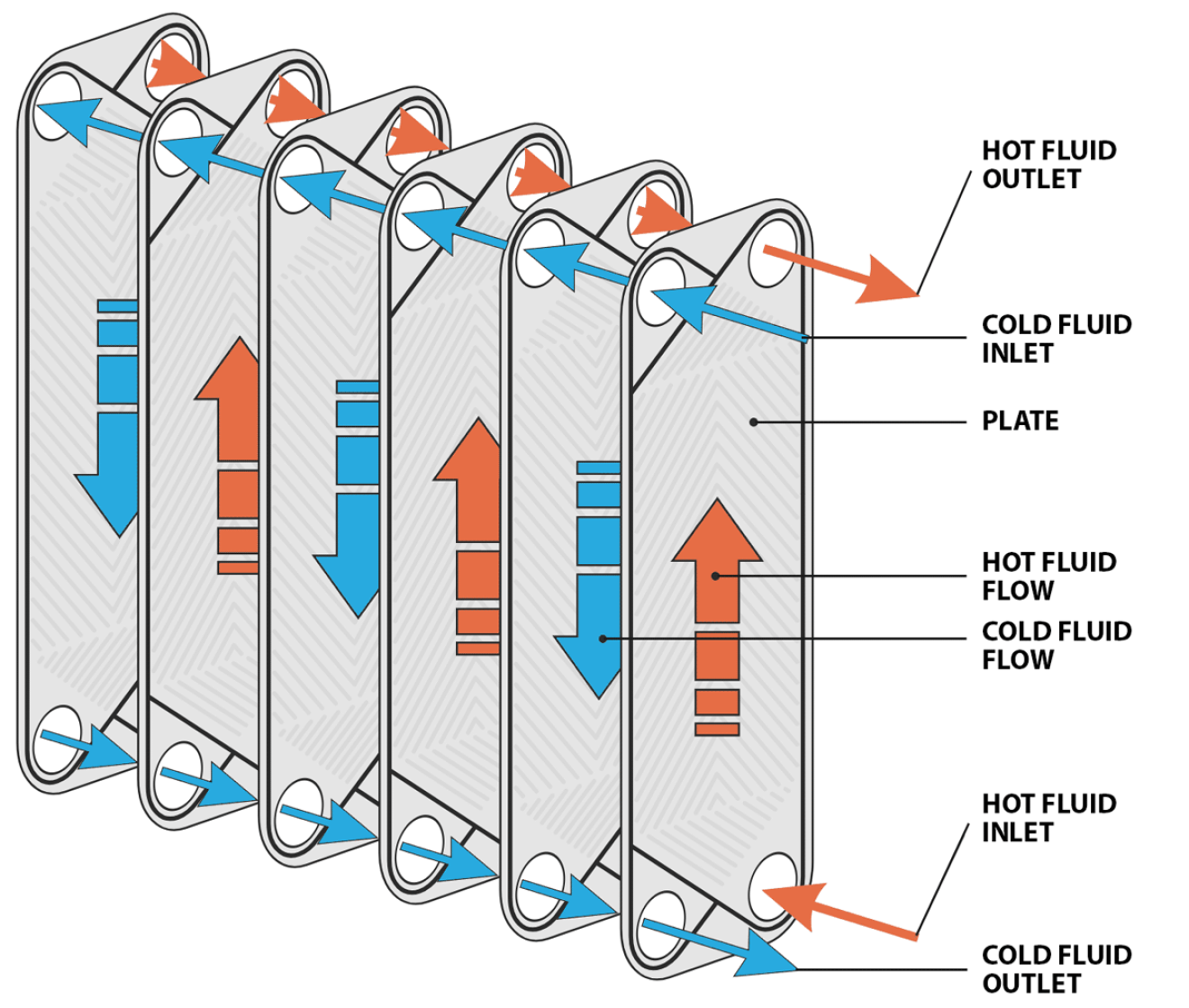
Plate heat exchanger
Composed of thin stacked plates, it offers a large heat exchange surface and excellent thermal efficiency. It is often found in heat pumps for example.
Tubular heat exchanger
This type of exchanger uses fins to increase the exchange surface. The cooling fluid is usually ambient air, as in vehicle radiators or computers.
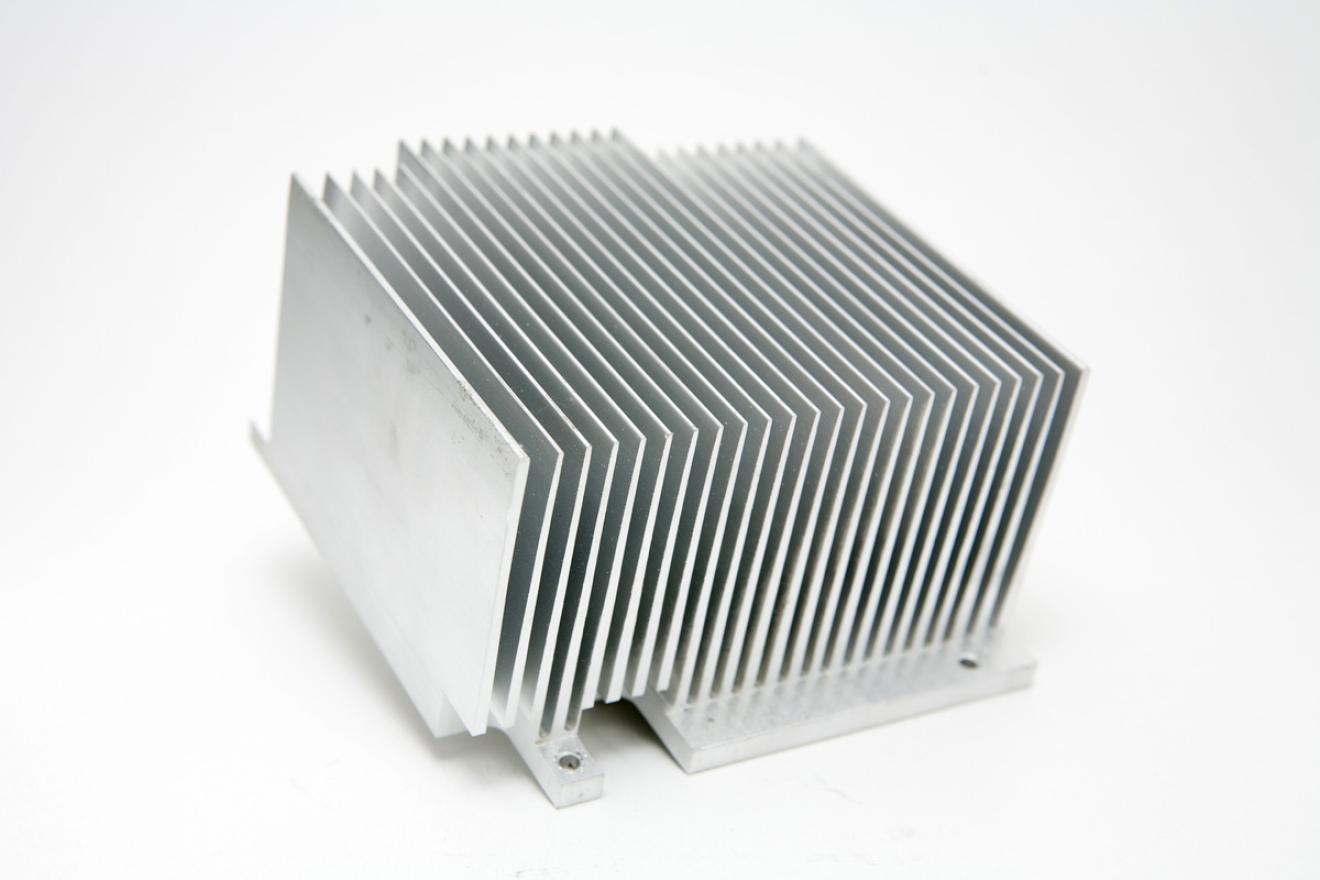
Finned heat exchanger
This type of exchanger uses fins to increase the exchange surface. The cooling fluid is usually ambient air, as in vehicle radiators or computers.
Other heat exchangers
There are many other types of heat exchangers, such as:
- spiral exchangers for industrial use;
- coil exchangers for hot water tanks;
- rotary exchangers for heat recovery in ventilation systems.
From home to industry
Heat exchangers are found just about everywhere. They’re used in devices that keep you comfortable at home, as well as in machines that make industrial processes more efficient. Here are a few key applications where heat exchangers play a vital role:
- Heating: they warm the air and produce domestic hot water by recovering heat from heating systems.
- Cooling: they ensure air conditioners, cooling systems, and heat pumps work properly.
- Automotive: they cool down engine fluids like coolant and oil to keep the motor running smoothly.
- Power plants: they efficiently convert thermal energy into electricity.
- Industry: they optimize production processes, recover heat that would otherwise be lost, and lead to significant energy savings.
Crucial for a sustainable future
As the energy transition progresses, heat exchangers are becoming increasingly important. They recover heat that would otherwise be lost — resulting in significant energy savings.
Innovation in this field remains essential for the development of sustainable and environmentally friendly technologies.