Choosing an installer is an essential part of making your solar energy project a success. Indeed, it's not simply a matter of installing panels on a roof. There are various technical and regulatory steps.
Choosing a competent installer ensures that your solar panels are correctly positioned to maximise their energy efficiency. What's more, a good installer will know how to navigate the various local regulations to ensure your installation is compliant.
Investing in a qualified professional is therefore essential not only to optimise the energy yield of your installation, but also to ensure compliance with safety standards.
9 tips for choosing an installer
Don’t settle for the first quote. Compare at least 2 installers and look beyond price. Check their service, warranty, and reliability. Our checklist can help you make the right choice:
About the installer
- Analyses your energy needs and sizes your system correctly.
- Has proven experience, with reference clients you can contact.
- Holds recognized certifications and qualifications.
- Preferably a local expert—so you get faster support and knowledge of regional rules.
About the offer
- Transparent quote, no hidden costs.
- Administrative procedures included.
- Realistic installation time: usually 1 to 4 days.
- Warranty on panels, inverter, and labor (20–25 years).
- Panels are Synergrid-approved and from reputable brands.
How to find a certified installer?
A RESCERT-certified installer is a safe choice. This Belgian certification guarantees expertise through a uniform training system valid in all three regions. Extra labels like Solar PV offer even more assurance. That way, you can invest in solar energy with peace of mind.
What does an installer actually do?
1. Calculate profitability
The installer starts with a yield calculation based on your consumption, roof orientation, and available space.
In Brussels, you typically earn back your investment in about 7 years, thanks to green energy certificates. Want to check yourself? Use the Leefmilieu Brussel solar map or Brugel’s PVcalc tool.
Smart insight into your consumption
Most installations already measure the total production of your solar panels. But monitoring your consumption and injection is also important to get a grip on your energy costs. With smart tools, you can see your daily consumption, usage per appliance, and even standby consumption.
2. Installation and connection
Installation includes the fitting of the panels and an inverter, and takes between 1 and 4 days on average. The function of the inverter is to transform the direct current captured by your panels into alternating current, the same type of current supplied by the grid. The installer will also connect your generation system to the distribution grid.
3. Green meter installation
In Brussels, the installer adds a green meter to register all solar energy produced. Every three months, you submit the meter reading on Sibelga’s Green Meter platform to qualify for green certificates.
4. Administrative support
In Brussels, several requirements apply when installing solar panels:
- You need a smart meter.
- A conformity certificate for both panels and electrical installation.
- Declare your installation to the grid operator (Sibelga) within 30 days of commissioning.
- The green meter must be inspected by a certified body appointed by Brugel.
A good installer guides you through all these steps.
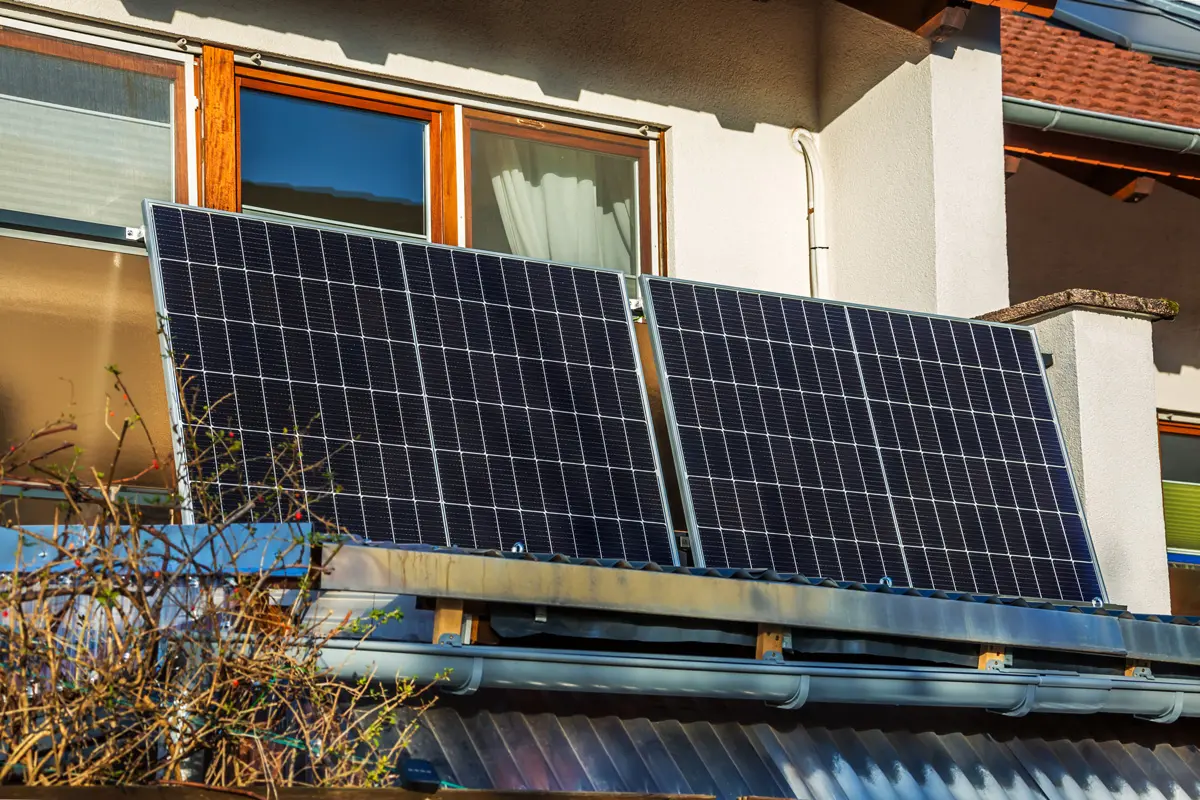
Are plug & play solar panels worth considering?
Plug-and-play devices or balcony solar panels offer a practical and affordable alternative for anyone who wants to get started with solar energy.
5. Maintenance and warranty
Your installer must be able to guarantee that your panels and the inverter will function properly for 20 to 25 years. They also have to explain how you maintain your system and what to do if there are any issues. Solar panels generally have a lifespan of 30 years.