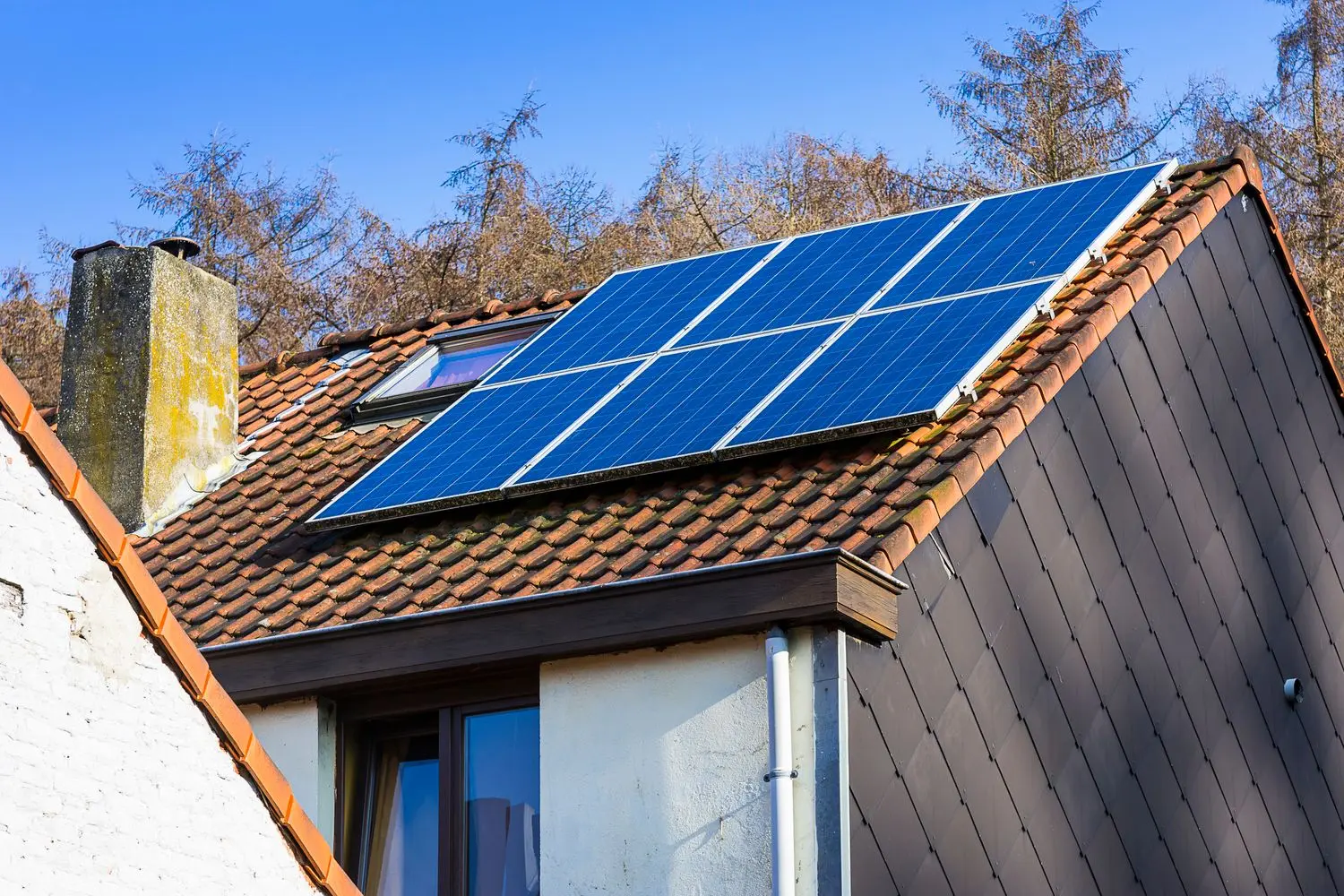
For your panels to make a real difference, generation isn’t enough: it’s all about the timing. By aligning your consumption with your output, you can truly change the game. Ready to rethink your habits?
Consume immediately
It's best to use the electricity your solar panels generate immediately. Why? It's simple maths:
- Consume immediately = free. Every kWh that goes directly from your roof to your dishwasher or e-bike is free (apart from your installation costs).
- Feed-in = loss. For every kWh you feed into the grid, you get about 5 cents. But do you need that same kWh again in the evening? Then you buy it back for about 34 cents.
The result: every kWh you don't use immediately actually costs you 29 cents. By planning your consumption wisely, you aren't just saving money: you’re also reducing your ecological footprint and helping to maintain the stability of the power grid.
A cost-saving tip
To cut your bills, try splitting your panels between east and west rather than putting everything on the south. By avoiding that unnecessary midday spike, you’ll generate electricity from your morning coffee right through to dinner. This way, you’re using your own energy exactly when you’d otherwise be buying it at peak prices.
Consume during the day
Your panels produce electricity when the sun is shining, i.e. during the day. Let go of the old reflex of consuming mainly at night and turn on your appliances when you are producing. Make sure there is enough sun that day. On cloudy days, this is less interesting.
Which appliances should you switch on when your panels are generating electricity?
- Large appliances: such as washing machines, tumble dryers or dishwashers.
- Electric vehicles: charge an electric bicycle or electric car.
- Garden equipments: use an electric lawnmower instead of a petrol model.
- Kitchen appliances: switch to an electric cooker instead of gas.
- Your water heater: let your electric boiler heat up.
When do my solar panels produce the most?
Do your panels really produce more in summer? From rain and snow to heatwaves, discover the real impact on your system.
Consume even smarter with an EMS
Consuming during the day is an excellent start, but the sun does not always shine constantly. An Energy Management System (EMS) does the thinking for you. It measures exactly how much power you generate and activates your appliances as soon as sufficient energy is available. For example, your electric car will automatically charge at the most favourable time. Efficient and completely carefree.
Store energy in a home battery
Have you already optimised your consumption, yet your panels still produce more than you need during the day? A home battery could be an option. It allows you to store excess solar energy and use it later, for instance in the evening or at night
This way, you become even less dependent on the grid and increase your self-consumption. Combine it with a smart control system to use it at the best time, when grid electricity is at its most expensive.
Not just with solar panels
A home battery can also be interesting in combination with a dynamic rate. If you have such a contract, charge your battery when energy is cheaper. You can then use that stored energy during more expensive peak hours. Sometimes you can even get paid to charge your battery!
Feed into the grid
If you cannot consume all the electricity immediately or store it in a battery, you can also feed it back into the grid.
Please note: You will receive much less for the electricity you inject into the grid than what you pay for the electricity you purchase.
In Brussels and Flanders
If you live in Brussels or Flanders, your smart meter continuously measures the energy taken from the grid and the energy injected into the grid. The only way to capitalise on your surplus electricity is to sell it to an energy supplier.
In Wallonia
If you live in Wallonia, you can still benefit from the 'reverse meter' system, provided your installation was commissioned before 31 December 2023. For these installations, the system will disappear at the end of 2030.
For installations completed after 31 December 2023, you can sell the electricity you produce to an energy supplier, just like in Flanders and Brussels.
What’s the return?
Not much. The fees for injected electricity range from 2.3 to 5.9 euro cents per kWh, depending on your energy supplier and contract. To receive an injection fee, you must have a digital meter. In Brussels, you currently receive green energy certificates on top of your injection fee.

How many green certificates am I entitled to?
Share your energy!
Did you know that in Brussels you don't always have to inject your surplus energy into the grid? You can also share it. This is often more advantageous than standard injection rates. This way, you and your neighbours can get more out of your solar panels!