
In the past, electricity was a given; a few large power stations simply adjusted to meet our needs. Today, the landscape has changed. With the rise of solar panels and new uses such as electric cars, the grid has to juggle fluctuating generation and unpredictable demand. In this context, keeping the electricity grid in balance has become a daily challenge.
The electricity grid operates like a ‘just-in-time’ system. Every electron consumed in your kitchen must have been generated at the same time somewhere else.
This is what is known as the balance between supply and demand. If this balance is disrupted, a blackout is guaranteed.
50 Hertz: the ‘heartbeat’ of the grid
To understand how this balance is measured, imagine that the European electricity grid is a huge machine whose engine has to run at a perfectly constant speed.
This speed is what technicians call the frequency, and it is measured in Hertz (Hz). In Europe, it is set at 50 Hertz.
Why is this important?
If we stray too far from this figure of 50, the safety systems of power stations are automatically triggered.
If multiple power stations shut down at the same time, the grid may become unbalanced. This is when the risk of a general blackout occurs.
- If we generate too much energy relative to what we consume, the grid’s ‘engine’ races and the frequency rises. As power stations are designed to operate within a certain frequency range, there is a risk that they will disconnect from the grid, much like the inverters on your solar panels ‘tripping’ when too much energy is fed into your local grid.
- If we consume too much relative to what is generated, the engine strains, slows down, and the frequency drops. In the event of a sharp and sustained drop in frequency, typically below around 49 Hz, load shedding plans may be activated as a last resort to prevent a blackout.
A balancing act for our appliances
Most of our appliances – from the motor in your fridge to the timer in your oven – have been designed to operate at this frequency of 50 hertz. In the event of an extended period of low frequency, certain devices may overheat and, eventually, burn out components.
How can we maintain a balance?
Keeping this constant balancing act going relies on rigorous organisation managed by Elia. The operator of the high-voltage grid monitors frequency stability 24/7. To achieve this, various measures are implemented depending on the urgency:
Adjusting generation, imports and exports
This is the first lever. If demand rises or falls, Elia or the energy producers can:
- Increase generation: By activating reserve power stations (often gas-fired, as they start up quickly).
- Import or export: The Belgian grid is interconnected with our European neighbours. We can purchase energy from France or Germany in a matter of seconds to make up for a shortfall.
Making use of flexibility
When generation cannot be adjusted, we look at demand. This is known as flexibility: we no longer ask generation to meet consumption, but the other way round.
- ‘Active’ flexibility: BRPs (accountants) anticipate demand, whilst FSPs (firefighters) ask large factories to reduce their consumption or use giant batteries to feed energy back into the grid.
- ‘Rate‘ flexibility: This affects us all. Dual hourly rates (peak/off-peak) or dynamic rate encourage us to shift our usage patterns. If the sun is shining and the wind is blowing, prices plummet (they can even go into negative territory!): this is the perfect signal to consume.
The last resort: load shedding
If, despite all these measures, the frequency drops dangerously low, Elia has to take a radical decision to avoid a blackout: activate a load shedding plan. Electricity is then deliberately cut off in certain geographical areas to relieve the grid and save the rest of the national system.
The smart meter: the eyes of the grid
Thanks to the smart meter, energy flows can be analysed in real time at a local level, and billing based on exact consumption times is possible. Want to take advantage of dynamic rates? Want to measure exactly how much impact our behaviour has on the grid? It’s impossible without a smart meter!
Ever more dynamic rates
The former ‘day/night’ rates are being phased out. In Wallonia, tariffs are already encouraging consumption during the middle of the day. Brussels will soon follow suit. In Flanders, the ‘capacity tariff’ encourages responsible consumption regarding power peaks. The aim: to smooth out demand so as not to overload the cables in your street.
Tailoring your setup to your needs
There is a strong temptation to install oversized systems (too many solar panels or a huge home battery). However, the key to balancing is all about the measures.
Over-sizing your system is expensive and can overload your local neighbourhood grid. To make a real difference, start by ensuring your system is sized to match your actual needs. Then try to shift your high-consumption activities, such as running the dishwasher or charging your car, to off-peak hours. By spreading your usage in this way, you play a key role in maintaining the grid’s balance.
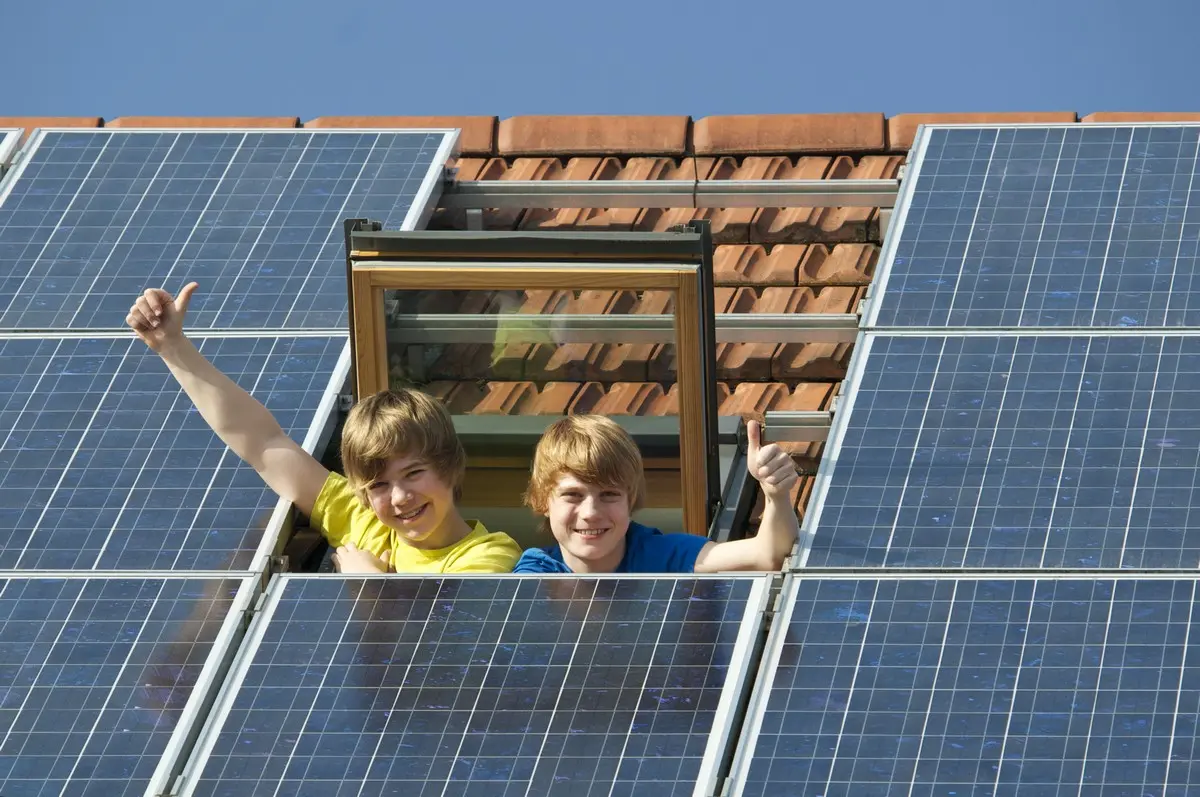
How to make the most of my solar panels?
It’s not just about generating power, but also about consuming it smartly. Discover how to perfectly match your consumption to your own output.
A collective challenge
Grid balancing is no longer just a matter for engineers. We all have a role to play, and it starts at home.
The future lies not in total energy self-sufficiency, but in smarter, more collaborative consumption. By adapting our behaviour — such as charging our cars when renewable energy production is at its peak — we become contributors to a more stable and sustainable grid.
It is together, through small, flexible adjustments, that we will ensure a secure energy future for all.