An electric water heater keeps water hot around the clock. With a timer, you decide when it heats up. At times when electricity is cheaper or your solar panels are generating. But is it really worth it, and for whom?
When does it pay off
A modern water heater is well insulated, which means it uses relatively little energy to keep water at temperature continuously. By limiting the heating periods, you can save a few kWh, but don't expect spectacular savings.
The real drawback is comfort: you only have hot water if the heater has run recently. Whether that's a problem depends on three things:
- The volume of your tank
a small tank empties faster. - How many people shower at home, and when
a family that all shower in the morning needs more hot water than a couple who shower in the evening. - Your hot water use during the day
baths, dishwashers using hot water, long showers: it all adds up quickly.
You can programme additional time slots (e.g. morning and midday) to maintain your comfort.
Legionella warning: don't set your water heater too low (minimum 55–60°C) and heat it to at least 60°C at least once a week to prevent bacterial growth.
Solar panels? Definitely
Do you have solar panels? A timer is one of the simplest ways to use more of your own electricity. Set the heater to run around midday, when your panels are producing at full capacity.
Do you already have a smart meter (and therefore no backwards-spinning meter)? Then it's financially more advantageous to use your own electricity immediately. Electricity you feed back into the grid earns you less than what you pay to draw it back in the evening.
You'll also be helping to reduce pressure on the electricity grid: by consuming when production is high (sun at midday, wind at night), you ease demand during peak periods.
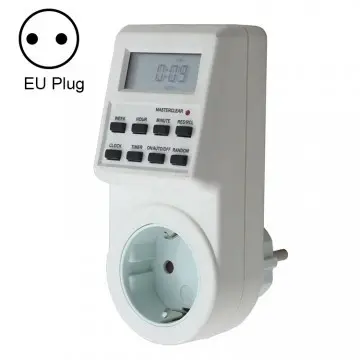
Smart plugs or an energy management system (EMS) can automatically link the heater to your solar production or dynamic pricing. This is more flexible than fixed time slots.
Day/night tariff
Do you have a dual-rate meter? It may be worth letting the heater warm up at night, when the cheaper night tariff applies. The price difference between day and night has narrowed in Belgium, however, so the savings remain limited.
Do you have a dynamic tariff? In that case, a standard timer is less suitable. Prices vary every hour, and a smart energy management system follows those fluctuations automatically.
Keep comfort in mind too: if you need a lot of hot water in the morning, the volume heated overnight may not be enough.
Choose the right timer
An electric water heater draws a lot of power: expect 2,000 to 3,000 watts. Not every timer is rated for this. An underpowered timer is a fire hazard. Check the packaging for the maximum permissible current in amperes (A).
Work out for yourself whether it's sufficient:
- heater wattage ÷ voltage = minimum current required
- Example: 3,000W heater at 230V:
- 3,000 ÷ 230 = 13A
Your timer must therefore be rated above 13A. If in doubt, choose a model with some margin. Also check that the socket and wiring have sufficient capacity (no old or loose connections).
Install it: DIY or electrician
- Water heater with a standard plug (single-phase): if your water heater has a standard earthed plug, installation is straightforward. Plug the timer into the socket and connect the heater to it. This takes just a few minutes to do yourself.
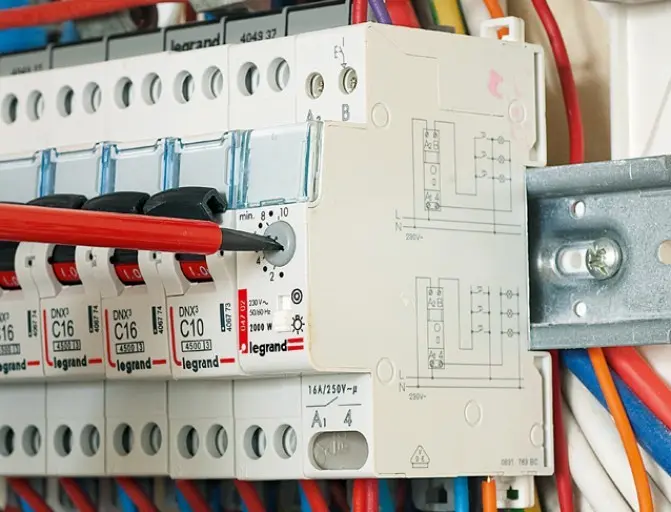
- Water heater without a plug (often three-phase): if your water heater is connected directly to the fuse box via a fixed cable, you'll need specialist knowledge. Under the AREI electrical regulations, this type of work must be carried out by a qualified person and an inspection may be required. Call in a certified electrician — it's the safer option.
Frequently Asked Questions
How much can I save with a timer?
It depends on your situation.
- With solar panels, savings can amount to several tens of euros per year, as you replace expensive grid electricity with your own free production.
- With only a day/night tariff and no solar panels, the gain remains limited, often less than €30 per year.
Can I save energy without solar panels or a day/night tariff?
Yes, but the savings are minimal. A well-insulated tank loses little heat, so there's little to gain from limiting the heating periods. In that case, a timer is more of a comfort option than a genuine energy-saving measure.
Is my installation safe for a timer?
Check three things before connecting a timer.
- First, look at the rating plate on your water heater to find the wattage, then calculate the minimum amperage: 3,000W ÷ 230V = 13A. Your timer should be rated well above this. A 16A model is a safe choice for most water heaters.
- Next, check that the circuit breaker in your fuse box is rated at least 16A, as this determines how much the entire circuit can handle.
- Finally, check that your socket is firmly in place and in good condition. Loose or ageing contacts are a risk when dealing with high-powered appliances.
Not sure about any of these three points? Have a certified electrician check everything before you install the timer.