
Many homes are heated with radiators or convectors—but what’s the actual difference? And which system is more energy‑efficient and sustainable?
How does a radiator work?
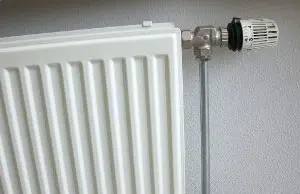
A radiator is connected to your heating system or heat pump. Hot water flows from top to bottom through steel, aluminium, or cast‑iron sections, which warm the surrounding air. A radiator delivers heat through:
- radiant heat: the panels give off warmth directly
- convective heat: warm air rises, pulling cooler air toward the radiator
How does a convector work?

In a convector, hot water flows through a tube surrounded by thin metal fins. These fins form a heat exchanger, increasing the contact surface with the air and speeding up heat transfer.
As with a radiator, warm air rises and draws cooler air toward the unit. Some models include a fan to boost this airflow.
A convector heats mainly through convection.
Convection vs. radiation
Heating systems use either convection or radiant heat. Each type influences comfort and efficiency differently.
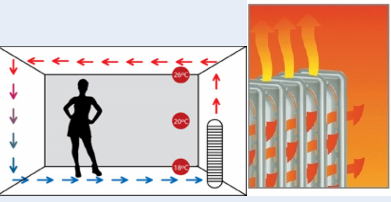 Convective heat rises to the ceiling, cools down, and sinks again.
| 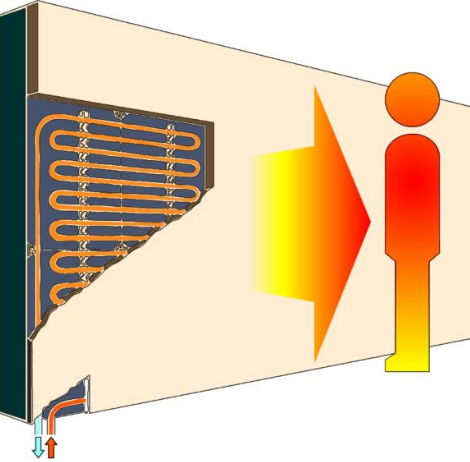 Radiant heat travels in straight lines and warms people and objects directly. Temperatures remain more stable, independent of air movement. This creates a comfortable feeling even at a lower air temperature, helping you save energy. |
Comparison table
To choose between a radiator and a convector, it helps to understand their key differences. Here is a clear overview:
Radiator | Convector |
|---|---|
| Takes longer to heat up but stays warm longer | Heats up quickly but cools down fast |
| Takes wall space | Can be more compact for aesthetic reasons |
| Visible in the interior but multifunctional (e.g. drying towels) | More discreet, also ideal near large windows |
| Higher surface temperature | Lower surface temperature, safer for children |
| Suitable for low‑temperature systems if large enough | Works at low temperature, but less efficient without a fan |
| Longer lifespan | Shorter lifespan |
| Cheaper to buy | More expensive |
| Uses more energy on average | Up to 10% less energy thanks to fast heating and little residual heat |
Which option is more energy‑efficient and sustainable?
Smart heating choices help reduce both your energy bill and your environmental impact.
A convector uses up to 10% less energy because it heats quickly and has almost no residual heat. Ideal for rooms you heat briefly, like hallways or a home office used only a few hours a day.
A radiator performs better in rooms where you spend more time. Radiant heat provides comfort at a lower temperature, saving energy indirectly. Radiators also last longer, lowering their ecological footprint over time.
Choose sustainable warmth
Whether you use radiators or convectors, the real impact comes from your overall heating system:
- the insulation quality of your home
- whether you use a heat pump or boiler
- running your system at low temperature
- how you set your thermostat
FAQ
Are radiators and convectors compatible with a heat pump?
Yes, but with an important nuance. Heat pumps work most efficiently at low water temperatures (30–45°C), while traditional radiators and convectors are designed for much higher temperatures (70–90°C).
For use with a heat pump, larger radiators or underfloor heating are often the better choice. Some convectors are specifically designed for low‑temperature systems; it’s best to check this when purchasing.
Do I have full freedom of choice in an apartment building?
Not always.In an apartment building, what you can choose depends on how the heating system is organised.
- With central (collective) heating, the co‑owners decide together. You can’t simply install a different heating system or change components, because this can affect the entire building. Always contact the building manager or check the co‑ownership rules first.
- If you are a tenant, make sure to check your rental contract — it often specifies what you are allowed to modify.
- In Brussels, additional rules apply regarding individual heat meters and heat cost allocation, which can influence your choice or the installation of certain appliances.
Tip: when in doubt, always ask what is allowed — it prevents problems later on.
Can you combine radiators and convectors in the same home?
Yes, absolutely.
Many homes use a mix of systems, depending on the function of each room. Radiators are often installed in living spaces for steady, comfortable warmth, while convectors are useful near large windows or in rooms that need to heat up quickly.
As long as the overall heating system is properly coordinated, both types work perfectly well together — even in low‑temperature setups.