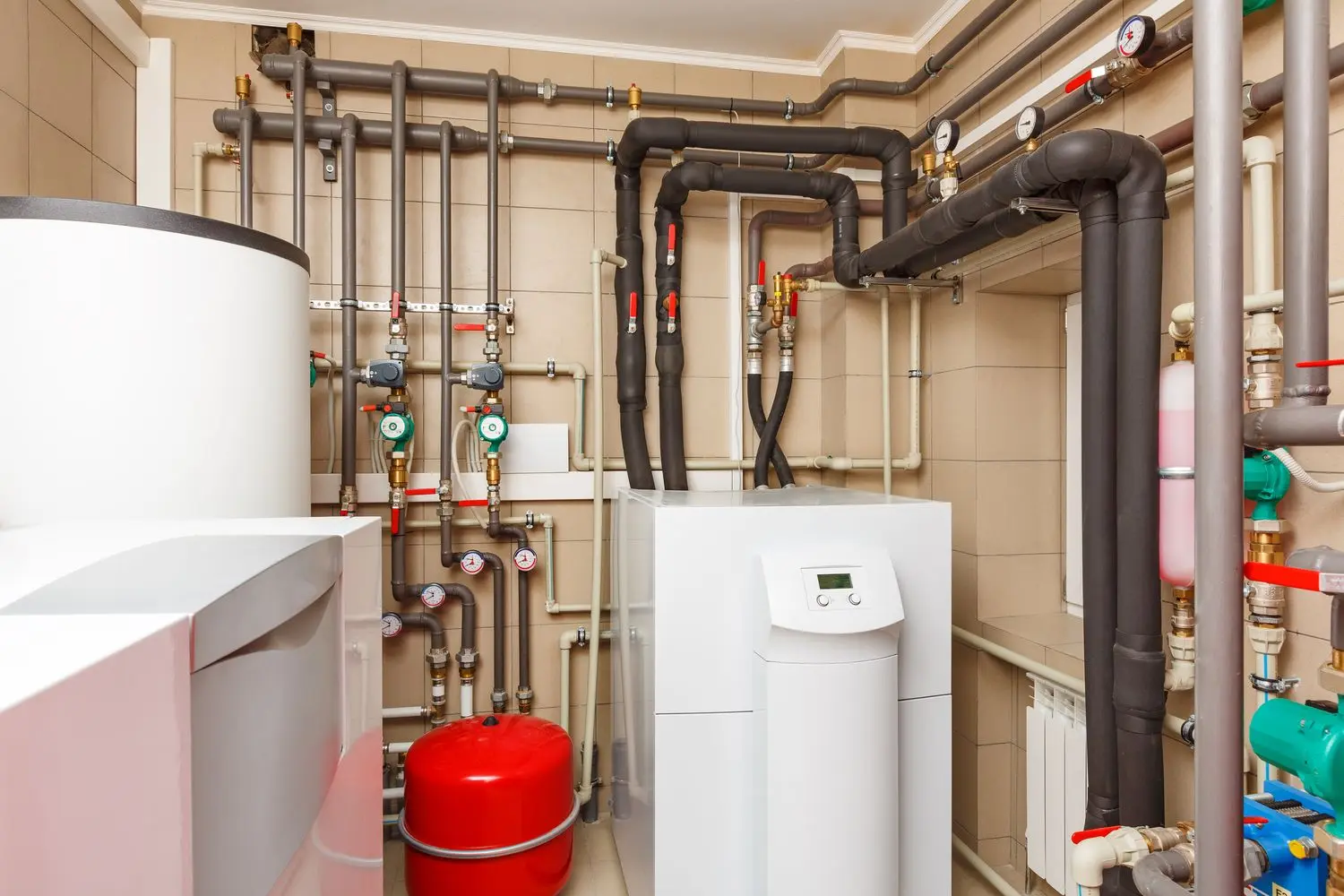
A heat pump is a cost-effective alternative to a traditional boiler. This technology draws up to 75% of the energy needed for a perfect indoor climate for free from the environment. The remaining 25% is the electricity required to power the system.
But how can one device heat and cool an entire home with so little added energy? The secret lies in a clever interplay of physical principles.
Essentially, a heat pump works like a kind of "energy sponge". While a classic boiler has to burn fuel to create heat, a heat pump simply soaks up the energy already present in the environment.
Thanks to a special fluid that can evaporate even in freezing temperatures, the system captures free calories from the outside air or the ground:
- In winter, this heat is drawn from the outside to heat your home.
- In summer, the system reverses this process to bring cool air indoors.
Insulation: a vital ally
The efficiency of a heat pump depends on your home’s ability to retain the heat it gathers. But don’t worry: you don’t need to live in a "passive house" to make the switch. To find out for sure, see if your home is ready for a heat pump.
Heating your home with a heat pump
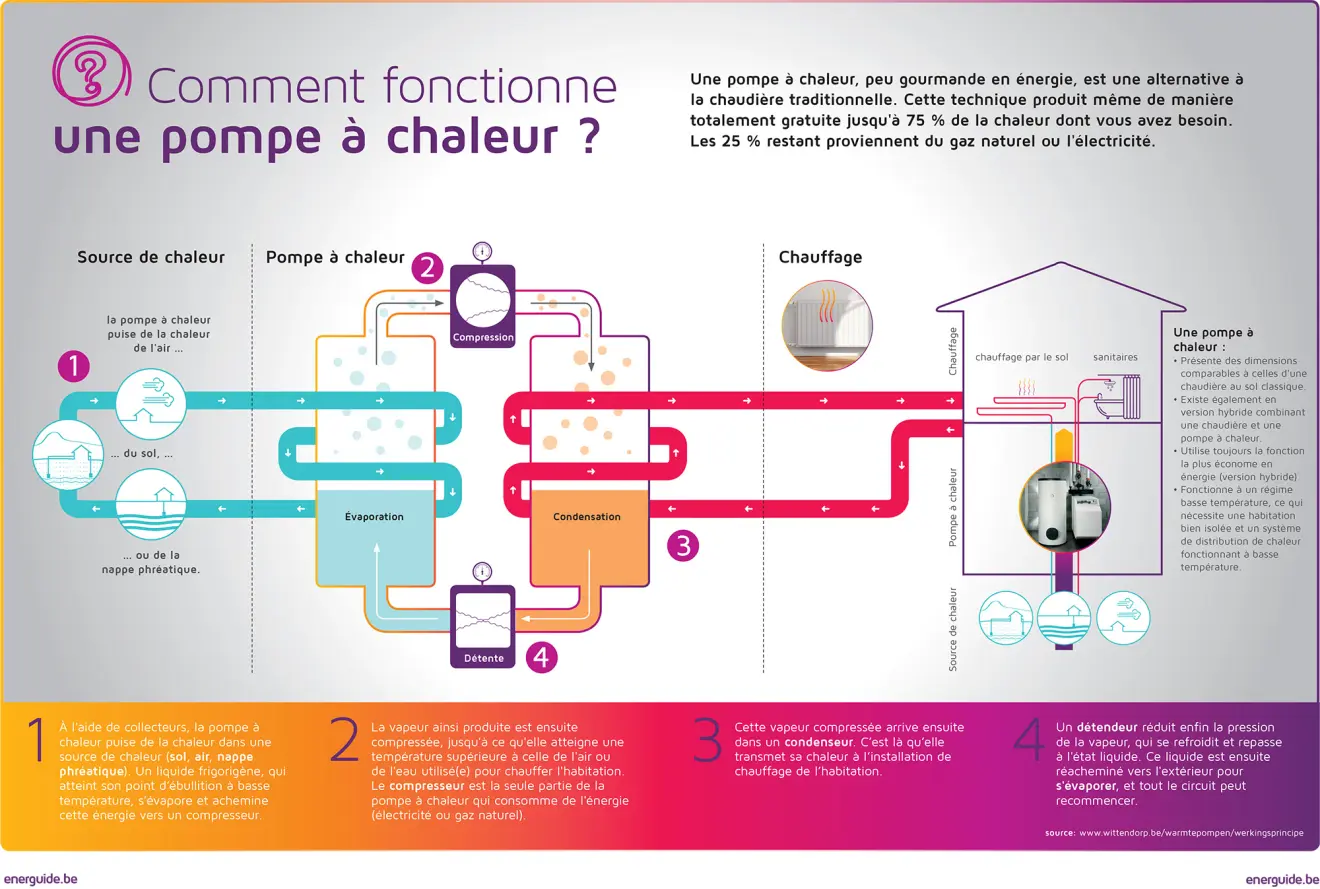
1. Extracting heat
A heat pump extracts heat from a heat source (soil, air, groundwater) with the help of collectors. A coolant transports this energy to a compressor. The advantage of the coolant is that it boils at a low temperature and evaporates.
2. Release heat
In the heat pump compressor, these vapours are compressed until they reach a higher temperature than the air or water used to heat the home. The compressor is the only part of the heat pump that uses energy (electricity or natural gas).
This heated vapour then ends up in a condenser. Here the vapour transfers its heat to the heating system of the house.
3. The cycle starts again
An expansion valve lowers the pressure of the vapour and cools it down again to a liquid. It is then sent back outside to evaporate, after which the whole process can start again.
Cooling your home with a heat pump
A heat pump isn’t just for heating your home; it also offers active or passive cooling, depending on the model you choose. This allows you to quickly lower the temperature indoors by several degrees, ensuring optimal comfort even in the height of summer.
Active cooling
In this mode, the heat pump’s operation is reversed: the compressor circulates the refrigerant in the opposite direction.
- Air-to-air heat pump: This works exactly like an air conditioner. It extracts heat from the indoor air and blows cool air into the room.
- Air-to-water heat pump: The compressor cools the water in your distribution system (such as underfloor heating) to a temperature between 18°C and 22°C. The system then absorbs heat from the floor and the room, lowering the overall temperature of your home.

Passive cooling
With a geothermal heat pump, you can cool your home passively. The water in your underfloor heating is cooled via a heat exchanger using the natural coolness of the groundwater.
In this case, the compressor remains switched off: only the circulation pump consumes electricity. This makes the system significantly more economical than an active cooling solution. In return, the cooling power is more moderate: a room will not get as "cold" as it would with standard air conditioning, but you will benefit from a stable and very comfortable indoor temperature.
Heat pump features
- Compact design: The dimensions are comparable to those of a traditional floor-standing boiler.
- Hybrid options: The system is also available in a hybrid version. It combines a boiler with a heat pump and automatically switches to the most energy-efficient mode.
- Low vs High temperature: While standard models are optimised for low-temperature operation, "high-temperature" versions are available. These allow you to keep your existing radiators, though they come with slightly higher energy consumption.