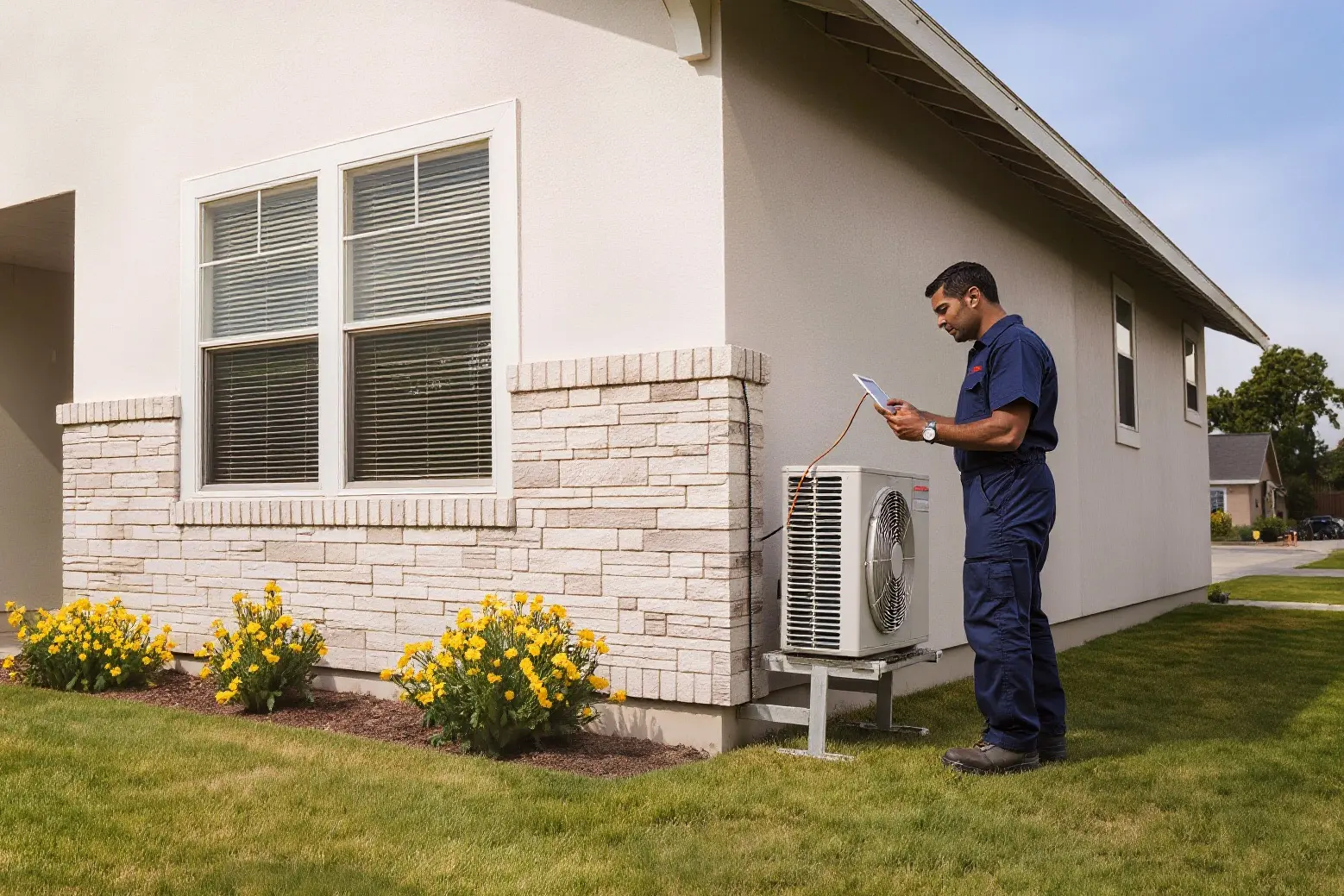
A geothermal heat pump can slash your energy use and cut CO₂ emissions dramatically. No surprise that more and more homeowners are looking into this technology. But is it really practical if you live in the city?
Geothermal systems are one of the best ways to make your home more sustainable and support the energy transition. They do require careful planning and professional installation. And in urban areas, there are a few extra things to consider:
- Space is tight: city lots are small. Vertical boreholes are a smart solution because they take up very little surface area.
- Local rules apply: some municipalities have specific restrictions on drilling, so check before you start.
- Soil matters: the type of ground determines what’s possible. Rocky soil can limit drilling depth, which affects system capacity.
- Apartment living: drilling can impact foundations, and you’ll need approval from all co-owners before moving forward.
Pros & cons of geothermal energy
If you have the required budget and a suitable outdoor space, geothermal energy can be an excellent option for more sustainable heating in the city. Here are the main points to bear in mind:
| Pros | Cons |
|---|---|
|
|
Horizontal or vertical collectors?
Extracting heat from the ground isn’t one-size-fits-all. There are three key approaches, each offering unique benefits and challenges.
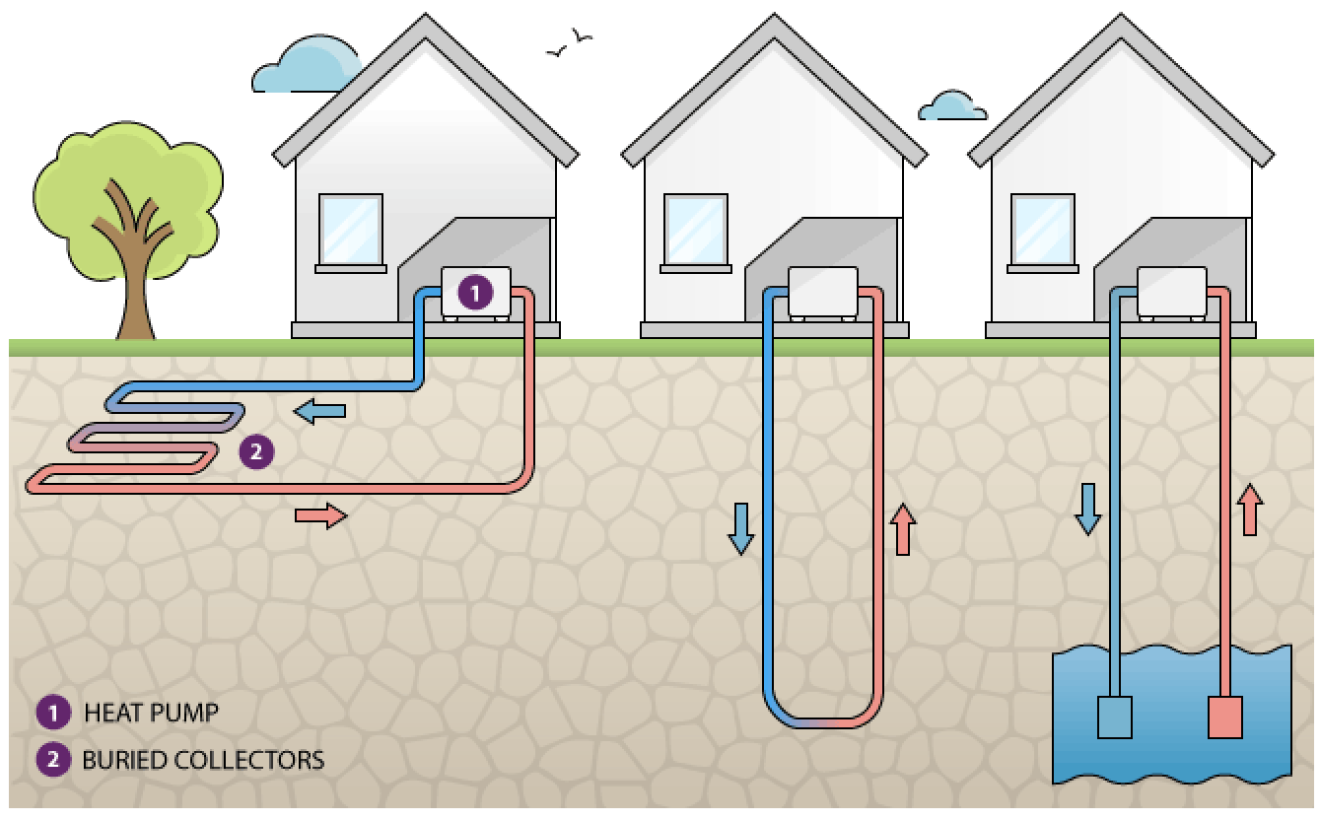
| Horizontal collection | Vertical collection (ground) | Vertical collection (water) |
|---|---|---|
| Pipes buried between 60 and 120 cm deep form a closed loop. | A pipe, also called a "geothermal probe", is inserted in a borehole that is 50 to 150 m deep. | An initial borehole is drilled to collect the heat from the water. A second one is drilled to discharge the cold water. |
Horizontal collectors are simpler to install but take up a significant amount of space. In urban environments, vertical probes are often the preferred solution because of their small footprint.
What do the Brussels regulations say?
An environmental permit is required for the installation of a geothermal heat pump in Brussels. It aims to ensure compliance with environmental standards, particularly with regard to groundwater protection and borehole management.
A planning permit is also required. Its purpose is to verify that the installation takes into account aspects such as landscape integration and the visual impact of the system.
It is advisable to consult Brussels Environment or a geothermal expert before starting any project, as regulations may evolve and specific requirements may apply based on the location and nature of the project.
What it costs
A geothermal heat pump requires a significant investment, but the final cost largely depends on the type of capture system you choose.
- A horizontal collection system will tend to be less expensive, with an average cost of €14,000 to €22,000.
- By contrast, a vertical collection system will cost around €16,000 to €25,000.
However, because of its efficiency, this system is eligible for various forms of financial assistance, such as the Renolution Grant in the Brussels region. The final cost for a residential building in Brussels may therefore range between €8,000 and €19,000.
City homes and heat pumps: your best options
A geothermal heat pump isn’t cheap, but it’s also the most efficient system on the market. Thanks to its high performance, available financial incentives, and completely silent operation, this technology is definitely worth considering.
In urban areas, geothermal systems are especially appealing for existing homes with a garden. For new builds, they’re an excellent choice too, since you can integrate the system right from the design phase.
No garden? Then aerothermal heat pumps (air-to-water or air-to-air) are a practical alternative. They’re slightly less efficient but easier to install and don’t require drilling.