
We often think the carbon impact of our home is summed up in the gas or fuel oil bill we get at the end of every month. But in reality, your house has a much more complex "carbon life": It was emitting CO₂ before you even moved in, and it continues to do so depending on how you live in it.
In Belgium, average CO₂ emissions stand at approximately 8.3 tonnes per person per year. Domestic heating alone accounts for around 13% of these emissions.
Your home's EPB certificate provides an initial glimpse into its CO₂ emissions, but it doesn't give you the whole picture. The reality of its carbon footprint also depends on how it was built and your lifestyle.
The table below illustrates how these factors influence annual CO₂ emissions for heating and electricity.
| Type of household | Property type & EPC | Consumption habits | Estimated CO₂ emissions/year |
|---|---|---|---|
| Single | Recently built studio (B) | Efficient (19°C, LED) | 1.2 tonnes |
| Couple | Renovated town house (C) | Standard (20°C) | 3.5 tonnes |
| Family (4 pers.) | Insulated detached house (B) | Efficient (heat pump) | 2.8 tonnes |
| Family (4 pers.) | Old house (F) | Energy intensive (22°C, fuel oil) | 8.5 tonnes |
Your home’s energy consumption
This is the most obvious part: the energy you need for heating, lighting and running your appliances.
The unique case of electricity
Electricity doesn't actually emit CO₂ when it's used (your light bulb doesn't "burn" anything). To understand the impact of one kWh, we need to look at what was used to produce it:
- Nuclear and renewable energy (solar, wind): Approx. 0 kg CO₂/kWh during production (direct emissions). If we include the entire life cycle (construction of stations/panels), it's almost 0.012 kg CO₂/kWh.
- Thermal power stations (gas): Approx. 0.40 to 0.45 kg CO₂/kWh. This is the gas that "weighs" the most in our mix.
- Imported electricity: The impact of this energy depends on where it comes from. If it comes from France (nuclear), it is very clean (approx. 0.05 kg). If it's from Germany (carbon/gas), it can reach more than 0.40 kg.
According to regulators and recent data (VERG/Engie 2024), the average carbon intensity in Belgium is around 0.13 to 0.18 kg CO₂/kWh.
Curious to know the carbon footprint of your current electricity consumption? Electricity Maps allows you to track the origin of the electricity produced and consumed in Belgium in real time, every 15 minutes.
The sun: your decarbonisation ally
By installing photovoltaic panels, you're contributing to the energy transition. In addition to the financial savings, self-consumption helps to decarbonise your household. Each kilowatt-hour produced on your roof is one unit of CO₂ that's not withdrawn from the national grid.
Fossil fuels
For gas and fuel oil, the traditional calculation is based on combustion:
- Natural gas: 0.198 kg CO₂/kWh.
- Fuel oil: 0.264 kg CO₂/kWh.
It should be noted that, to be completely accurate, we would need to include the impact of extraction and transport (gas pipelines, fuel tankers), which may increase the rating by 10 to 20% before even turning on the boiler.
Heat pump vs boiler
Switching from fossil fuels to a heat pump is the most powerful step you can take for your carbon footprint. While a gas boiler emits CO₂ for each unit of heat produced, a heat pump uses electricity (which is increasingly green) to multiply the free heat energy from the air or the ground. As a result, you can cut the impact of your heating down to 1/3 or even 1/4 of what it was before.
The hidden aspect of your home
Long before you opened your door for the first time, your home already had an ecological past. This is what is known as embodied energy. It represents all the CO₂ emitted to extract, manufacture and transport its materials. It is a true carbon debt contracted right from the moment of construction.
For example, producing one tonne of cement requires kilns to be heated to 1,450°C, which releases massive amounts of CO₂. On the contrary, using wood or hemp "stores" carbon. This is what circular construction is all about.
Renovating an old house is often more environmentally friendly than building a new one, as you're retaining the structure (walls, foundations) and thus avoiding any embodied energy being emitted for new materials. This is the principle behind the circular economy.
The impact of your lifestyle
The technical performance of your building is an initial framework, but the final result also depends on your behaviour.
- Heating and air: Turning down your heating by 1°C cuts your emissions by 7%. Also consider airing out your house for 10 minutes a day: Dry air is quicker to heat than humid air.
- Hot water: Opting for quick showers over baths and setting your water heater to 55°C can drastically reduce the energy used for domestic hot water.
- Cooking and cooling: Cooking with lids and regularly defrosting your freezer are habits worth getting into.
- Appliances on standby: Switching your devices off completely (e.g. TV, router) rather than leaving them on standby eliminates the continuous "phantom energy use" on the grid.
- Choosing appliances: Using appliances ranked A+ and opting for "eco" cycles directly reduces the demand for national electricity production.
House and car: a shared destiny
It's tempting to separate your house from your car, but the 2 are closely linked. A "zero energy" house in a rural location could lose its entire environmental benefit if it involves two long commutes in a combustion-powered car every day.
Your mobility footprint also includes the manufacturing of your vehicle (steel, electronics, batteries). Prolonging the life of your current car is often the more virtuous option, avoiding the CO₂ emissions that come from producing a new one. But, if your car is old and you drive a lot, replacing it with a more energy-efficient electric model may prove to be more eco-friendly over the long term.
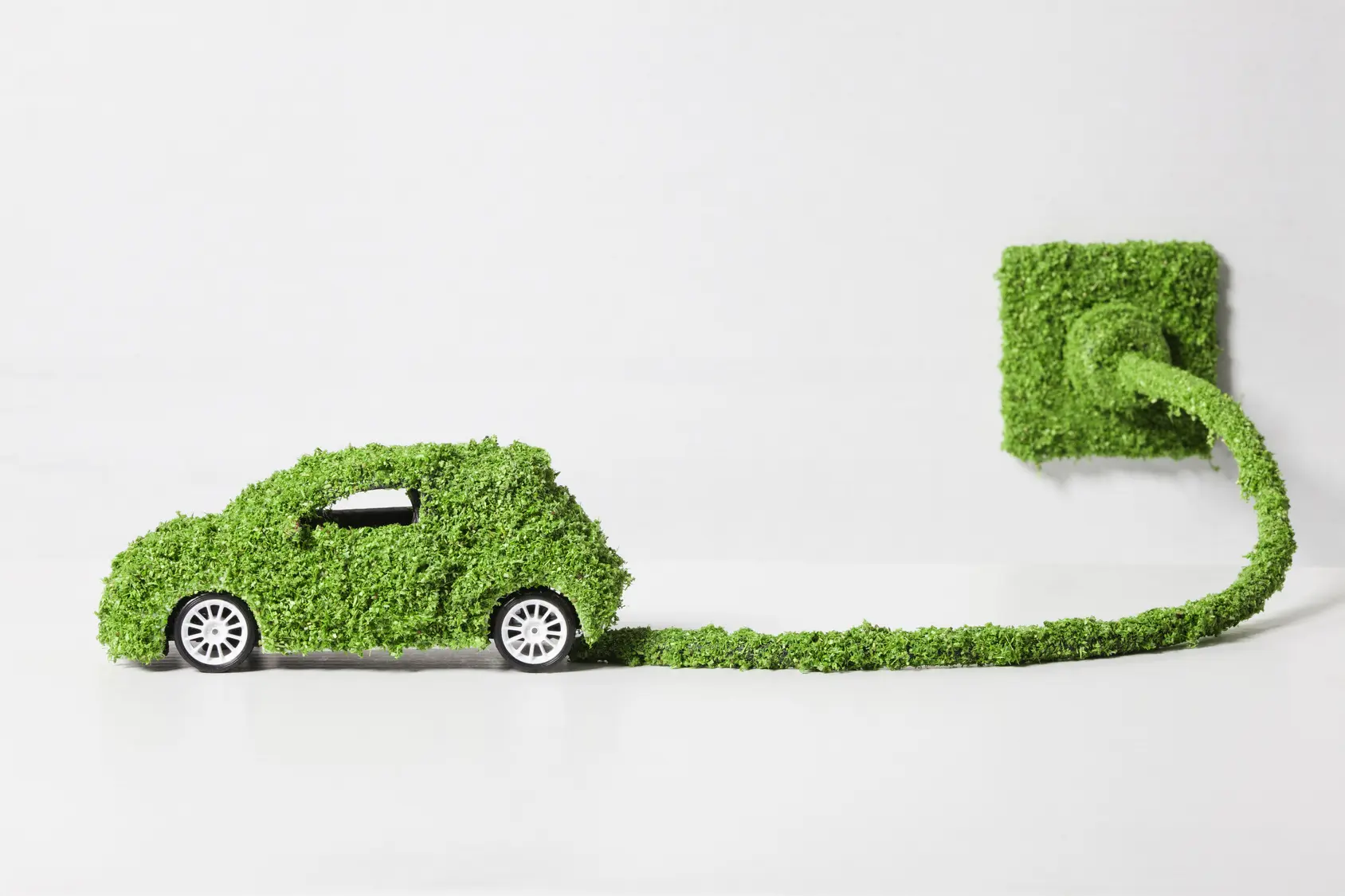
Are electric vehicles really environmentally friendly?
How can you reduce your impact?
The first step is to carry out an assessment: You can use online calculators to build a picture of your situation based on your actual consumption. Once you've established your main emission sources, you can take 2 courses of action: changing your habits (as discussed above) and transforming your home.
Here are four priority areas where you can reduce your home's carbon footprint:
- Thermal insulation: This is the no. 1 area. By insulating your roof, walls and floor, you're reducing your energy needs at the source. This is the most effective step you can take to permanently cut your bills and CO₂ emissions.
- Decarbonising your heating: Once the house has been insulated, replacing fossil-fuel-powered systems (gas, fuel oil) with low-carbon solutions, such as a heat pump, allows you to eliminate the direct combustion of fossil fuels in your home.
- Self-generation of energy: Installing solar panels or a solar water heater allows you to produce decarbonised energy at home, reducing your dependence on the national energy mix.
- Choosing sustainable materials (embodied energy): For any renovation project, opt for bio-based materials (wood, hemp, cellulose). These have used less energy to be produced and can even store CO₂ for the entire lifespan of the building.