Anyone who wants to install solar panels will soon come across the term kilowatt peak or kWp. What does it mean exactly? And how does it benefit you in practice?
The maximum capacity of your panels
To understand kilowatt peak (kWp), you first need to understand the difference between kilowatt (kW) and kilowatt hour (kWh). These units are often confused, but they tell very different stories :
- kW (kilowatt): This is the instantaneous power. Compare it to the amount of water flowing from your tap at that precise moment. As soon as a cloud passes in front of the sun, this figure immediately decreases.
- kWh (kilowatt hour): This is the total amount of energy produced by the solar panels, like the bucket of water that is filled at the end of the day.
- kWp (kilowatt peak): This is the theoretical maximum power output. A 400 Wp (0.4 kWp) panel only provides this 400 W under ideal conditions (full sun in summer around midday).
A theoretical value
The kilowatt peak is therefore a theoretical value. It gives no direct indication of how much electricity your solar panels will actually produce. This yield depends on various factors, such as:
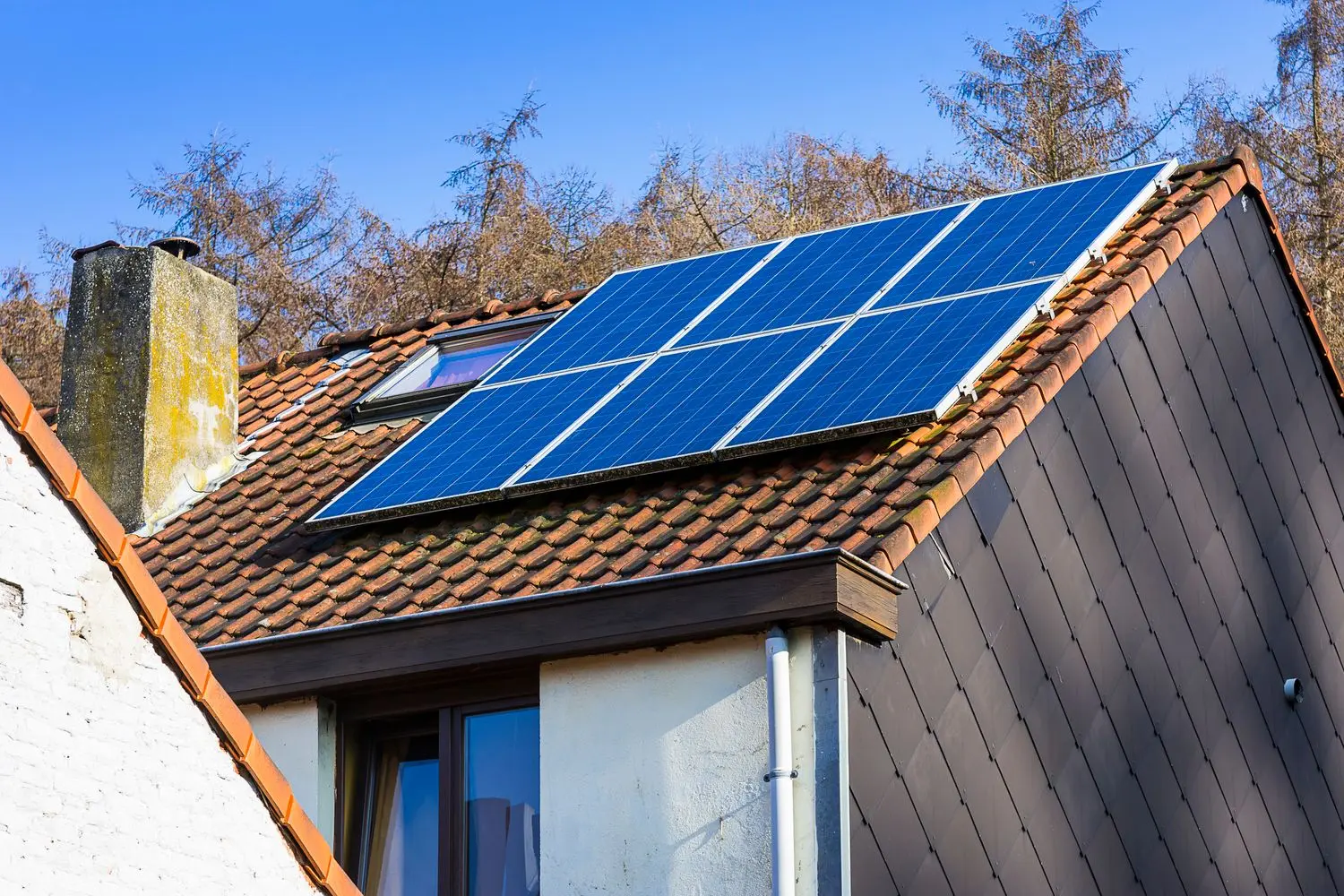
- The slope of your roof.
- The orientation of the panels.
- Any shade caused by trees or chimneys.
- Weather conditions and cloud cover.
- The temperature on the roof.
This is why 2 installations with the same capacity in kWp can still have very different annual yields.
For example, a 1 kWp installation on the roof of a house in Brussels will produce 900 kWh under optimal conditions (south-facing, 35° angle). On the roof of a holiday home in southern Europe, the same installation will produce 1,250 kWh/year!
When do my solar panels produce the most?
Do your panels really produce more in summer? From rain and snow to heatwaves, discover the real impact on your system.
Under standard conditions
The watt peak is determined under strict laboratory conditions, with fixed parameters:
- Solar radiation of 1,000 watts/m².
- An ambient temperature of 25 °C.
- A cloudless sky, for example around midday.
In reality, these conditions almost always differ, which means that the efficiency is often lower.
Less surface area, more energy
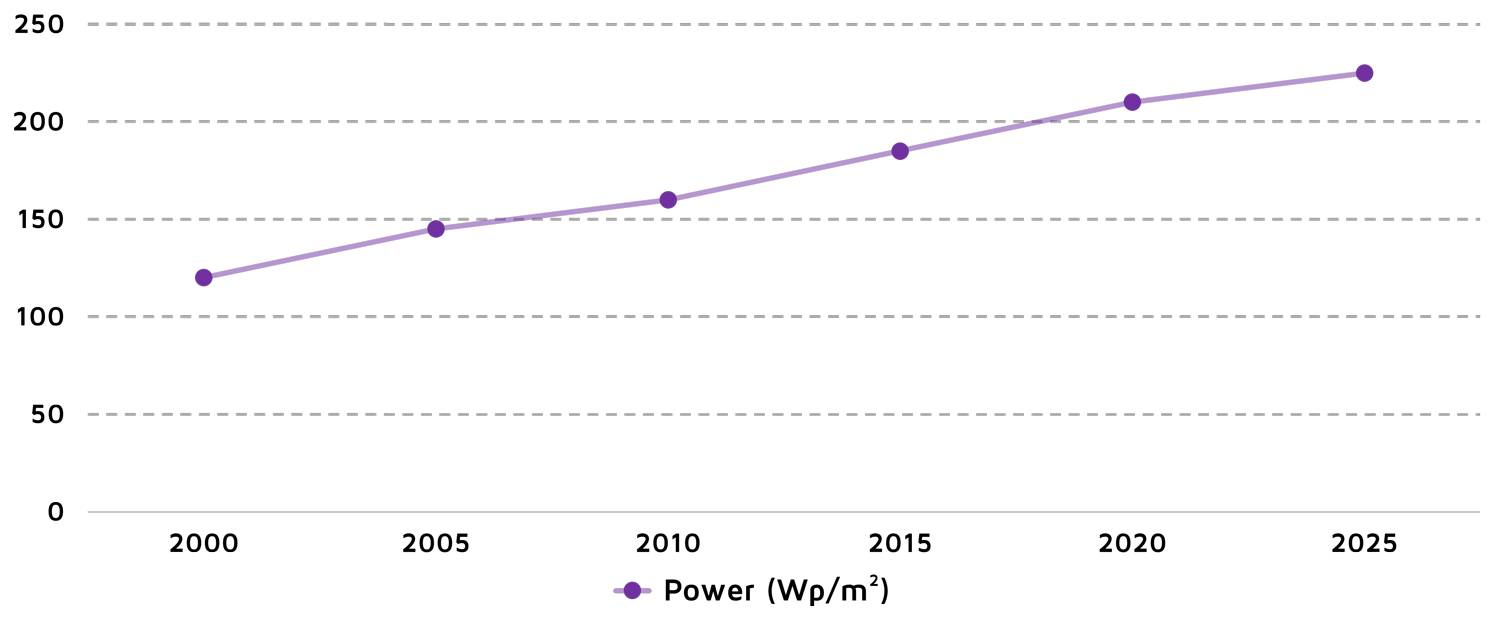
With technological advances, solar panels are becoming increasingly efficient. In 25 years, power density has almost doubled. Today, an installed kWp requires approximately 4.5 to 5 m², compared to more than 10 m² in the early 2000s.
What do you use kWp for?
Comparing solar panels
Power in Wp or kWp is the ideal measure for objectively comparing solar panels. For panels of equal surface area, the following rule applies: a panel with a higher kWp rating can generate more electricity under identical conditions. This helps you evaluate the efficiency of different brands and models.
Calculating the number of solar panels
Do you know how much electricity your installation should ideally produce? The number of kWp helps you determine:
- How many solar panels you need.
- The size of the solar panels.
- What roof area required for this purpose.
As a rule of thumb, 1 kWp theoretically corresponds to 1,000 kWh per year (Ed. note: approximately 900 kWh in Brussels).
Please note: Factors such as shade or less favourable orientation can influence this figure. Therefore, always seek advice from a professional who will perform an accurate calculation for your roof.
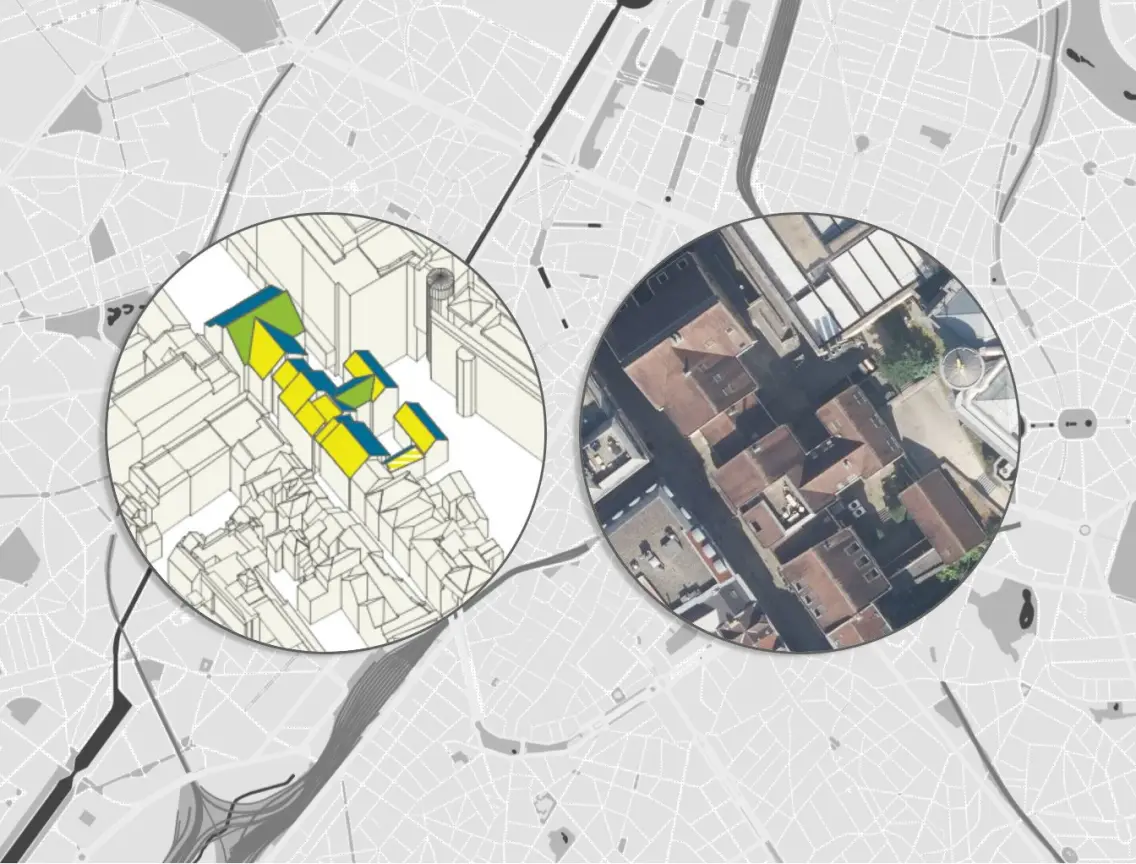
Wat is my roof's solar energy potential?
Brussels Environment has provided a solar map of the Brussels-Capital Region. By consulting this map, you can see whether your roof is facing the right direction for it to accommodate panels.
To the solar map