
The lifespan of an e-bike battery is measured in charge cycles. A cycle represents one full charge (from 0 to 100%) before its efficiency gradually declines until the battery eventually reaches the end of its life.
In theory, an e-bike battery can undergo hundreds of charge cycles. Exactly how many depends on the type of battery. How well you look after your battery also has a significant impact on its longevity. With regular use, performance typically starts to drop after 3 to 5 years.
The battery type
E-bike battery life expectancy is mainly determined by the battery type. The most commonly used batteries are:
- Lithium batteries: tend to become widespread and may hold up to 1000 charge cycles, or even more for the latest Lithium Iron Phosphate models.
- Nickel batteries: expect around 500 cycles.
- Lead batteries (on first-generation electric bicycles): expect around 300 cycles.
Be careful!
This lifetime is a theoretical indication based on manufacturers' estimates. It may vary according to the battery's build quality. So a bad quality lithium battery runs more risk of stopping working prematurely than a good nickel battery.
Make sure the seller has a minimum two-year guarantee, as established by law. Also be aware of the 'health' of your battery. If you notice that it discharges more quickly after a few months, there is probably a manufacturing defect.
Maximum number of charge cycles
The maximum number of charge cycles specified by the manufacturer in fact corresponds to the number of recharging cycles that a battery can theoretically undergo without losing too much efficiency.
At the end of the specified number of cycles, its performance will be reduced and it will hold its charge for a shorter time. It is up to you to judge, depending on your use, whether a replacement is necessary or whether you can get by.
Batteries wear out
Even if you don't use a battery, it will still wear out. The energy it has stored escapes gradually: this is called 'self-discharging'. If it remains completely discharged for a long period of time, irreparable damage can occur due to chemical reactions inside the battery.
Refer to your user manual for information on what to do if you do not intend to use it for a period of time. Recommendations vary depending on the type of battery.
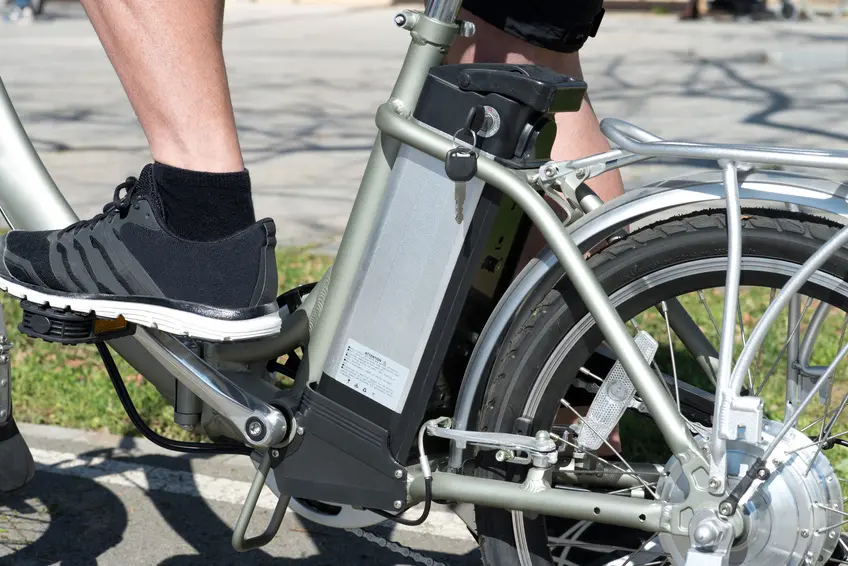
How much does it cost to charge an electric bike?
Charging your electric bike is often cheaper than you think. Discover the cost of your journeys and how you can easily calculate this yourself.
How to take care of batteries?
Charging
- Always use the charger as well as the adapter supplied with your battery. It will avoid overcharging and protects the battery against damage due to short circuits.
- Let your battery cool before charging it. Also, do not use it directly after recharging.
- Never completely drain the battery. Make sure to charge it regularly.
- Always disconnect the charger from the battery and the network after charging.
Storage
- Keep your battery in a cool and dry place (preferably between 0 and 20°).
- Avoid elevated temperatures and do not leave the battery near a heat source.
Cleaning
- Remember that water and electricity do not match! Always remove the battery before cleaning.
- Never use a steam pressure washer when cleaning the battery (or your e-bike).
- Dust the connectors from time to time with a dry cloth and lubricate them lightly.