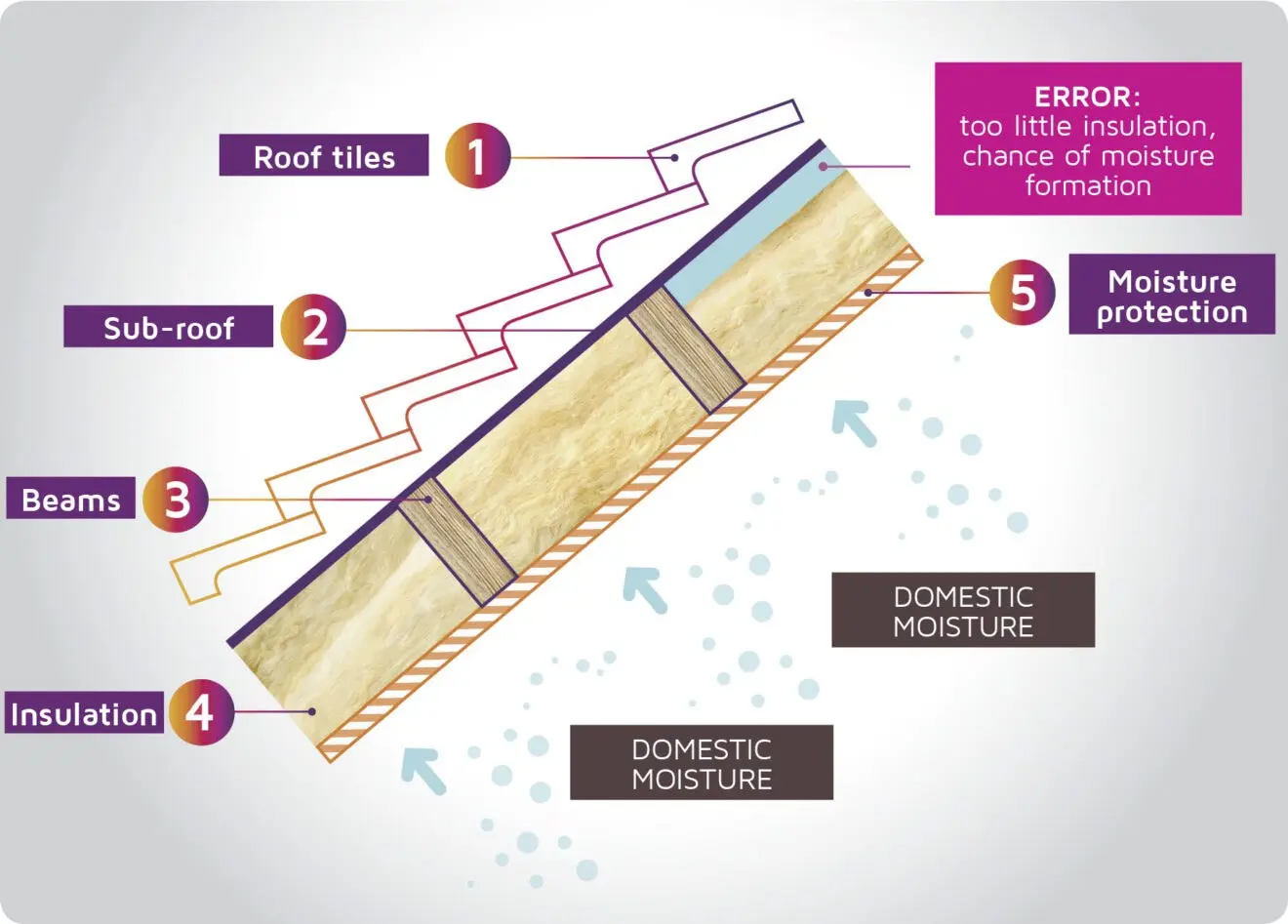
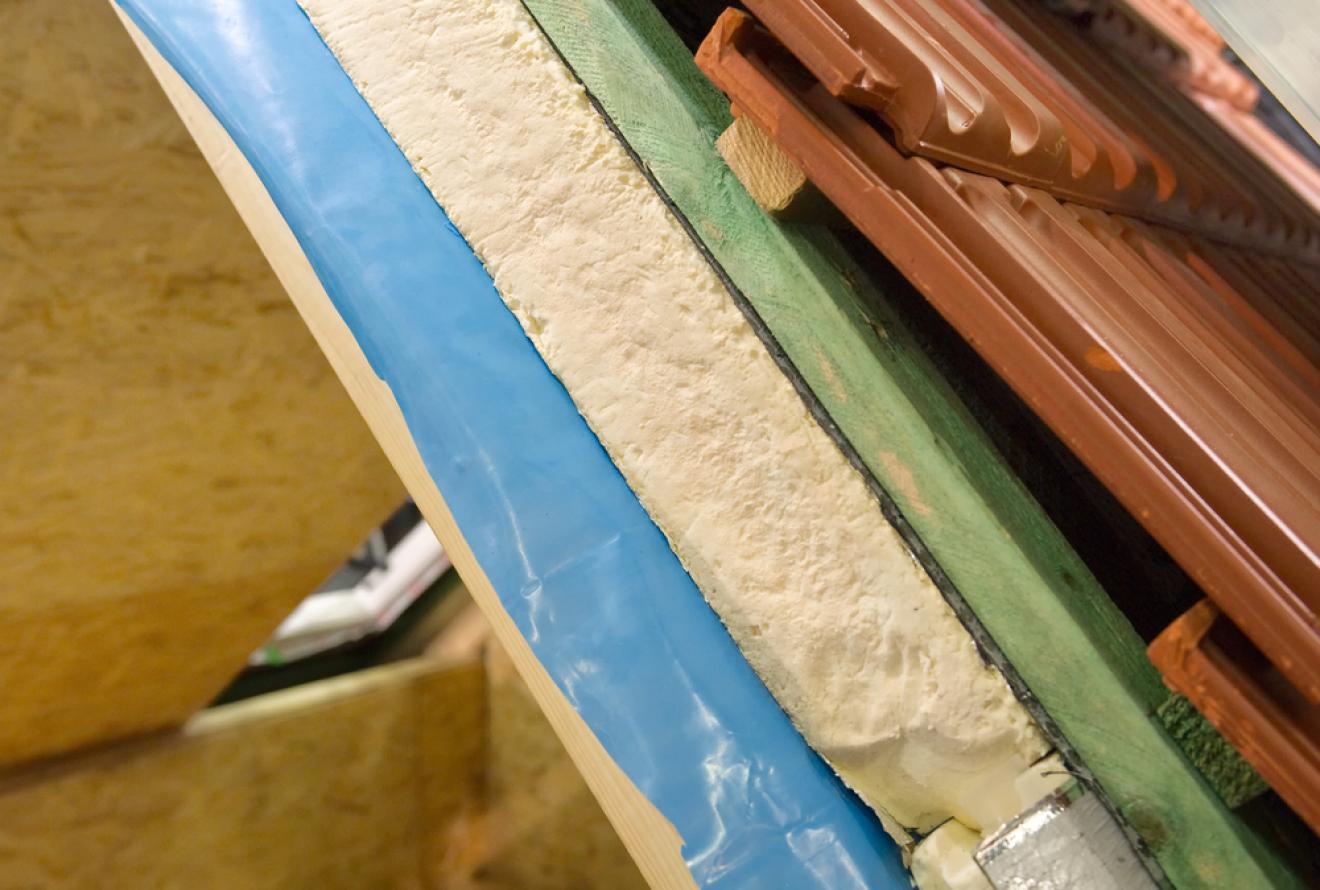
A damp-proof membrane is a moisture-inhibiting foil that is 100% watertight (unlike a breather membrane!). Thus damp – which exists in the surrounding air in the form of condensation – is prevented from penetrating the membrane.
Why do I need a damp-proof membrane?
A damp-proof membrane is required when using certain insulation materials – such as mineral wool, cellulose, etc. - to prevent damp from working its way into the insulation. Where insulation is concerned, fitting a damp-proof membrane is important, as it safeguards the insulating properties of the material.
The membrane is also used to protect building structures against damp. For a timber structure, the damp-proof membrane offers protection against rot and mould.
Damp-proof membrane types
Damp-proof membranes come in different forms.
- (polyethylene) foils are most widely used
- aluminium or aluminated paper are also often used for insulation materials - examples that come to mind include flensing decks and laminated insulation panels.
- another solution is a bituminous course
For which spaces?
A damp-proof membrane is especially advisable for roofs that have a low-water-permeable course. This holds true for most roof frames of sloping roofs and platform roofs. In addition, a damp-proof membrane is a good idea in poorly ventilated kitchens and bathrooms and for exterior walls that do not allow a lot of damp to get through, such as walls built with glazed bricks.
If you are in doubt as to the need of a damp-proof membrane, the best thing to do is to play it safe. The cost of a damp-proof membrane is negligible, but it will help to save your investment in the protective materials.
Take care when fitting
Installing a damp-proof membrane is not a specialist job. But it does require care and attention.
If the damp-proof membrane is meant to protect insulation material, make sure it is always fitted underneath the insulation material. This is the only way that it will block humid air (inside your home) before it reaches a cold area when this damp air will condensate.
The damp-proof membrane only does what it is supposed to do if it has been fitted perfectly.
When fitting a DPM, always make sure:
- to meticulously seal off all joints and staple holes with tape
- to kit-seal connections to other parts of the building.
- to avoid piercing the damp-proof membrane when dealing with pipes and ducts. If this is unavoidable, use adapted sleeves to achieve a perfectly airtight transit flow.
What is a breather membrane?
A breather membrane is placed on the cold side of the wall insulation (outer side of the construction) in order to prevent humidity from entering the building without reducing the insulating effect.
Unlike a vapour barrier, breather membranes are vapour permeable which will help evacuate indoor humidity.
Een dampscherm zit verborgen in je dak of muren, maar speelt een cruciale rol: het houdt vochtige binnenlucht weg van je isolatie. Zonder het juiste scherm op de juiste plek kan je isolatie-investering in jaren kapotgaan door condensatie.
Wat doet een dampscherm?
Warme binnenlucht bevat altijd vocht. In een goed geïsoleerde woning (zeker een die net gerenoveerd is) kan die vochtige lucht nergens meer naartoe. Ze dringt de constructie in en condenseert op de koudere zones in dak of muur. Dat condenswater beschadigt isolatie, laat hout rotten en veroorzaakt schimmel.
Een dampscherm zorgt ervoor dat die vochtige lucht aan de binnenzijde van de constructie wordt tegengehouden, vóór ze een koudere zone bereikt.
Hoe goed een folie damp tegenhoudt, wordt uitgedrukt in de Sd-waarde: die geeft aan hoeveel meter stilstaande lucht dezelfde dampweerstand zou bieden als de folie zelf. Hoe hoger het getal, hoe minder waterdamp er doorheen dringt.
| Type folie | Typische Sd-waarde | Betekenis | Positie | Wanneer? |
|---|---|---|---|---|
| Dampopen folie | < 0,5 m | Zeer dampdoorlatend | Buitenzijde (koude kant) | Altijd aan buitenzijde dak/gevel |
| Dampremmende folie | 20–100 m | Sterk remmend | Binnenzijde (warme kant) | Standaard voor droge leefruimtes |
| Dampscherm | > 100 m (tot > 1.500 m) | Bijna geen dampdoorlaat | Binnenzijde (warme kant) | Badkamers, keukens, platte daken |
Een correct geplaatst dampscherm werkt meteen ook als luchtscherm: het stopt ongecontroleerde luchtlekken, wat warmteverlies en tocht sterk vermindert.
Wist je dat: "dampscherm" niet verwijst naar waterbestendigheid tegen regen, maar naar weerstand tegen waterdamp? Dat zijn twee verschillende eigenschappen met elk hun eigen maatstaf.
Wanneer is het nodig?
Een dampscherm hoort bij vrijwel elke binnenisolatie met vezelachtige materialen: glaswol, rotswol, cellulose, hennep of houtvezel.
Die isolatiematerialen zijn vochtgevoelig: glaswol die nat wordt, verliest een aanzienlijk deel van zijn isolerende werking. Sommige isolatieproducten hebben een geïntegreerde dampremmende laag; controleer in dat geval de technische fiche.
Typische toepassingen:
- hellende daken die langs binnen geïsoleerd worden
- platte daken
- binnenwanden en gevels met vezelachtige isolatie
- ruimtes met veel vochtproductie, zoals slecht geventileerde badkamers of keukens
Twijfel je over de juiste opbouw? Een dampscherm op de verkeerde positie, of gecombineerd met een dampdichte buitenlaag, kan vocht insluiten in plaats van weren. Bij twijfel vraag je beter advies aan een specialist: bij een bestaande constructie zijn er vaak meer lagen in het spel.
Correct plaatsen
De basisregel: het dampscherm hoort altijd aan de warme zijde van de constructie. Afhankelijk van de situatie betekent dat concreet:
- bij een hellend dak langs binnen: het scherm aan de kamerzijde, direct tegen de isolatie
- bij een zoldervloer: het scherm op de vloer van de zolder, met isolatie bovenop
- bij een plat dak: het scherm op de draagvloer, met isolatie en dakbedekking daarboven
De plaatsing zelf vraagt geen bijzondere vakkennis, maar de detaillering wél.
- plak alle naden en niet-gaatjes nauwkeurig af met de juiste tape,
- kit aansluitingen met balken en ramen luchtdicht
- vermijd doorboringen met leidingen. Is dat onvermijdelijk, gebruik dan conforme manchetten. Eén open naad maakt het hele scherm grotendeels waardeloos.
Dampopen folie
Een dampopen folie is de tegenhanger van een dampscherm, en ze werken altijd samen. Waar een dampscherm aan de binnenkant zit met een hoge Sd-waarde, zit een dampopen folie aan de buitenkant van de constructie met een lage Sd-waarde (typisch < 0,5 meter).
Dampopen folies houden regen, wind en sneeuw buiten, maar laten waterdamp vanuit de constructie ongehinderd naar buiten ontsnappen. Zo kan de isolatie uitdrogen als er toch vocht in terechtgekomen is.
De correcte opbouw combineert dus altijd binnen sterk dampremmend, buiten sterk dampopen. Daarmee houd je vocht in de winter buiten, en laat je het in de zomer naar buiten uitdrogen.