
Bleeding your radiators is a good habit to get into. This very simple operation is essential to evacuate air bubbles and sludge that can prevent your heating system working properly.
When to bleed your radiators?
- before restarting your boiler.
- when the whole surface of a radiator isn't the same temperature.
How to bleed the air from your radiator?
- Turn off the heating. Before you begin, turn off your heating system’s circulation pump. The easiest way is to set your boiler to the "summer" position. Wait until the radiators are cold.
- Always start with the radiators at the lowest level. If you need to bleed several radiators, gradually move upstairs to the last radiator in the system. Warning: if you only bleed the radiators on the top floor (where the air is most likely to accumulate), they may re-fill with air as soon as you turn the circulation pump back on, drawing the air up from the lower floors
- Fully open the thermostatic valve.
- Start the bleed
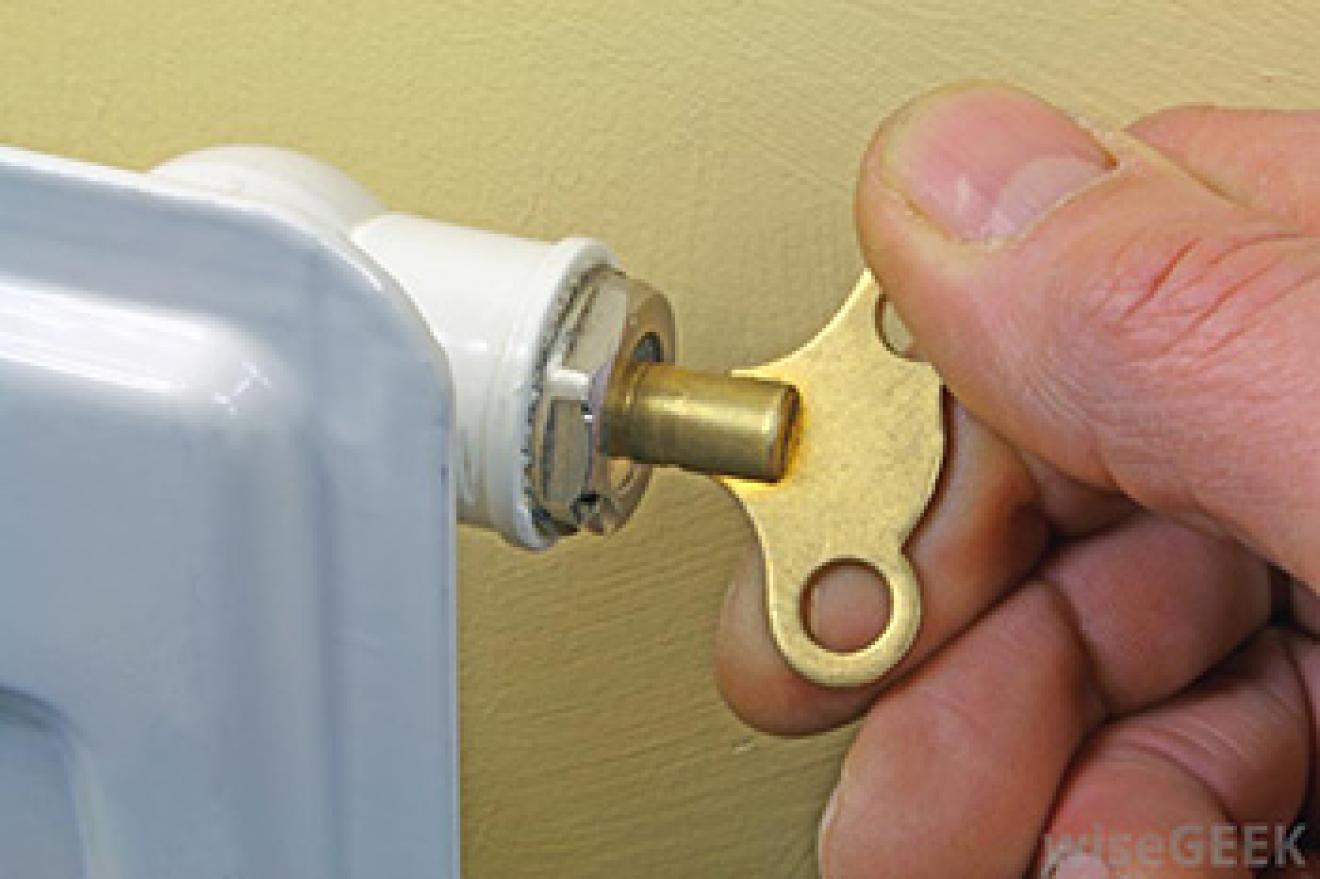
- Locate the air vent, also referred to as the 'bleed screw'. This may be a brass knob or hex-head screw, depending on the model. Whichever it is, it is always at the top of the radiator, on the opposite side to the thermostatic valve.
- Have a radiator key to hand. If the bleed screw has a hex head, you will need to use a special butterfly key. Otherwise, simple needle-nose pliers or a socket set will be enough.
- Place a container under the bleed screw. Unscrew it gently, until you hear air whistling. After a while, the valve will spit water. Leave the valve open for a few seconds until the trickle of water is regular, then close it. Note that the escaping water may be brownish. This is normal: it contains some of the sludge from the radiator.
- Tighten the screw without forcing it when the heating water is clear again, as if you were closing an ordinary tap. A small drop may form just after closing. However, if the flow is continuous, it is better to replace the bleed screw.
- Set the thermostatic valve, which you had fully opened, to the desired temperature.
After bleeding your radiators: restore the pressure
When bleeding your radiator(s), you may have lowered the pressure within the circuit. To restore it, proceed as follows:
- Open the filling valve (usually located under or next to the boiler) and keep an eye on the pressure gauge.
- Close the valve as soon as the needle indicates the recommended pressure (green zone on the dial).
If in doubt, it is best to contact your heating installer.
Is there really sludge in my radiators?
In addition to air bubbles, muddy deposits can also clog your pipes. These form through the oxidation of metals in the closed circuit. The water carries these metal oxides along, which results in a brown, compact, and foul‑smelling deposit. By bleeding the system regularly, you help prevent this problem.