
You see numbers or graduations on your thermostatic radiator valve, but no 18°C or 21°C. Yet this valve regulates your room temperature very precisely. The numbers represent comfort levels, not exact degrees
Many people really discover their thermostatic radiator valve when they want better control over their heating. It turns out it's not a simple on/off switch: each setting reacts to the environment.
Setting 3 gives 20°C in one room, but 19°C in another. That feels confusing, but is actually an advantage.
Why no degrees?
A thermostatic radiator valve works with a thermostatic bulb. This is a capsule filled with liquid, gel or gas that expands with heat and contracts with cold. This element opens or closes the water supply to your radiator, depending on the room temperature.
But that temperature depends on much more than just the radiator:
- A cold external wall draws heat away
- A window in the sun adds heat
- The radiator works alongside these influences
That's why no manufacturer can guarantee: "Setting 3 = exactly 20°C." It depends on your room.
The numbers 1 to 5 are comfort settings. They give you control without false precision.
The numbers explained
The table below shows approximate temperatures per setting, including advice on which rooms they're suitable for. Use this as a starting point, not as precise science.
| Valve position | Reference temperature | Recommended for |
|---|---|---|
| * | 6°C | Frost protection |
| 0-1 | 12°C | Cellar, stairs |
| 1 | 15°C | Unoccupied room, laundry, storage |
| 2 | 17°C | Hall, corridor |
| 2-3 | 18°C | Bedroom |
| 3 | 19-20°C | Kitchen |
| 3-4 | 20-21°C | Living room, child’s bedroom |
| 4 | 22°C | Bathroom |
| 5 | max. | Valve fully open |
Tip: Note your ideal settings per room on a sticker next to the valve. After a week of experimenting, you'll know exactly where you're comfortable.
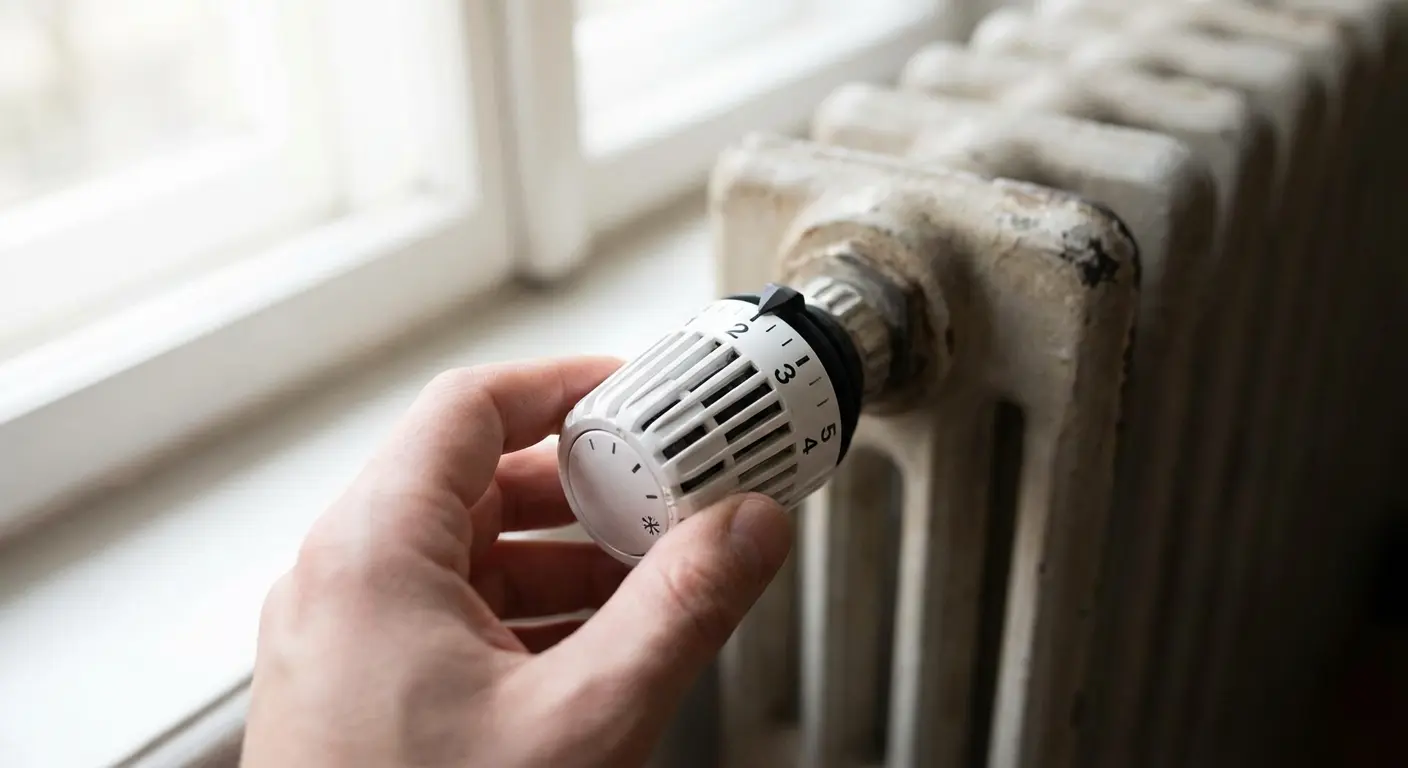
Simple adjustment
The best way to adjust your thermostatic radiator valves: experiment and leave them be.
- Step 1: Start with the recommended setting for your room (check the table). Living room? Set to 3. Bedroom? Try 2-3.
- Step 2: Give it time. Wait at least a day before judging. A thermostatic radiator valve reacts gradually and accounts for changing conditions (sun, outdoor temperature, other heat sources).
- Step 3: Adjust in small steps.
- Too cold? Turn it one setting higher, not immediately to setting 5.
- Too warm? One setting lower, not completely closed.
What doesn't work
- Turning straight to setting 5 in the morning because it's chilly → the valve doesn't heat faster, only longer
- Setting the valve to * when it's warm → you risk excessive cooling and will need to reheat later
Let the element do its work. It reacts constantly to changes and keeps the temperature precisely at your chosen setting.
Combine cleverly
Thermostatic radiator valves give you room-by-room control, but no time control.
Combine them with a room thermostat for the best result: the thermostat determines when your heating switches on or off, the valves ensure the right temperature in each room.