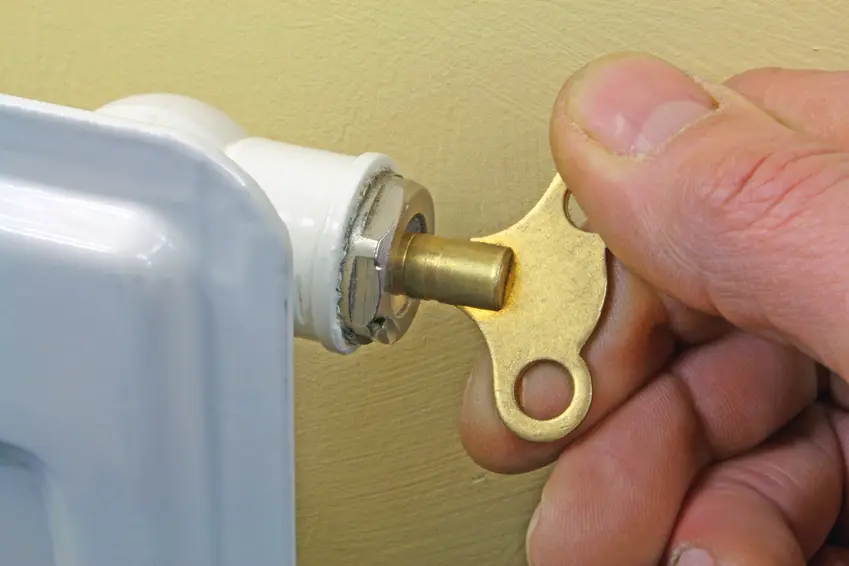
Whether you heat with a gas boiler or have just switched to an air-source heat pump: both systems work with water circulating through radiators or underfloor heating. The water pressure determines how well the system pumps that hot water throughout your home.
In a house with several floors, you notice the difference immediately: low pressure means cold rooms upstairs.
Why is pressure important?
The water pressure in your heating installation must be high enough to 'push' water to all radiators, including those on the top floor.
- Insufficient pressure? The water doesn't reach the highest radiators properly.
- Excessive pressure? The safety valve releases excess water.
This principle applies to both traditional boilers and modern air-source heat pumps. A heat pump has an outdoor unit that extracts heat from the air, but the indoor unit works with the same water circuit as a boiler.
The ideal pressure
- 1 to 2 bar for most systems
- When in doubt: check the manual or ask your installer
- Green zone on the pressure gauge = safe range
How to read the pressure gauge?
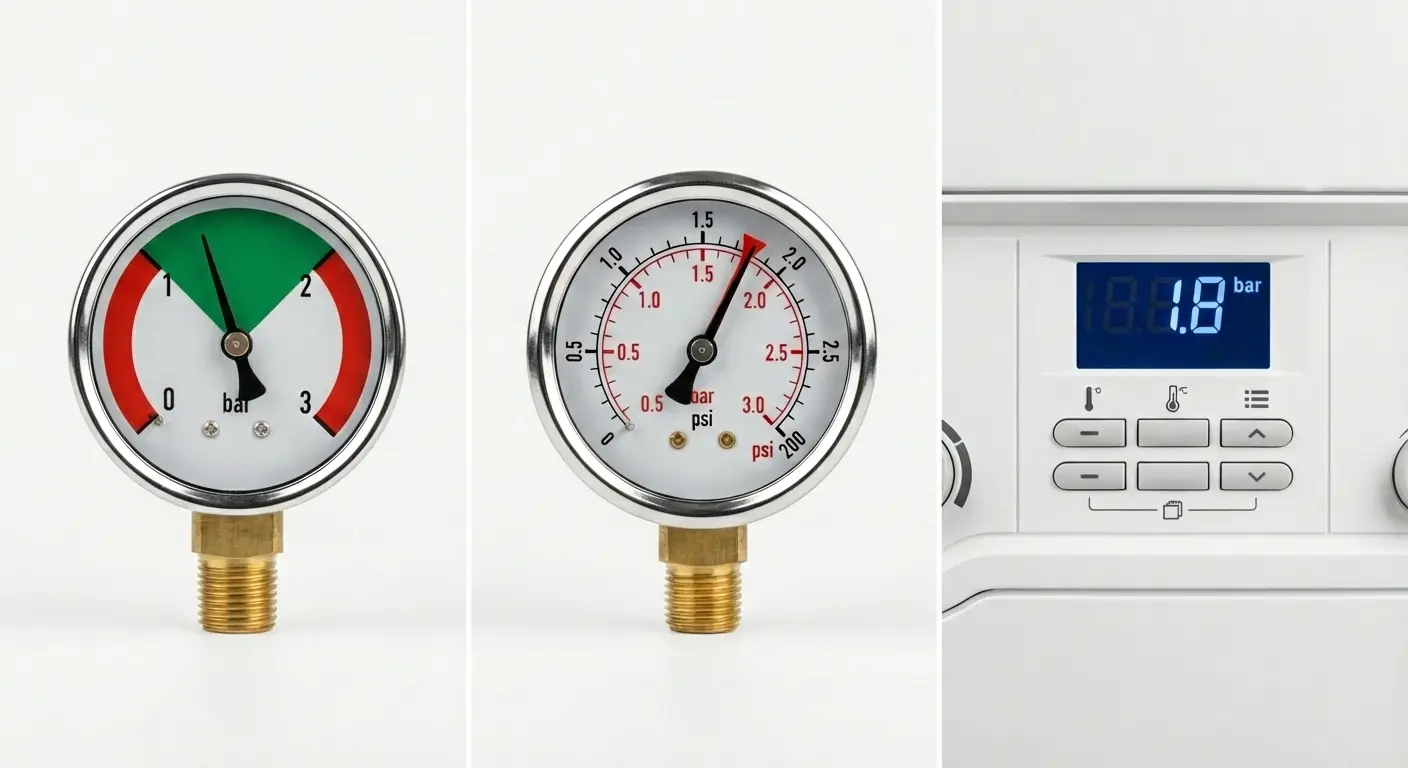
The pressure gauge is the measuring instrument on your boiler or heat pump (indoor unit) that shows the pressure. Different systems have different displays:
| Type | Recognition | How to read |
| Needle gauge with zones | Dial with green and red zones |
|
| Dual needle | Two pointers: one red, one black |
|
| Digital display | LED screen with numbers | Pressure directly readable on screen. Often with colour coding: green = good, red = problem |
For heat pumps, the pressure gauge is often located on the indoor unit (hydro-unit), not on the outdoor unit.
Low pressure: adding water
s the needle in the red zone or below 1 bar? You can add water yourself via the filling taps of your system.
Steps:
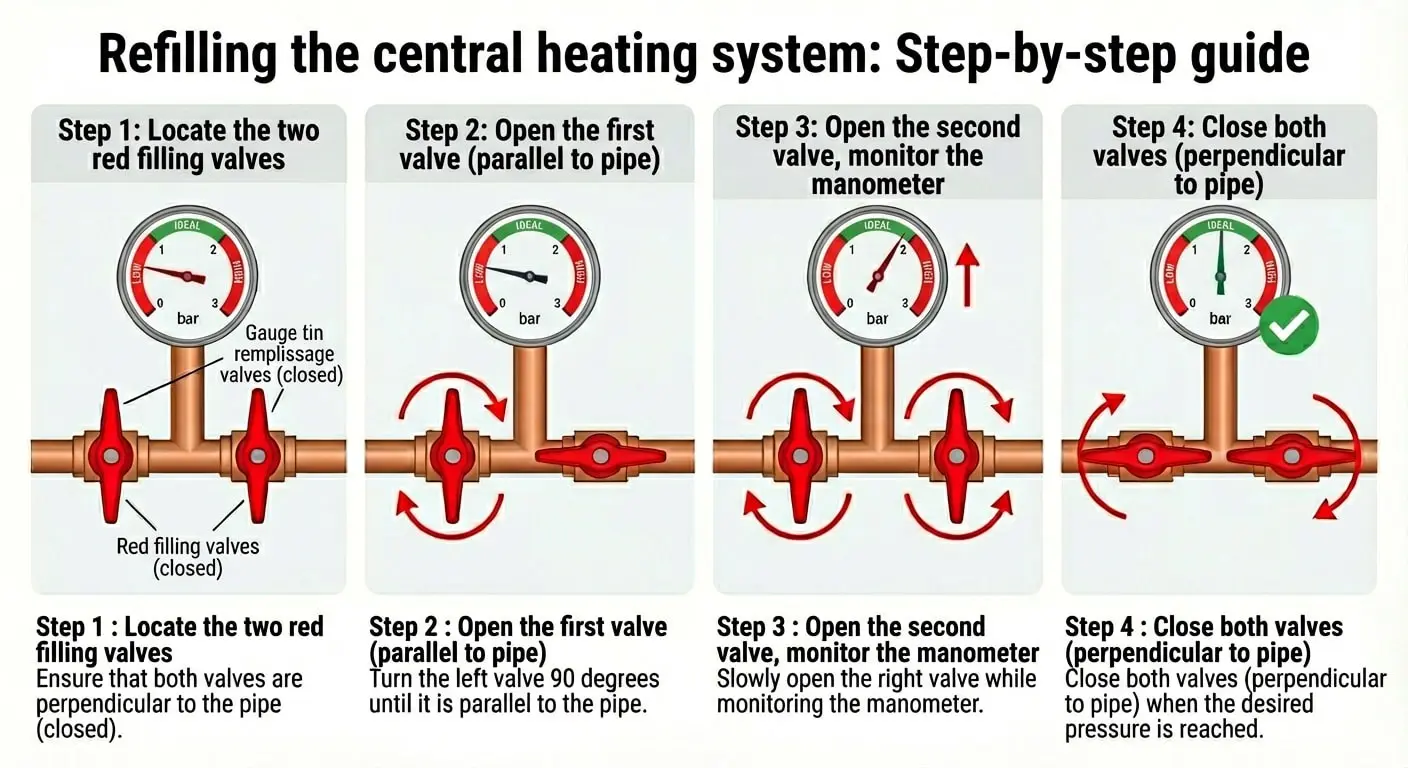
- Locate the two filling taps
usually red taps on copper pipes, often below the boiler or near your heating system - Check that both taps are closed
the handles must be perpendicular to the pipe - Open the first tap fully
turn the handle 90 degrees so it's parallel with the pipe - Open the second tap carefully
watch the pressure gauge closely whilst turning - Stop in the green zone
between 1 and 2 bar or at the red marker needle - Close both taps properly
turn back so handles are perpendicular to the pipe again
After refilling
- Check the next day whether the pressure remains stable
- Does the pressure drop quickly? You may have a leak – consult your installer
Have you recently bled your radiators? It's normal for the pressure to drop. When bleeding, you remove air and a bit of water from the system. Refill afterwards to the desired zone.
High pressure: what to do?
Does the pressure rise above 2 bar? Don't panic, your heating system has a safety valve that releases excess pressure. An occasionally dripping tap at that valve is normal.
When to take action?
- Does the valve leak constantly?
→ Check whether both filling taps are properly closed (handles perpendicular to pipe) - Does pressure keep rising despite leaking?
→ Switch off the system and call your installer - Pressure above 3 bar?
→ Close the isolation valve (water supply to the system) or the main tap at your meter
For heat pumps, pressure increase can also result from a defective expansion vessel. If you need to refill regularly or the pressure is often too high, have your installer check the expansion vessel.
You don't need to check the pressure daily or weekly. The expansion vessel in your system compensates for pressure variations due to temperature fluctuations. A stable system requires little attention.
Check the pressure:
- At the start of the heating season (September-October)
- 1 to 2 months later (check after starting up)
- Directly after bleeding radiators
- The day after bleeding (to check stability)
Do you see large fluctuations or need to refill every week? There's probably a leak in the system. Contact your heating installer for a thorough check.