Yes, your chimney needs to be adapted for a condensing boiler. The good news: relining is often simpler and cheaper than installing a completely new flue. Which solution suits your home depends on the configuration of your existing chimney.
Replacing an old boiler? You'll quickly end up looking at a condensing model, the only heating boilers that still meet current standards. But your old chimney isn't automatically suited to this new technology. Fortunately, there are practical solutions.
Why the adaptation?
condensing boiler works differently from a traditional boiler. The appliance extracts additional heat by condensing the flue gases. As a result, these gases leave the boiler as lukewarm, moist air rather than hot, dry smoke.
This moisture is the problem. A masonry chimney cannot handle it. Over time, the moisture penetrates the bricks and joints, causing damage to your chimney and the surrounding walls. Mould, peeling paint and damp patches are typical consequences.
That's why the flue of a condensing boiler must always be moisture-resistant, either through a new installation or by relining your existing chimney.
Two solutions
Option 1: new moisture-resistant flue
A concentric flue, also called a twin-wall pipe, is a system of two pipes inside each other:
- The inner pipe evacuates the moist flue gases
- The outer pipe provides air circulation and keeps the temperature low
Both pipes are hermetically sealed. This system can be installed inside or outside the building, depending on your situation.
Option 2: reline the existing chimney
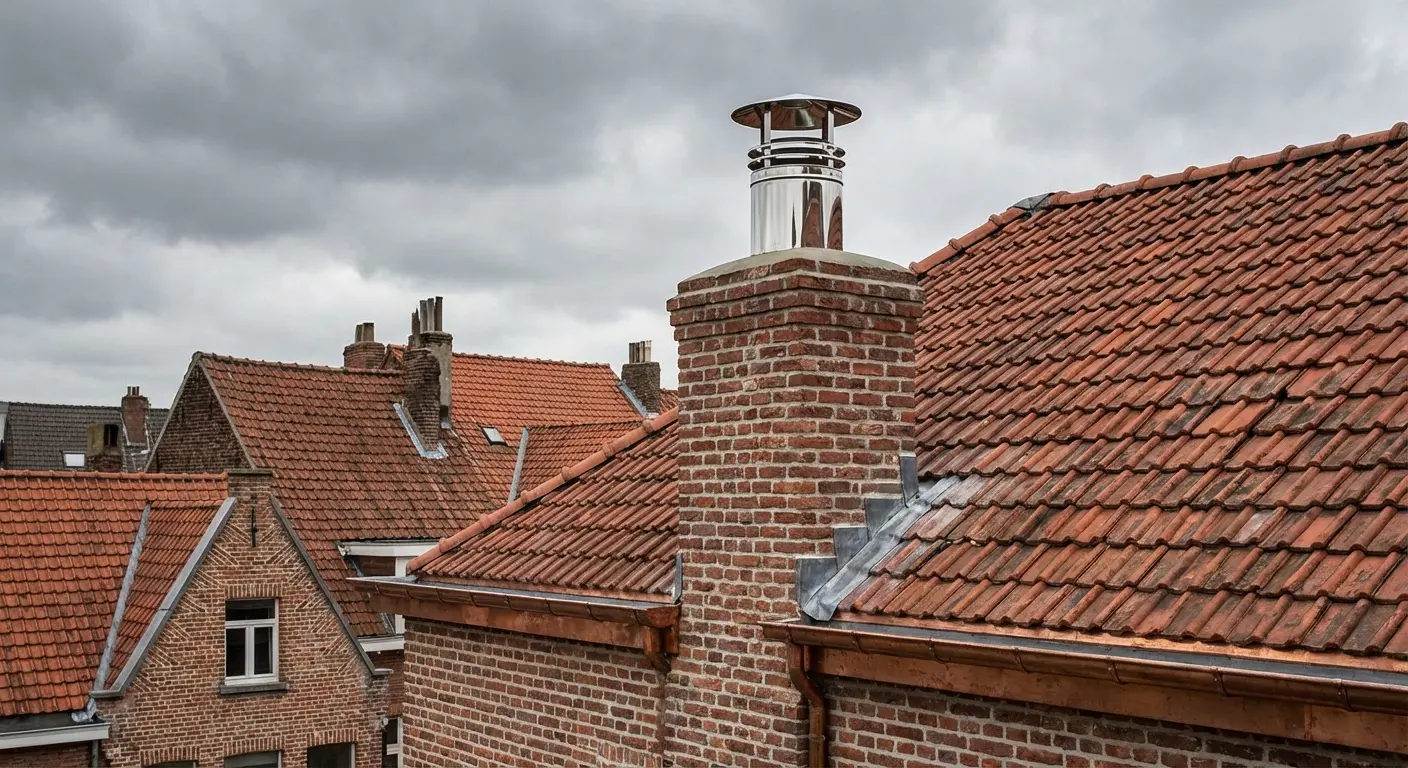
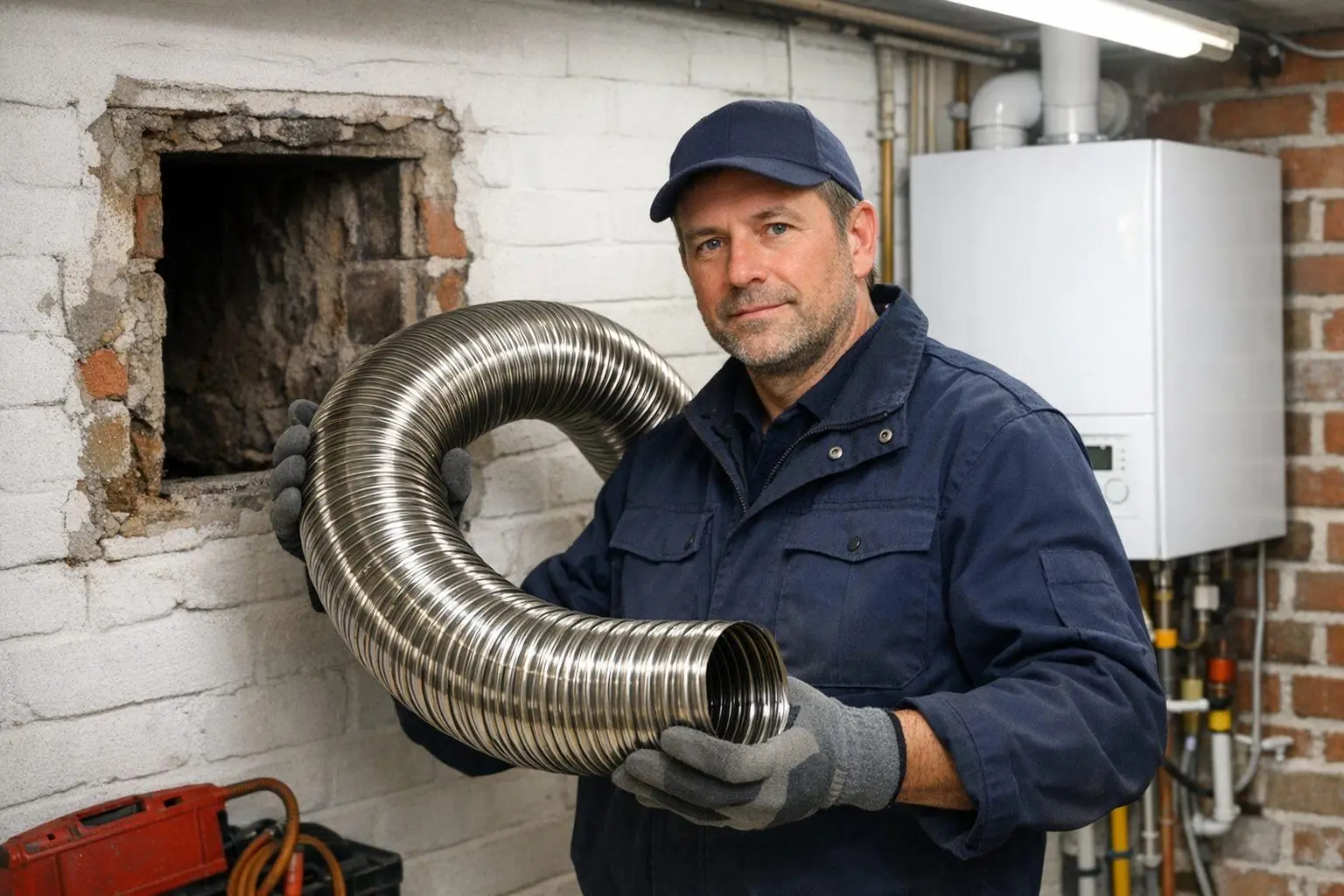
Relining involves placing a single-wall flexible pipe through your existing masonry chimney. This pipe, made of stainless steel or synthetic material, protects the masonry from moisture. The chimney itself then acts as a protective outer layer.
This is usually the most practical solution for renovations: you keep your existing chimney and make it suitable for the new boiler. Relining is often cheaper than a completely new installation.
Which solution to choose?
Your home's configuration determines which solution is suitable:
| Relining | New concentric flue |
|---|---|
| Existing masonry chimney | No usable chimney |
| Chimney with bends | Straight, wide flue |
| Lower cost | New build |
A certified installer assesses the situation on site and advises on the best solution. Always have this evaluated before purchasing a new boiler.
Boiler or heat pump?
Before investing in a new condensing boiler and chimney, this might be the moment to think bigger. A gas boiler lasts 15 to 20 years. If you choose gas now, you're committed for the next two decades, while the energy market is changing rapidly.
Here’s a useful checklist to help refine your options:
- How well is your home insulated?
With reasonable insulation, a heat pump could be an alternative. Otherwise, a hybrid heat pump, which combines a small gas boiler with a heat pump, is a good intermediate step. - Do you have space for an outdoor unit?
In a narrow townhouse, this isn't always straightforward, but it's often achievable. - What are the long-term costs?
A heat pump costs more to purchase but less to run. With rising gas prices and falling electricity tariffs, the balance is shifting.
A hybrid system still requires a flue for the gas component, by the way, so relining remains relevant. But you'll use considerably less gas than with a traditional boiler.
Unsure? Ask for free advice from Homegrade. They can help you map out the options for your specific home.
A new gas boiler lasts 15-20 years. Take a moment to consider whether a (hybrid) heat pump might better suit your future plans.
In an apartment building
Do you have your own flue in your apartment? Then it's simply a matter of adapting that chimney, just like in a single-family home.
With a shared flue, it's more complex. Only an atmospheric boiler (type B1) can be connected to a communal chimney. A condensing boiler requires a separate flue per flat, or a complete replacement of the shared system.
This means consultation with co-owners and the building manager. Such a decision isn't made alone. Discuss at the general meeting which collective solution is feasible – whether each condensing boiler gets its own flue, or whether a new communal system is installed.