
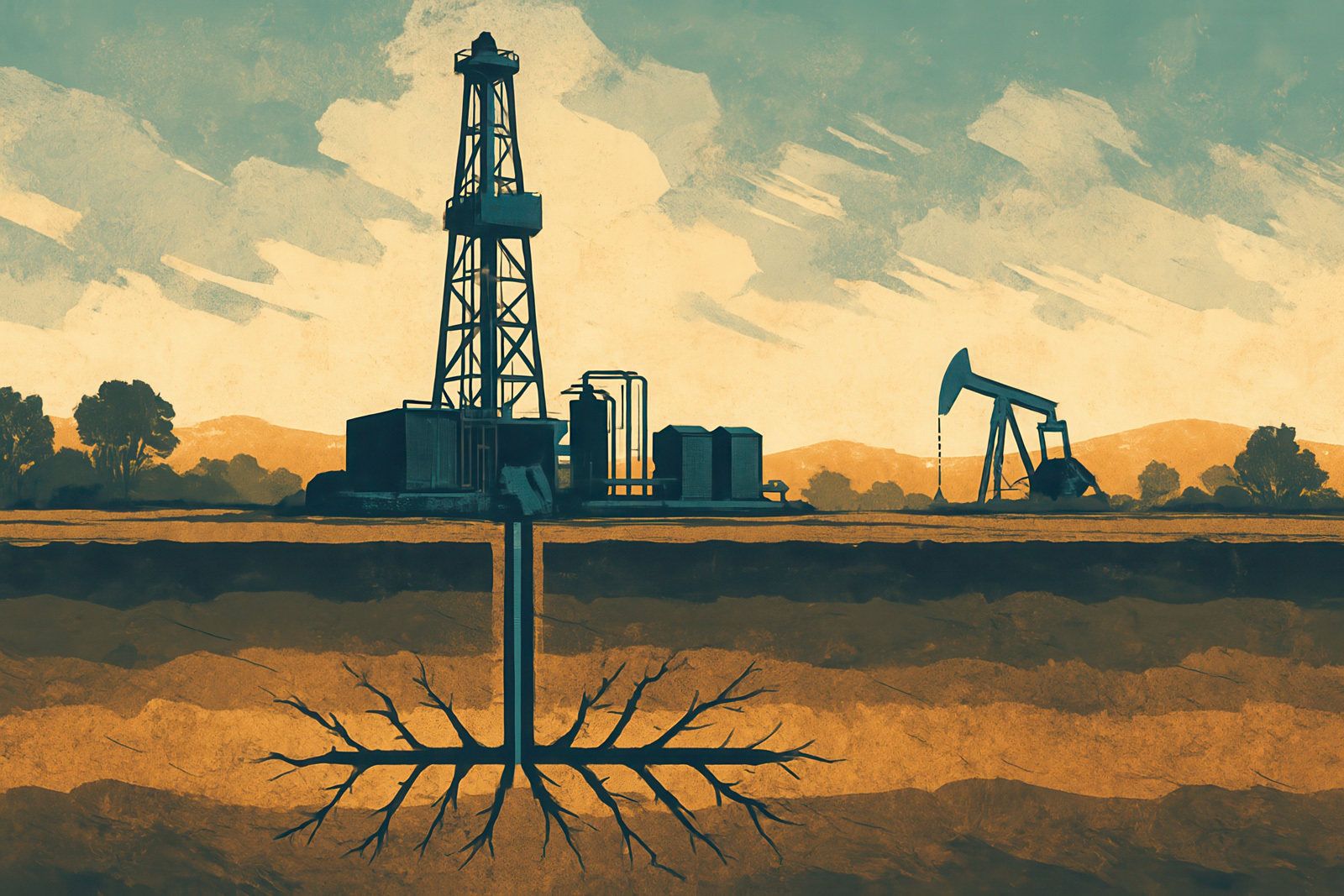
A means of extracting shale gas
Hydrocarbon reserves, whether of natural gas or oil, are running out. So scientists across the world have been seeking to develop methods of exploiting deposits that were hitherto inaccessible. This has resulted in hydraulic fracturing, which is used to extract shale gas.
Shale gas is trapped in the rock in the form of microbubbles and imprisoned in a layer of clay. To fracture the rock and release the bubbles, water, sand and detergents are injected at very high pressure. The gas released rises to the surface and some of the water remains in the substratum.
A much-debated method
Hydraulic fracturing gives rise to a host of fears:
- water: after drilling, several million litres of water, mixed with sand and detergents, are injected into the well. This water emerges loaded with chemical products.
- groundwater: the underground water that feeds sources and wells could be contaminated by the rising gas or, if it is not fully isolated, by the products used.
- mini-earthquakes: hydraulic fracturing cracks the rock to extract the gas.
- the effects of releasing the gas into the atmosphere
- the impact of the drilling on the ground itself: hydraulic fracturing is an extensive operating method whereby a substantial number of wells have to be drilled very close together to cover a wide surface area.
Numerous associations and many scientists are concerned about the consequences of this type of drilling. Some countries, such as France, have banned hydraulic fracturing. In Belgium, the shale gas reserves seem to be very limited and the question does not really arise. But if groundwater layers are damaged or the seismic risks increase, the problems caused will not stop at the borders.
The debate is ongoing and will largely determine the energy future of Belgium, Europe and the world.