
All 3 ensure the safety of your electrical installation, but each has a distinct role. The circuit breaker and the RCD have specific separate functions, whereas the RCBO combines the 2.
With the arrival of new technology like heat pumps and EV chargers, your power requirements are increasing. It is therefore essential to secure your installation: this is exactly where these protective devices come into play.
The automatic circuit breaker
The automatic circuit breaker interrupts the electrical circuit in the event of excessive electricity demand. Consider, for example, a home office where several devices are operating simultaneously, or a kitchen equipped with energy-intensive appliances.
The automatic circuit breaker is adapted to the capacity of the cables it protects. It intervenes in the event of:
- Overload
- Short circuit
- Too many appliances on the same circuit
Without this protection, cables can overheat and even cause a fire. The automatic circuit breaker therefore protects your electrical installation above all else.
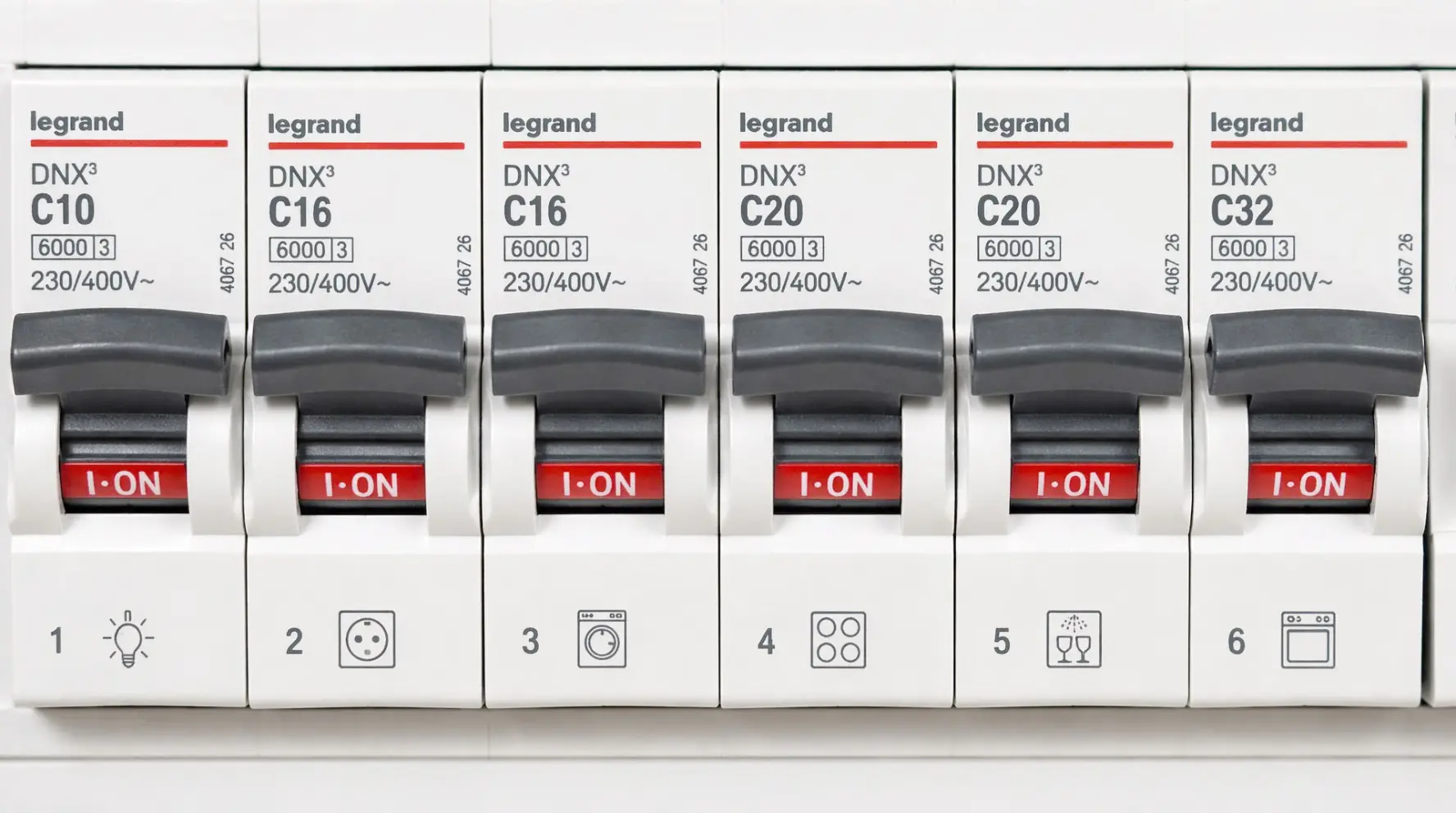
The ancestor of the circuit breaker: the fuse
Do you still have those small cylinders that 'blow' and need replacing? While they do protect your cables from overheating, there is a catch: their presence often signals an outdated installation that lacks an RCD. Without one, you remain at risk of electric shock. If this is the case, upgrading your fuse box should be a top priority for your safety.
The residual current device (RCD)
The residual current device continuously monitors your electrical installation. It detects any loss or leakage of current. This is essential in a home where more and more electrical appliances are operating simultaneously.
The residual current device constantly compares the amount of current entering one wire with the amount leaving the other wire.
- If it detects a difference greater than 300 mA (or less in some cases), it immediately cuts off the electrical circuit.
- If the returning current is ‘insufficient’, this indicates a leak in your installation. If this leakage current passes through your body, for example when you touch an appliance in your home, it can be extremely dangerous, even fatal.
The residual current device therefore protects you and your family above all else. This protection is essential, especially in a modern home with many powerful appliances.
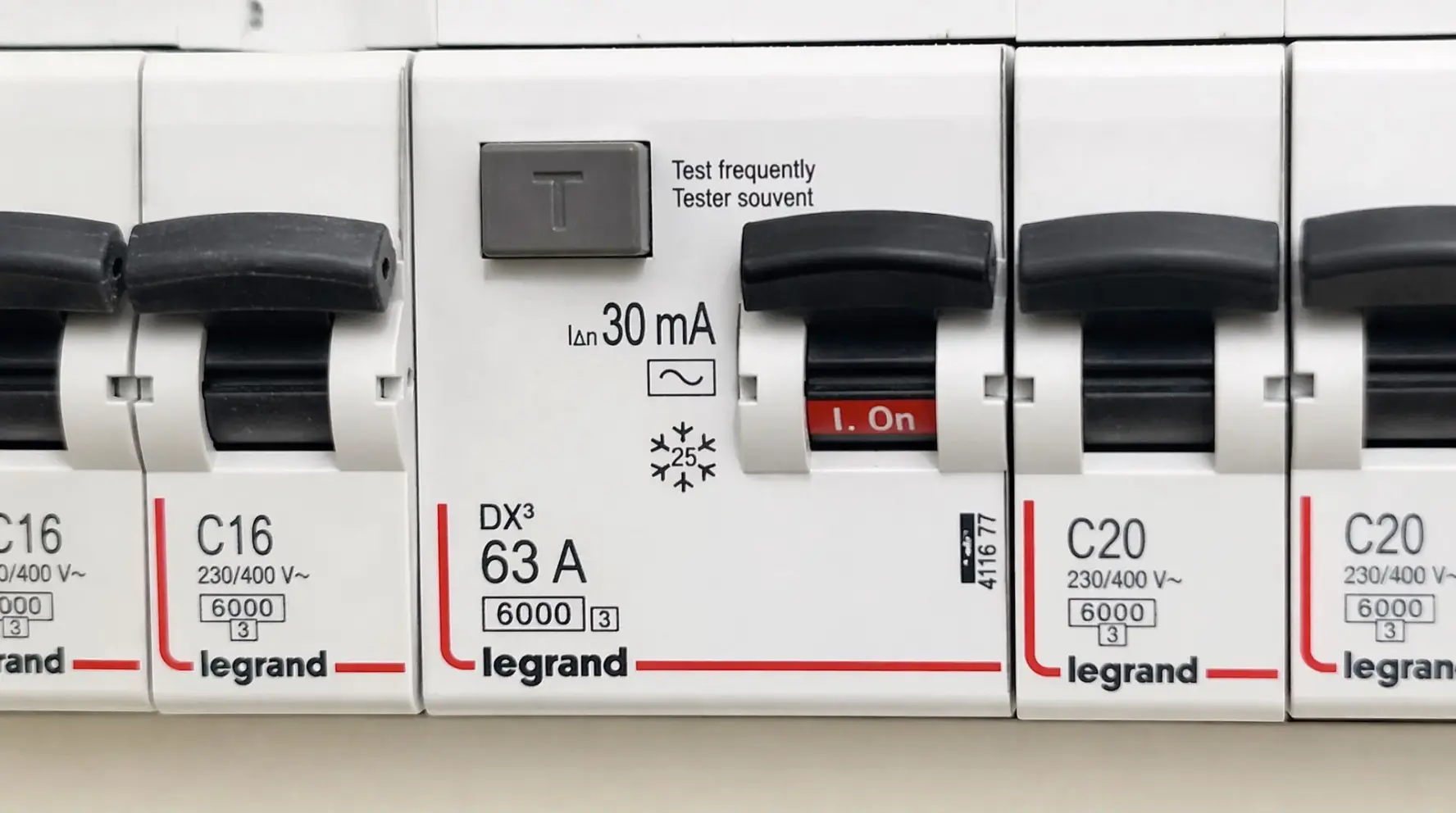
Types of RCDs
Think of these types as the switch’s level of "sensitivity" or "vision":
- Type A: Found in most homes, this standard RCD is designed for everyday appliances. It detects classic AC ground faults as well as pulsed DC currents (common in devices like washing machines or microwaves).
- Type F: Designed for appliances equipped with variable speed drives, such as modern heat pumps or high-end household appliances. It also offers better resistance to "nuisance tripping" (unexpected power cuts).
- Type B: Recommended for installations with large solar inverters or electric vehicle (EV) charging stations (unless the station already has integrated DC leak detection).
The residual circuit breaker with overcurrent protection (RCBO)
The residual circuit breaker with overcurrent protection combines these 2 types of protection in a single device. It functions both as a residual current device and as an automatic circuit breaker.
These are often used for specific equipment like EV charging points, heat pumps, or swimming pools. They allow you to completely isolate the appliance from the rest of the house while saving space in your consumer unit.
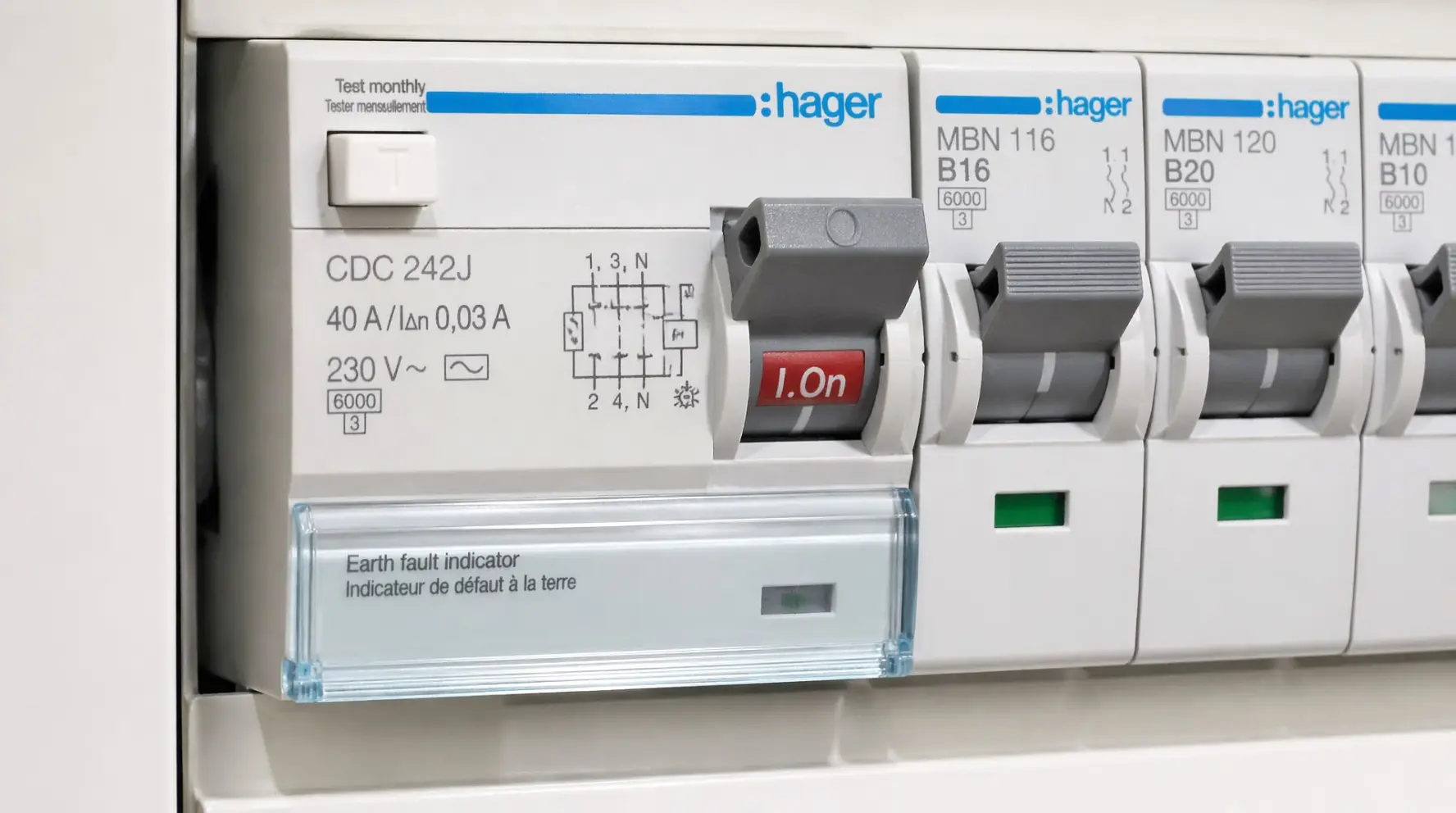
In summary
- The circuit breaker protects the electrical installation.
- The residual current device mainly protects people.
- The residual circuit breaker with overcurrent protection protects both people and the electrical installation.
What protections do I need?
Regulations require the following:
- A 300 mA max residual current device at the start of the installation.
- 30 mA RCDs for circuits requiring additional protection, particularly those in wet zones and, depending on the configuration, certain socket and lighting circuits.
- Suitable automatic circuit breakers on each electrical circuit.