
We all worry about the safety of our food after a power cut, and rightly so. However, there is usually more time than you think: food will stay fresh for up to 4 hours in a closed fridge. In a well-stocked freezer, this can often be as long as 48 hours.
The fridge
Normally, the temperature of your fridge is between 0 and 4 °C. In the event of a power outage, the contents will remain safe for up to 4 hours for perishable products; for less sensitive products, this may be slightly longer. After that, however, the temperature rises rapidly and you will need to take a critical look at your supplies.
What should you do after a power cut of more than 4 hours?
| Bewaren | Weggooien |
|---|---|
| Hard cheese and butter: hard cheeses (such as Gouda or Parmesan), butter and margarine. | Meat, fish, poultry and seafood: both raw and cooked. These are the most high-risk products. |
| Uncut fruit and vegetables: whole fruits and vegetables remain safe as long as they are not cut. | Dairy: all liquid dairy products such as milk, cream, yoghurt (including unopened) and soft cheeses such as brie or ricotta. |
| Condiments and juices: mustard, ketchup, pickles, olives, and unopened cartons of fruit juice. | Prepared meals: leftovers, soups, sauces, quiches, and eggs that have already been opened or prepared. |
| Eggs in their shells: as long as the shell is intact and the temperature has not risen excessively. | Pre-cut fruit and vegetables: ready-made salads, pre-cut fruit trays and opened cartons of fruit juice. |
The secret of European eggs
Did you know that American eggs must be refrigerated because they are washed? In Europe, we leave the natural protective layer intact, which makes our eggs much more environmentally friendly. Although they can be stored at room temperature, they stay fresh even longer in the fridge. A sustainable choice with a fresh advantage!
The freezer compartment of the fridge
While a standard freezer is set to -18 °C, the temperature in a freezer compartment (1 or 2 stars) usually fluctuates between -6 °C and -12 °C. Because the starting temperature is not as low, the safety margin in the event of a power failure is much smaller. Products in a freezer compartment often defrost after just a few hours. As soon as the ice melts, it is therefore necessary to act quickly.
What should you do after a power cut of more than a few hours?
| Product status | What to do? |
|---|---|
| Still frozen or with ice crystals | Eat or prepare immediately: Use the product immediately in a hot meal. |
| Fully defrosted (soft) | Throw: At these higher temperatures, food safety can no longer be guaranteed. Do not take any risks with your health. |
How many stars does your freezer compartment have?
Please note! The vast majority of freezer compartments cannot freeze food themselves. Most internal freezer compartments only have 1 or 2 stars. They are designed solely for keeping products that are already frozen, not for freezing fresh produce.
| Number of stars | Temperature | Use |
|---|---|---|
| * | -6°C | Keeps ice cubes cool, but not really suitable for frozen products (max. 1 week). |
| ** | -12°C | Short-term storage of frozen products (a few weeks). |
| *** | -18°C | Long-term storage of already frozen products. |
| **** | -18°C of kouder | Freezing yourself: can safely freeze fresh products and store them for a long time. |
The freezer
Normally, your freezer is set to -18 °C or less. In the event of a power cut, the products inside will remain frozen for up to 48 hours (if you keep the door closed properly).
Please note: Frozen products keep each other cold. The fuller your freezer is, the longer everything will stay frozen. If your freezer is only half full, the products will usually only stay frozen for 24 hours. With a fridge-freezer combination, this time is often even shorter.
What should you do after a power cut of more than 48 hours?
| Refreeze | Consume within 24 hours | Throw |
|---|---|---|
| Products that still contain hard ice crystals: These have not yet completely defrosted and can be safely returned to the freezer (although the texture may change slightly). | Hard cheese (blocks), bread & pastries without cream (such as muffins and coffee cakes). | Fresh meat, fish, poultry, and seafood that you cannot cook thoroughly right away (or if in doubt whether they have been above 4 °C for too long), or those that are already prepared. |
| Raw products that you first heat thoroughly: Have they not exceeded 4°C? Then cook or fry them thoroughly. Once prepared as a hot meal, you may refreeze the dish. | Defrosted fruit (preferably stew or boil first). | Prepared dishes (such as lasagne or sauces). Dairy products (such as soft cheese and cream) & eggs. |
Tips in case of a power outage
- Be prepared: Expecting a power outage? Group your food items as close together as possible and fill in the empty spaces with bottles of water or ice cubes. This will create a single compact block with high thermal inertia.
- Keep the door closed: Open the fridge or freezer as little as possible (or preferably not at all) during the power cut. This prevents warm air from entering and keeps the cold inside for as long as possible.
At a glance
Now you know exactly how to prevent unnecessary waste. Here is a summary of the most important points:
- In the fridge: After 4 hours, it's time for a quick check. Products such as hard cheese, butter and unopened juices can be kept. Be strict with meat, fish and dairy products: safety is paramount with these products.
- In the freezer compartment (of the fridge): Be extra vigilant here, as these compartments lose their cold faster. If they still have ice crystals, cook them immediately, otherwise throw them.
- In the freezer: Here you have the most leeway, up to 48 hours. Products with hard ice crystals can simply be put back in the freezer. Raw products that have thawed can be saved by first heating them thoroughly (frying or boiling).
- One simple rule: When in doubt, throw. Smell, colour or taste are not reliable indicators of food safety.
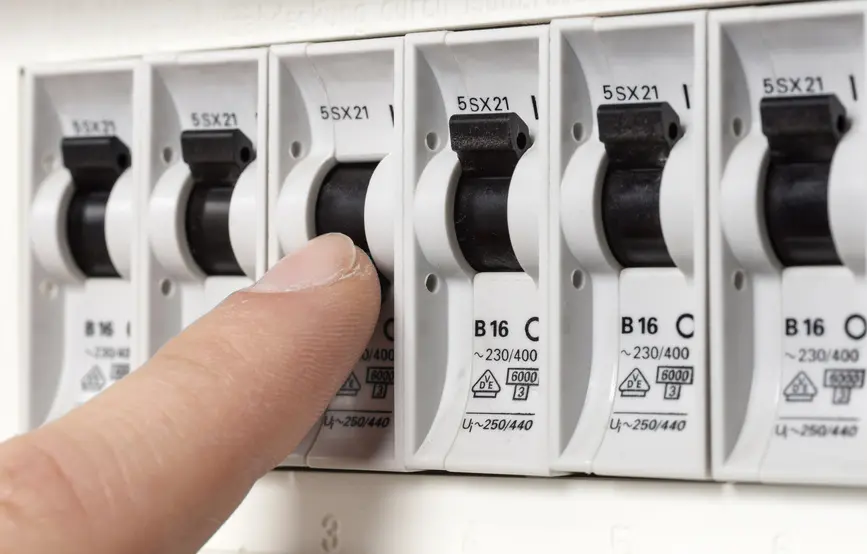
What to do in the event of a power cut?
Follow our checklist to find the source of the problem and how to fix it.