
At first glance, insulating a flat roof from the inside seems like a simple solution. However, this approach is not recommended today.
Although it is technically possible, insulating from the inside can cause serious damage in the long term. What exactly is the problem, and what is the best solution?
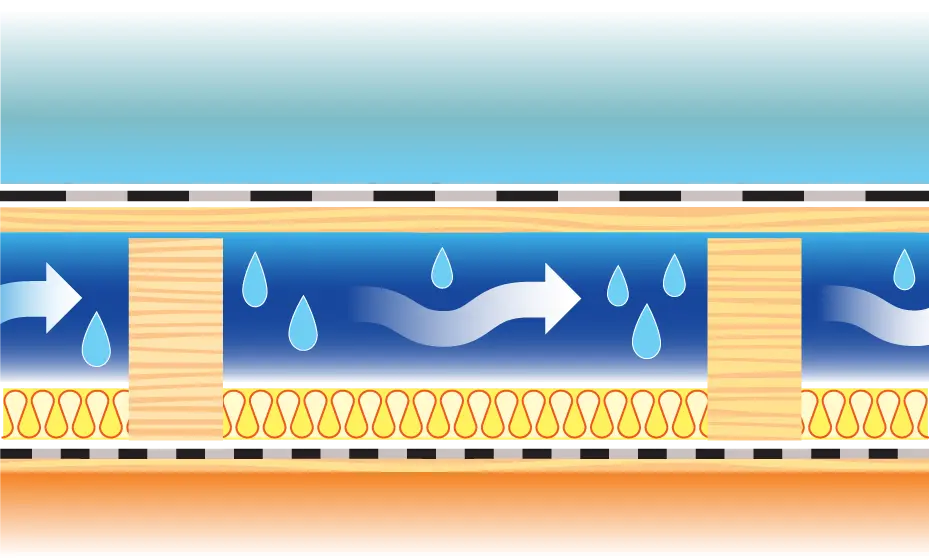
Insulating from the inside
Insulating a flat roof from the inside is done according to the cold roof principle.
This involves placing the insulation under the load-bearing roof structure, usually with a ventilated air layer above it.
Technically, this is possible, but it is not a good idea.
Why is a cold roof not recommended?
This system was often used in the past, but is now considered outdated and risky. The reason? Condensation and moisture problems that are difficult to avoid in the long term.
This has several consequences:
- The insulation becomes saturated with water and loses its effectiveness.
- Wooden supports can rot.
- Metal or concrete elements can rust or become damaged.
- Frost accelerates the damage.
- The roof can be seriously damaged within a few years.
Even with a vapour barrier or a ventilated air cavity, the risk remains high. In some cases, the air layer actually exacerbates the problem by creating additional condensation.
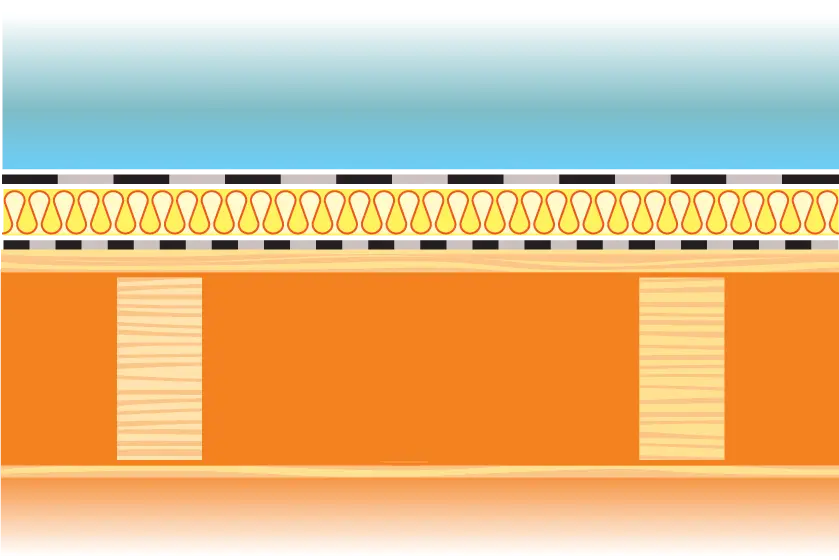
Insulating from the outside
This is what we call a warm roof.
With a warm roof, rigid insulation is placed on the outside, on top of the supporting structure and under the roof covering.
This keeps the entire roof structure warm and dry, greatly reducing the risk of condensation.
The best long-term solution
If you want to insulate a flat roof correctly, it is best to opt for a warm roof.
This approach:
- Prevents condensation problems.
- Protects the supporting structure.
- Extends the life of the roof.
- Ensures better and more stable insulation.
For this type of work, it is best to call in a specialist contractor who can carry out the roof construction correctly.