
What if your boiler could generate your own electricity while heating your living room? That is the clever principle behind cogeneration, also known as Combined Heat and Power (CHP). It’s a technology that maximizes every calorie to reduce both your bills and your carbon footprint.
The principle: waste nothing
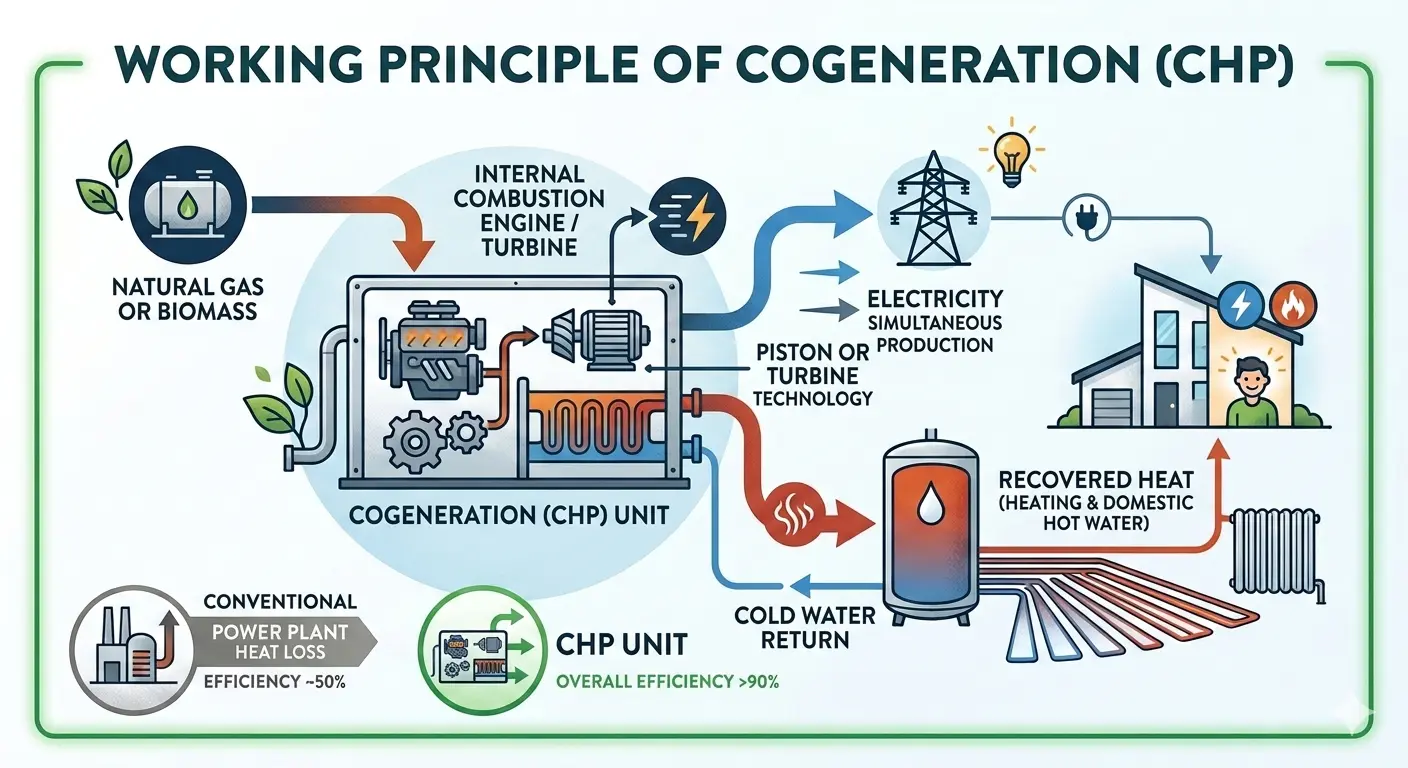
Usually, we buy electricity from the grid (produced by large power plants) and produce our heat via a boiler. The problem? In a classic power plant, a massive amount of heat is lost into the atmosphere.
Cogeneration turns the tables: heat and electricity are produced simultaneously using a single engine and a single fuel source (gas, oil, biogas, or biomass). Imagine an engine that runs a generator to light up your building, while its own heat—instead of being wasted through an exhaust pipe—is injected directly into your heating circuit. Nothing is lost; everything is put to use!
Who is it for?
This is where the choice becomes strategic. To be profitable, a cogeneration unit must run almost constantly, as it requires a permanent need for heat.
- The collective choice: This technology is particularly relevant for apartment buildings, hospitals, or sports complexes. By sharing the energy needs, global efficiency levels of nearly 90% can be reached.
- The individual home: While "micro-CHP" systems about the size of a dishwasher do exist, this solution has become marginal for private houses. With high purchase costs (€15,000 to over €30,000) and complex maintenance, it is difficult to make it profitable for a single household. Today, the combination of solar panels and a heat pump is almost always preferred.
How does it work?
To produce cogeneration, you need an "engine" that drives an alternator to create electricity, while capturing the heat released during the process. There are 3 main technologies:
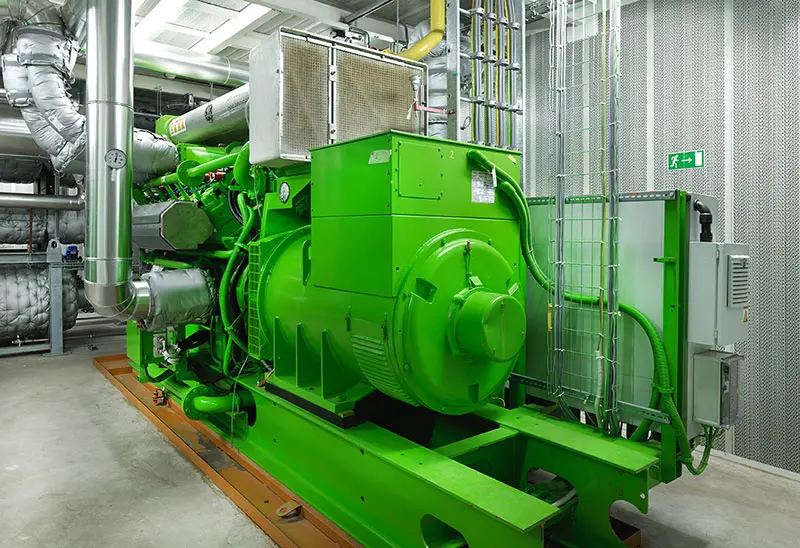
- Thermal Engine: The most common for buildings. It works like a car engine powered by gas.
- Stirling Engine: Very quiet, it is sometimes used for smaller needs thanks to its external combustion.
- Gas Turbine: Reserved for massive industrial needs, it operates similarly to a jet engine.
Did you know?
Unlike solar panels, which only produce electricity when the sun shines, cogeneration produces the most electricity in winter, just when we need it most for lighting and heating our homes!
Cogeneration at the heart of Brussels
Sibelga already operates numerous cogeneration plants across the Brussels territory. At the Cinquantenaire site, for example, a plant heats several museums simultaneously, reducing CO2 emissions by 1,000 tonnes per year while cutting their energy bill by 20%.
In the future, this logic will expand to entire neighborhoods via district heating networks, such as in Neder-Over-Heembeek, where heat from a nearby incinerator will power hundreds of homes.